We’re going to be ranting just a little bit today.
This situation has been ongoing for a frazillion years. Yes that’s number I just made up because I’m downright tired of how long it has been going on.
To date, I am unable to count how many frustrating and FRUITLESS searches I (and my European colleagues) have made for quality cosmetics containers with NO MOQ.
MOQ stands for Minimum Order Quantity, and the standard in the industry is death on a stick for artisan skincare businesses. The standard ranges between 5000 to 15.000 units.
The myth that “60% of what’s applied to your skin is absorbed into your bloodstream” is one of my pet peeves. It’s so far from the truth, and it’s cited with such an air of authority that it really ticks me off.
It also tends to be cited by the sorts of people who push “non-toxic” products, which is very much a BS marketing tactic.
Let’s break down how human skin works, and why this myth is just plain wrong.
Skin is not a sponge
One of your skin’s main functions is to act as a barrier – that is, it blocks substances from getting into the deeper living layers of your body. If things were so easily absorbed into skin, humans would’ve died a long time ago (probably from exploding after absorbing a tree or something). Thank you, evolution!
So by default, the amount of substances absorbed is going to be closer to 0% than 100%.
You can see this in everyday life as well:
You don’t get massively heavier after you take a bath.
You don’t absorb your clothes.
You still have make-up to remove at the end of the day.
You can’t just slap food you don’t like on your skin to get around eating it.
Medicated creams and patches
At this point in my rant, people who promote the 60% absorption myth like to bring up medicated creams and patches. If skin’s such a great barrier, they say, why do medicated creams and patches work?
(They smile smugly as I take a sip of water. “Got her!” they think. But they’ve made a huge mistake. Medicinal chemistry is MY home turf.)
Transdermal medications have a few advantages.
One of the biggest headaches in designing medications is first pass metabolism, which is when your digestive system metabolises and gets rid of oral medications before they get absorbed into your bloodstream. To compensate for this, you have to take a lot more of the medication so that enough of it makes it to your bloodstream to have an effect. Alternatively, you can avoid the digestive system altogether with IV drips, injections, suppositories etc. – or transdermal delivery.
Transdermal products can be designed to release the drug more slowly and consistently than other methods. They’re also easier to administer to uncooperative patients.
But while transdermal medications sound great, it actually takes a lot of effort to get drugs through your skin and into your bloodstream. Compared to the total number of medications on the market, the number of transdermal medications are extremely limited, and lots of formulating tricks are used to get them through the skin.
Take transdermal patches, like nicotine patches – as well as lots of penetration enhancers that help the nicotine get through skin, they also need a liner to protect the ingredients from rubbing off.
So why do some things get through skin into the bloodstream? If skin is such a good barrier, does that mean skincare doesn’t work?
Well, how much of a substance absorbs into skin depends on a ton of things (which is why the blanket statement of 60% rings alarm bells for us pharma nerds).
What is it?
How well a substance gets through your skin into the blood depends on the structure of the substance itself.
Firstly, molecular size is important. The smaller the molecule, the more easily it squeezes in between all the substances already in your skin, sort of like how you try to make yourself as small as possible to get through a crowd.
Your skin is also both watery and oily at the same time, and things that dissolve in water tend not to dissolve in oil. It has to have the right balance of hydrophilic and lipophilic (the right polarity) to get into the skin, then leave the skin and enter the blood.
As you’d expect, drugs that can be delivered transdermally tick these boxes – but most drugs don’t, and it’s the same for other substances that encounter your skin.
Where are you putting it?
Your skin doesn’t have the same permeability all over, so skin absorption depends on the location of application.
For example, here’s a table (from this book) showing the permeabilities of hydrocortisone and two pesticides through skin in different locations.
Anatomical region
Dose absorbed (%) hydrocortisone
Dose absorbed (%) parathion
Dose absorbed (%) malathion
Forearm
1.0
8.6
6.8
Palm
0.8
11.8
5.8
Foot, ball
0.2
13.5
6.8
Abdomen
1.3
18.5
9.4
Hand, dorsum
–
21.0
12.5
Forehead
7.6
36.3
23.2
Axilla
3.1
64.0
28.7
Jaw angle
12.2
33.9
69.9
Fossal cubitalis
–
28.4
Scalp
4.4
32.1
Ear canal
–
46.6
Scrotum
36.2
101.6
You can see that the different substances have different permeabilities, and you can see some areas are better at absorbing things (armpit (axilla), jaw angle, ear canal and, uh, scrotum… I’m assuming the additional 101.6% for parathion is experimental error), while others are pretty impermeable (foot, palm, forearm).
Note that this table only shows percutaneous absorption – in other words, absorption through the skin. Getting through the skin doesn’t necessarily mean that the substance ends up in the blood, since not all locations have the same blood flow, and the blood vessels are at different depths, so the actual amounts of these substances that get to the blood are much lower.
What are you putting it on with? How are you applying it?
There are some other things you can do with an ingredient to enhance how well it absorbs into skin. Transdermal patches and creams exploit a few of these. For example, occlusion (covering up your skin) will help underlying substances penetrate the skin.
A lot of medicated creams and skincare products also include penetration enhancers. These ingredients help substances absorb better. Some of them will make the stratum corneum (the dead outer layer of your skin) more fluid, others will disrupt the proteins and oils on your skin, or hydrate your skin. Penetration-enhancing ingredients include alcohols, essential oils, fatty acids, urea and just plain water.
You can also use tools to increase penetration, like ultrasound, electroporation, iontophoresis, heating and microneedles. Depending on the technique, these drive the ingredients into the skin or disrupt the skin barrier.
But in your standard beauty products, you rarely have many of these special tricks in place. In fact, some products are specially formulated to stay on top of your skin. Sunscreens, for example, are designed to sit in a layer on top of your skin, since they’re useless if it’s under your skin.
Does this mean skincare doesn’t work?
So if skin is such a good barrier, does that mean skincare won’t absorb and therefore won’t work? Luckily for us skincare enthusiasts, not necessarily!
Skincare is for skin, not blood
As previously mentioned, most things that do get absorbed into your skin don’t make it past the first few layers of the dead stratum corneum. Even less make it through the epidermis to the deeper dermis, where your blood vessels are. But for skincare, that’s fine – you want generally want it in to stay in the top layers of your skin where you apply it! Moisturisers are meant to work to hydrate the stratum corneum, and most actives work in the epidermis.
Ingredient selection
Most of the active ingredients used in skincare, like ascorbic acid and tretinoin, are small enough to penetrate into skin. Larger ingredients like collagen, hyaluronic acid, petrolatum and sunscreens work at the surface of the skin, so they don’t need to penetrate.
Formulations can help ingredients penetrate
Skincare products can be purposely formulated so the ingredients have the best chance of penetrating through the dead stratum corneum into the living layers of the skin.
The most common method is the use of penetration enhancers. The same ingredients used in transdermal medications show up in skincare as well – that’s one of the reasons why denatured alcohol is in a lot of products.
Another factor is pH. If there’s an acidic ingredient, a low pH will generally help it penetrate skin, while higher pH usually makes it too polar (water-soluble).
When I was younger, I’d spend countless night up until all hours. It was so uncool to go to bed early. These days, I wish I could fall asleep at 10, but, more often than not, my insomnia is keeping me awake till the early morning hours.
Doesn’t matter what’s keeping me awake. My skin is paying the price for lack of sleep. Just like the rest of my body (and mind), it looks tired and worn out. People have started asking me if I’m ill. Ugh.
Beauty sleep is no myth. We really need it to look our best. Without it, there’s only so much the best concealer in the world can do (although I’m ever so grateful for my beloved Bobbi Brown concealers – they help a ton!).
Here’s why and how to get all the beauty sleep you (and your skin) need:
The first phase, which occupies most of the early sleep night, is when our brain gets its well-deserved rest after all the frantic and intense work it did when we were awake. The second phase, REM or “deep” sleep, is when we dream.
It’s during the REM phase that our body regenerates and restores itself (isn’t it awesome)? Here’s how it works. Our body produces human growth hormobe (HGH) that helps repair tissues and keeps skin elastic. Skin cells regenerate faster at night, too.
So, if sleep is that important, can you imagine what happens when we don’t enough? Our body isn’t happy, and starts producing cortisol, the hormone that creates free radicals and reduces skin regeneration. And, as we all know, we get those pesky dark circles, under-eye bags, and puffy eyes.
How to get your best sleep
Ok, so now you know that you need to get at least 8 hours of good sleep every single night (naps don’t count). But how do you do it?
1. Routine is your friend
Routine can be so boring. But, it can also be helfpul. Going to sleep at the same hour every night, and waking up at the same hour every morning really helps. Your body will rebel at first, but, soon, you’ll teach it when it’s time to sleep and when it’s time to wake up, so that it can get all the rest it needs.
2. Watch your diet
A large meal and a good cup of coffee are two of the little pleasures of life. But, they also interfere with sleep. Never have them just before you go to bed. The same is true for nicotine, but, then, I hope you aren’t smoking, anyway. I wrote a whole post about how that ages you faster too, by the way. If you smoke, you should check it out.
3. Don’t forget your skincare
Doesn’t matter how tired you are, you should always find the time to cleanse your skin and apply serum and moisturizer, at least. The night is a particularly great time to use retinol and vitamin C, two anti-aging superstars that make skin more susceptible to sun damage when exposed to sunlight.
4. Create a quiet environment
Light and noise can interfere with sleep, too. So, make sure your bedroom is dark, quiet, and comfortably warm (but, not too hot, or you won’t be able to sleep).
5. Sleep On Your Back
I’m awful at this. I find sleeping on my side so comfortable. But, pressing your face into a pillow can create crease marks that turn into premature wrinkles overtime. Kinda defeats the purpose of sleeping for better skin, doesn’t it?
The Bottom Line
Getting your eight hours of sleep is not negotiable if you want healthy and flawless skin. Hopefully, these tips will make it easier for you to get all the beauty sleep you need.
Do you get enough beauty sleep? Do you have any tips to sleep better?
Take The Guesswork Out Of Skincare Shopping
Get access to the “Pro Skincare Library” for exclusive skincare routine “cheat sheets” and tricks to help you navigate the beauty aisles jungle like a pro and immediately know what to pick off the shelves to achieve the gorgeous skin of your dreams – even when you’re drowning in an endless sea of skincare products.
Success! Now check your email to confirm your subscription and get access to the skin library.
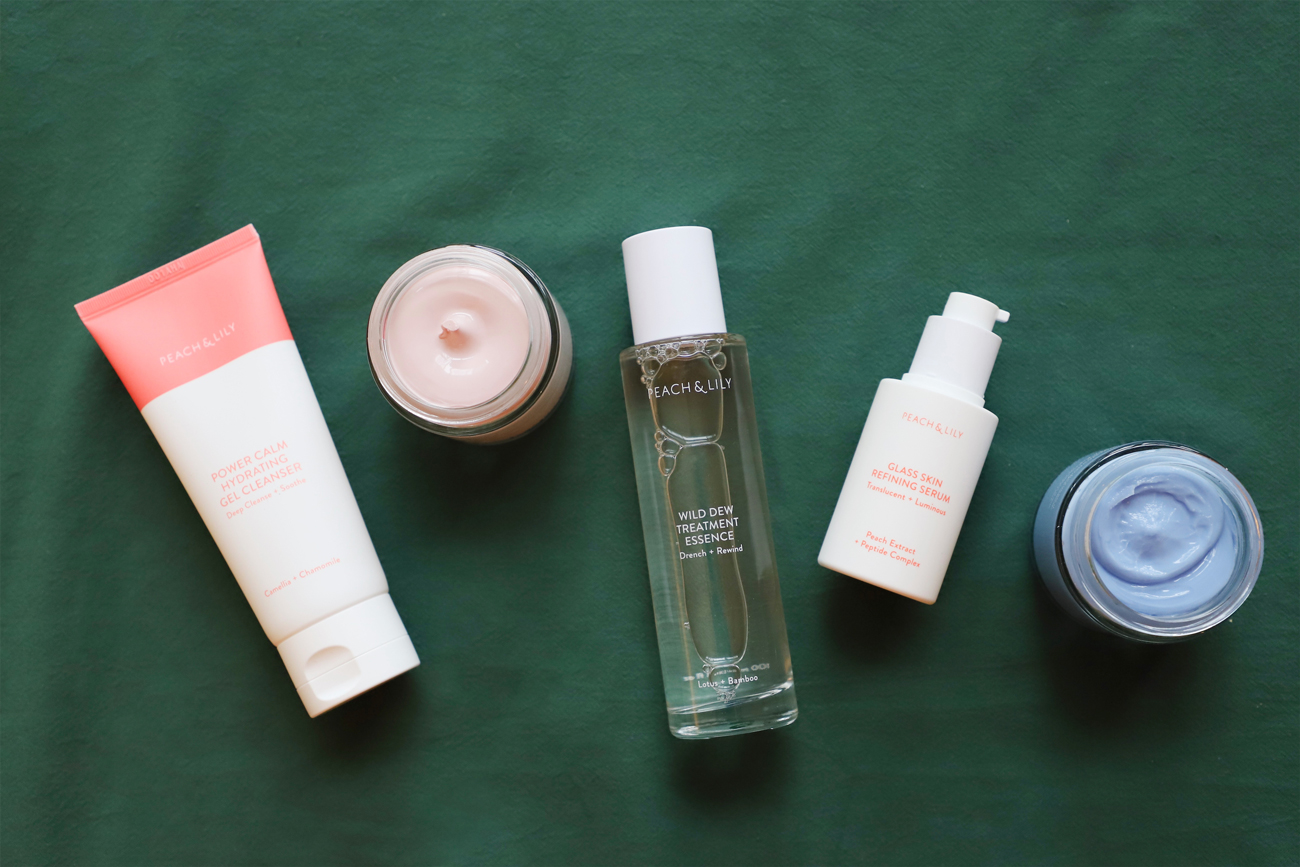
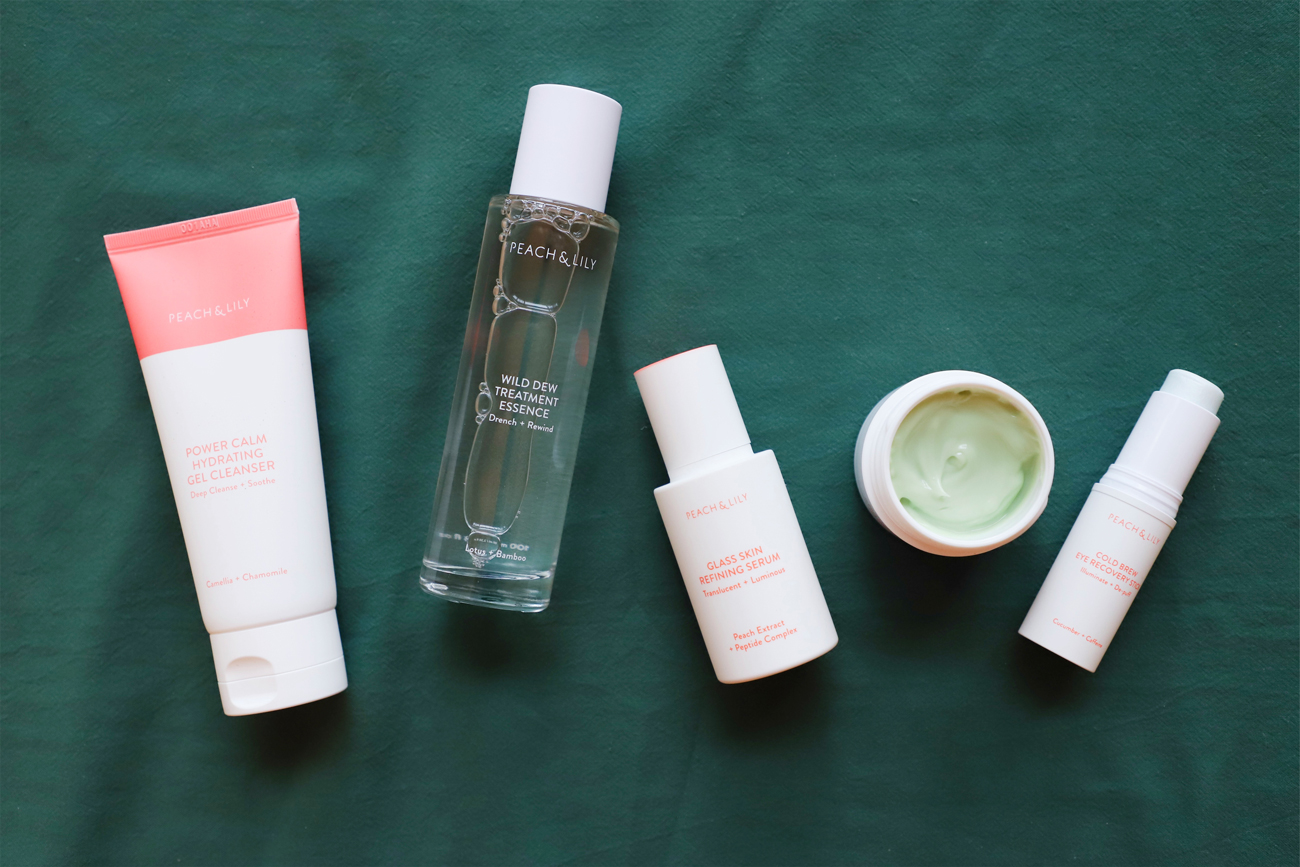
Here’s a special thing about the Peach & Lily Collection — all the products are formulated to play well together as a glass skin routine. That means our new products also play very well with our hero product, the Glass Skin Refining Serum.
Our Glass Skin Refining Serum is packed with beneficial ingredients that help provide skin with deep hydration, vitamins, and antioxidants. It’s a beautiful, clear, slightly gel-textured serum that simply sinks into skin and helps you achieve glass skin — skin that’s so healthy and hydrated, it appears poreless, luminous, and translucent, like glass.
Use the Glass Skin Refining Serum after you do our Pore Proof Perfecting Clay Mask, when your skin is still damp, so Glass Skin sinks into your skin and helps hydrate and nourish your clarified, softened skin. Use it before our Overnight Star Sleeping Mask, so skin really gets a comprehensive dose of hydrators, vitamins, and antioxidants to help rejuvenate as you sleep.
In the morning, use Glass Skin before applying a moisturizer and swiping our Cold Brew Eye Recovery Stick to wake up your eye area! Overall, you’ll find that the products support each other incredibly well.
How do the products fit in a Glass Skin Routine, though?
In The PM
Start with an oil-based cleanser then cleanse with the Power Calm Hydrating Gel Cleanser, a sulfate-free cleanser that removes light makeup, excess oil, and other impurities without stripping skin dry. Apply a thin, even layer of the Pore Proof Perfecting Clay Mask and leave on for 10-15 minutes — the soft, pliant clay mask won’t dry into a hard shell on your face, even while it decongests pores and excess sebum.
After rinsing off Pore Proof with lukewarm water, pat on a generous layer of the Wild Dew Treatment Essence. Massage one or two (or three) layers of the Glass Skin Refining Serum; it was formulated to be suitable even for sensitive skin; so you can really apply several layers of this without irritating skin. Complete your PM routine with the Overnight Star Sleeping Mask, massaging the decadent overnight moisturizer into your skin.
Get your beauty sleep.
In The AM
Start with the Power Calm Hydrating Gel Cleanser — you won’t typically need to double cleanse in the morning. Either air-dry your skin or pat it dry, not completely; products will absorb better into damp skin. Pat on one or two layers of the Wild Dew Treatment Essence to balance your pH level and blast skin with hydration. Massage one or two (or three) layers of the Glass Skin Refining Serum, doing some facial massages to help de-puff skin and center yourself for the day.
Apply the Matcha Pudding Antioxidant Cream to seal everything in, then swipe the Cold Brew Eye Recovery Stick to wake up your eye area and help it appear de-puffed. Don’t forget your SPF.
—
We hope that was helpful! If you have any questions, please leave them in the comments below, and don’t forget to check out our founder’s YouTube video explaining her Glass Skin Routine!
When it comes to hydration, everyone’s skin is different. But there’s one product we’re ALL better off using…
Face serum!
If you’ve never tried one, know that they fit into your skincare routine after cleansing and exfoliating, but before moisturizer or sunscreen. Typically, they have a liquid texture, although some serums can be lightweight gels or lotions, too. And they tend to suit every skin type, thanks to their thin, usually water-based consistency.
What’s more, hydrating serums are packed with a high concentration of active ingredients (like hyaluronic acid) that readily absorb into your skin. All you need are a few drops to boost your skin’s moisture levels, whether you’re dry, oily or in between!
Here’s what to look for in a face serum, plus the top products to try now.
What to Look for in a Face Serum
The best face serums from Vivier, Omorovicza, Pai, Glossier, Caudalie and more.
For best results, choose a serum that is low in potentially irritating, inflammatory and pore-clogging ingredients. These are the key things I scan for on labels:
Low in silicones: They only give the illusion of hydration, and may interfere with your skin’s absorption of active ingredients. Over time, they can even dehydrate you and exacerbate acne.
Low in fragrance: It’s the number one skin irritant, so it should be near the end of an ingredients list, or not present at all.
High in humectants: Ingredients like glycerin, hyaluronic acid and aloe vera are desirable for a serum because they draw moisture from the environment into your skin. Just be sure to seal them in with a cream, oil or sunscreen, especially if you live in a dry climate (otherwise their action will reverse!).
Low in oils: Oil-based serums may not hydrate your skin well, due to their occlusive properties that prevent moisture from getting in. I suggest using them like you would a face oil, to seal in your water-based serum and/or moisturizer. You also want to limit oils if they are unsaturated, as they can quickly oxidize (go rancid).
Low in alcohol: Due to its drying effects, it shouldn’t be present in high amounts (although it is sometimes appropriate in other products as a penetration enhancer).
Low in witch hazel: It’s sometimes substituted for water, but can be too harsh and irritating for sensitive skin.
Preservative: Any product that has water in it needs to have a preservative to prevent bacteria growth.
With these points in mind, here are the face serums that measure up!
The Best Face Serums
Consonant HydrExtreme
Consonant HydrExtreme
Consonant HydrExtreme is an all-natural, silicone-free hydrating serum with the most minimal formula around. It has just two ingredients, cassia angustifolia seed extract (a polysaccharide) and glycerin. For me, it has always hydrated better than hyaluronic acid… and now, there’s clinical proof! In an independent, double-blind study, it outperformed hyaluronic acid as well as the leading hydration serum on the market. The texture is light, fast-absorbing and non-greasy.
Indie Lee Stem Cell Serum
Indie Lee Stem Cell Serum
Indie Lee Stem Cell Serum is a natural hydrating serum that may have anti-aging benefits as well. The star ingredients are glycerin, hyaluronic acid and stem cells derived from Echinacea. While plant stem cells aren’t a proven ingredient like retinol, they have shown some promise for firming and improving texture (see study here). This serum has a watery feel and sinks in quickly. You can also mix it with the brand’s Squalane Facial Oil.
Omorovicza Instant Perfection Serum
Omorovicza Instant Perfection Serum
Omorovicza Instant Perfection Serum is an oil-free and silicone-free serum that hydrates with xylitol and hyaluronic acid. The base is the brand’s signature Hungarian thermal water, which is rich in minerals, and there’s also yeast ferment (seen in many K-beauty products) to help with absorption. Also note that they only use naturally-derived fragrance. This is a clear gel that penetrates completely.
Drunk Elephant B-Hydra Intensive Hydration Serum
Drunk Elephant B-Hydra Intensive Hydration Serum
Drunk Elephant B-Hydra Intensive Hydration Serum is named for its pro-vitamin B5 (panthenol), a humectant that hydrates and improves the skin’s barrier function. This serum also features glycerin, pineapple ceramides, marula oil and coconut alkanes (just be aware that the latter two might be comedogenic if you’re acne-prone). What I like most about this product is the gel texture, which becomes more watery as you spread it on, and absorbs with zero stickiness.
Vivier Hydragel Advanced B5+ Complex
Vivier Hydragel Advanced B5+ Complex
Vivier Hydragel Advanced B5+ Complex also contains pro-vitamin B5, along with humectants like hyaluronic acid to bring water to the skin. There’s no oil, silicone or fragrance in here, and unlike most serums, this formula is a clear gel. It’s non-sticky, and oilier skin types could even use it in place of moisturizer.
Timeless Hyaluronic Acid Pure
Timeless Hyaluronic Acid Pure
Timeless Hyaluronic Acid Pure is not only one of the most affordable hydrating serums, it’s also one of the simplest—with just four ingredients. The main two are water and a high one percent concentration of hyaluronic acid, which gives it a slightly gel-like texture. It sinks in completely with no residue, and makes your skin feel super soft!
Truly Organic Glass Skin Facial Serum
Truly Organic Glass Skin Facial Serum
Truly Organic Glass Skin Facial Serum has the texture of a face cream (hence its jar packaging), similar to the “pressed serums” you’ll find in K-beauty lines. It also has an unusual ingredients list, which includes soy lethicin, xanthan gum, aloe vera and coconut oil, and no silicones or other chemicals. Once you apply it to your skin, the texture becomes more fluid, leaving skin nourished and dewy.
Caudalie Vinoperfect Radiance Serum
Caudalie Vinoperfect Radiance Serum
Caudalie Vinoperfect Radiance Serum has been the brand’s bestselling product at French pharmacies since 2008! This is a 98 percent natural, silicone-free and oil-free hydrating serum with brightening benefits. Ingredients include water, glycerin, squalane, vitamin E and a patented grapevine extract (plus less than one percent synthetic fragrance). With a light, milky texture, it is suitable for all skin types.
Glossier Super Bounce Hyaluronic Acid + Vitamin B5 Serum
Glossier Super Bounce Hyaluronic Acid + Vitamin B5 Serum
Glossier Super Bounce Hyaluronic Acid + Vitamin B5 Serum is a newly reformulated serum that moisturizes with a two percent hyaluronic acid complex and pro-vitamin B5. It’s also got glycerin, coconut fatty acids and propanediol. Plus, the brand has now removed the silicones that were in the previous version. Similar to Caudalie, this has a milky feel, and penetrates quickly.
Pai Back To Life Hydration Serum
Pai Back To Life Hydration Serum
Pai Back To Life Hydration Serum is a nourishing serum specifically formulated for sensitive, reactive skin. In a base of water and glycerin, it moisturizes with a skin-conditioning probiotic, coconut extract, jojoba oil and hyaluronic acid. I’d describe the texture as a thin, non-greasy lotion—all you need are a couple of drops.
SkinCeuticals Hydrating B5 Gel
SkinCeuticals Hydrating B5 Gel
SkinCeuticals Hydrating B5 Gel is one of the OG hydrating serums, launched more than a decade ago. Like so many other serums, it is named for pro-vitamin B5, which it contains along with hyaluronic acid. There are just four ingredients in here, and no silicones, alcohol or fragrance, which you might not expect from this brand. The texture is a gel, which can feel slightly sticky initially, but this goes away once it absorbs.
The Ordinary Marine Hyaluronics
The Ordinary Marine Hyaluronics
The Ordinary Marine Hyaluronics isn’t your typical hyaluronic acid face serum. Instead, it uses what the brand calls “marine derivatives” to draw moisture into the skin, along with glycerin and amino acids. Specifically, it is high in algae, polysaccharides and proteins that are sustainably sourced from marine bacteria. It’s clear with a watery texture, and sinks in fast without stickiness.
Dr Roebuck’s True Blue Ultimate Hydrating Serum
Dr Roebuck’s True Blue Ultimate Hydrating Serum
Dr Roebuck’s True Blue Ultimate Hydrating Serum is a lightweight serum with moisturizing and plumping benefits. This clean formulation includes hyaluronic acid and niacinamide for hydration, and co-enzyme Q10 and creatine peptides for firming. I also spotted vitamins C and E for antioxidant protection. This has a slightly golden hue and a gel-like texture.
Benton Snail Bee Ultimate Serum
Benton Snail Bee Ultimate Serum
Benton Snail Bee Ultimate Serum is a great K-beauty option for normal to oily or acne-prone skin. This concentrated serum has a base of snail secretion filtrate, an ingredient with humectant and emollient properties that may also help with pigmentation. It’s spiked with bee venom, which has calming properties, and niacinamide, which helps strengthen the skin barrier. The texture is a bit gooey (blame the snails for that!), but it penetrates fast.
StackedSkincare HA Hydrating Serum
StackedSkincare HA Hydrating Serum
StackedSkincare HA Hydrating Serum is a silky serum for all skin types, and features three active ingredients. It uses hyaluronic acid to plump and hydrate; niacinamide to prevent water loss; and lactic acid to both hydrate and gently exfoliate. The texture is lightweight and non-greasy.
Derma E Ultra Hydrating Serum
Derma E Ultra Hydrating Serum
Derma E Ultra Hydrating Serum is a good choice if you’re seeking out natural or vegan ingredients. This serum uses hyaluronic acid, glycerin and pro-vitamin B5 to restore hydration to the skin. Emollients like fatty alcohol give it a lotion-like texture while helping to seal in the moisture. It absorbs beautifully and doesn’t feel greasy at all.
This Works Morning Expert Hyaluronic Serum
This Works Morning Expert Hyaluronic Serum
This Works Morning Expert Hyaluronic Serum is a combination hyaluronic acid and vitamin C serum for plumping and brightening the skin. In a base of water and glycerin, it is spiked with two percent hyaluronic acid and 10 percent ascorbyl glucoside, a gentle vitamin C derivative. The consistency is slightly watery, and it has a subtle scent (thanks to less than one percent synthetic fragrance).
OSEA Hyaluronic Sea Serum
OSEA Hyaluronic Sea Serum
OSEA Hyaluronic Sea Serum combines the moisture magnet hyaluronic acid with three types of seaweed extracts. The latter are rich in minerals, vitamins and antioxidants to help condition, calm and protect the skin without the need for heavy oils or silicones. It’s super light, with the initial tacky feel dissipating as it sinks in.
Vichy Minéral 89
Vichy Minéral 89
Vichy Minéral 89 is your best bet if you’re looking for something at the drugstore. Believe it or not, it is silicone-free, fragrance-free and oil-free! The “89” stands for its 89 percent thermal water content—the same mineral-rich water the brand uses in its face mist. The rest of the formula includes hyaluronic acid and glycerin, and promises 24 hours of hydration. This is a clear gel that absorbs completely within about a minute, leaving your skin supple and dry to the touch.
Dr. Barbara Sturm Hyaluronic Serum
Dr. Barbara Sturm Hyaluronic Serum
Dr. Barbara Sturm Hyaluronic Serum is a concentrated hyaluronic acid serum for those who feel like splurging! Hyaluronic acid and purslane (an antioxidant-rich plant extract) are the star ingredients; there’s also a version for Darker Skin Tones with lumincol (micro algae) to help even out skin tone. This has a fluid but moisturizing texture, and a little goes a long way.
Moon Juice Beauty Shroom Plumping Jelly Serum
Moon Juice Beauty Shroom Plumping Jelly Serum
Moon Juice Beauty Shroom Plumping Jelly Serum harnesses the adaptogenic properties of reishi mushrooms to improve skin hydration, firmness and texture. It also uses hyaluronic acid and silver ear mushrooms, which work similarly to attract and hold onto water. This one has a gel texture and is scented with essential oils (so you may want to avoid it if you are sensitive).
The Ordinary Hyaluronic Acid 2% + B5
The Ordinary Hyaluronic Acid 2% + B5
The Ordinary Hyaluronic Acid 2% + B5 is a budget alternative to pricier serums with the same ingredients: hyaluronic acid (in a two percent concentration) and pro-vitamin B5. It’s free of silicones, fragrance, oil and alcohol (although some sensitive types have reported reactions). The higher hyaluronic acid content gives it a gel texture; just give it a moment to dry and you’ll avoid problems with pilling.
Susanne Kaufman Hyaluron Serum
Susanne Kaufmann Hyaluron Serum
Susanne Kaufman Hyaluron Serum is a concentrated serum for hydrating and plumping the skin Hyaluronic acid does most of the heavy lifting, in a solution of water, pentylene glycol (another humectant), citric acid (a pH adjuster) and natural fragrance. The texture is non-sticky and non-greasy.
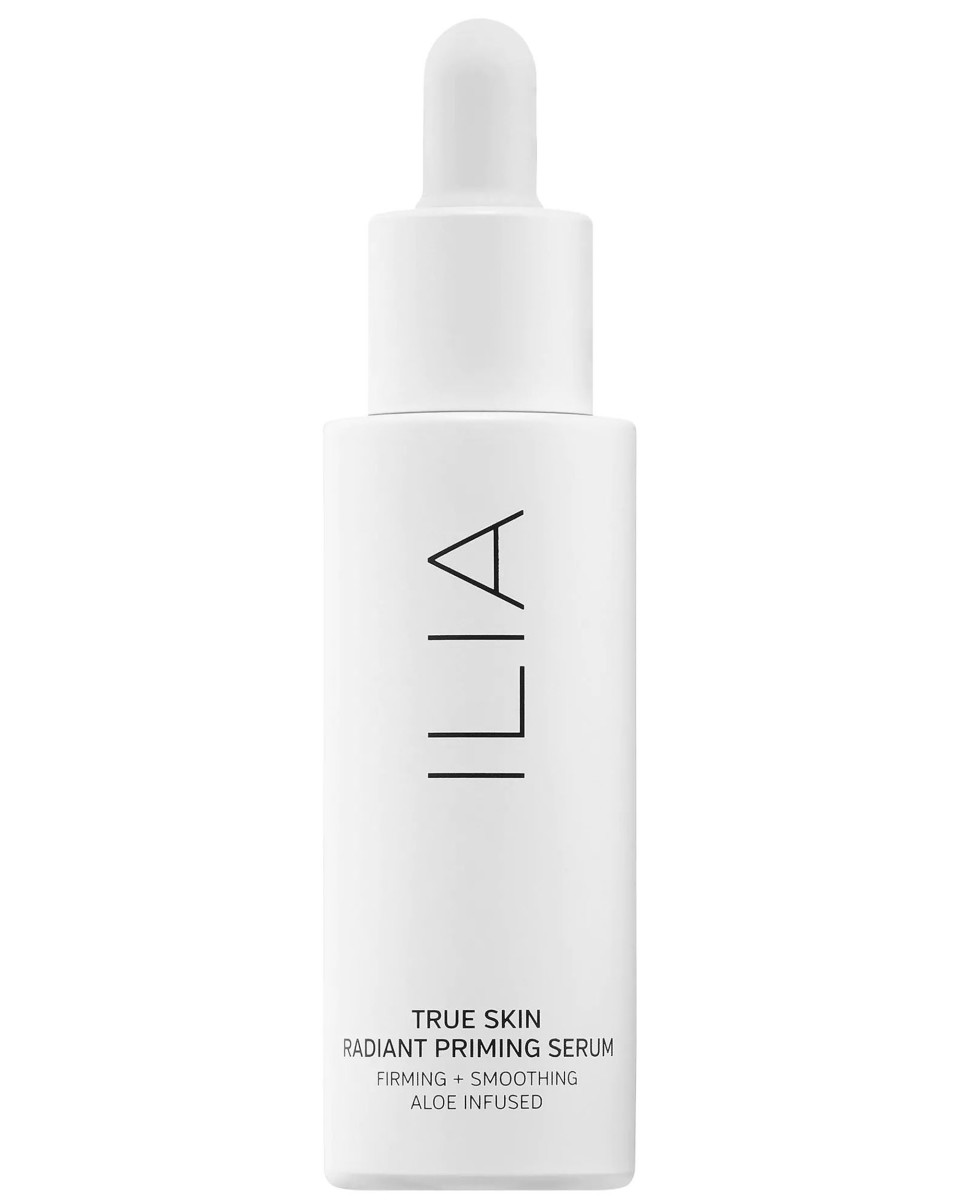
ILIA True Skin Radiant Priming Serum
ILIA True Skin Radiant Priming Serum
ILIA True Skin Radiant Priming Serum is a face serum that doubles as a silicone-free primer. Rather than water, its main ingredient is aloe; there’s also skin-conditioning gluconolactone, glycerin, coconut fatty acids and propandeiol in here. Not only does it hydrate, it also creates a smooth base for makeup application without the usual silicones. The texture is a light fluid; you just need to give it a couple minutes to set.
Shop Editor’s Picks
What’s your favourite face serum? Have you tried any of these?
In the fast-paced world of Korean skincare, few products last more than one season. If you fall in love with a mask or serum, you’d better stock up. By the time you run out, you won’t be able to get your mitts on it anymore.
Laneige Water Sleeping Mask is the exception to the rule. This cult mask has lasted YEARS and is still going strong. It’s like the grandmother of Korean masks.
What’s the secret behind its longevity? I’ve put it to the test to find out:
Key Ingredients In Laneige Water Sleeping Mask
Hyaluronic Acid To Hydrate Skin
If I wanted to be a stickler for detail (and I do 🙂 ), Laneige Water Sleeping Mask doesn’t contain pure Hyaluronic Acid. It uses Sodium Hyaluronate, a derivative that can better penetrate skin.
When skin has all the moisture it needs (and then some), it plumps up, so fine lines and wrinkles look smaller. It gets softer to the touch. And it takes on a dewy glow.
P.S. Sodium Hyaluronate isn’t the only moisture magnet in this mask. It also contains Butylene Glycol and Glycerin. They do the same thing, but on a smaller scale.
Beta-Glucan is a sugar found in the cell walls of yeast, some bacteria, and even seaweed. What is it doing in Laneige Water Sleeping Mask? It has 3 jobs:
Texture-enhancer: It makes the texture easy to spread and a pleasure to use.
Ascorbyl Glucoside is a Vitamin C derivative made with glucose (a sugar). When applied onto the skin, it breaks down into L-Ascorbic Acid, the pure form of this Vitamin.
L-Ascorbic Acid is an anti-aging superstar. Here’s what it does:
If it’s so powerful, why does Laneige Water Sleeping Mask use a derivative? L-Ascorbic Acid is harsh and unstable. It easily irritates skin and goes bad within 3 months.
Ascorbyl Glucoside gives you the benefits of L-Ascorbic Acid (ok, it’s a little less effective) without these side effects.
Laneige Water Sleeping Mask has a lightweight, silky texture that glides on like a dream. It looks a bit shiny at first, but it soon dries down to a matte finish. The best part? It doesn’t clog pores.
It has a clean scent that disappears pretty quickly, but if you have sensitive skin, beware. It may cause irritation in some people. Luckily, my skin can tolerate fragrance pretty well.
Just after application, my skin instantly feels softer and smoother. A sure sign this mask packs a very hydrating punch.
I go to sleep and let it work its magic on the skin. When I wake up in the morning, my whole face looks plumper and healthy.
I don’t use this mask every night. But if I have an important event the next day – a photoshoot for IG, a friend’s wedding or a networking lunch – I am sure to slather it on. It makes me look radiant and awake.
FYI, a sleeping mask is always the LAST step in your evening skincare routine. That’s right. You apply it AFTER moisturizer.
But you don’t have to use it as a sleeping mask. If you have oily skin, for example, you can use it as your moisturiser. Or you can use it in the morning, if you could do with the extra hydration during the day.
That’s the beauty of hydrating products. You can use them whenever your skin needs the extra perk-me-up.
One last thing: I know I always say I don’t like products in jars. But as long as you close the lid quickly, the antioxidants won’t go bad too soon. Plus, the mask comes with a spatula for a more hygienic application.
Get access to the “Pro Skincare Library” for exclusive skincare routine “cheat sheets” and tricks to help you navigate the beauty aisles jungle like a pro and immediately know what to pick off the shelves to achieve the gorgeous skin of your dreams – even when you’re drowning in an endless sea of skincare products.
Success! Now check your email to confirm your subscription and get access to the skin library.
What are the best Kate Somerville skincare products?
Hint: it’s not ExfoliKate. It works, but it’s too harsh and fragranced to make the cut here. So where you should invest your hard-earned cash, instead? Here are my top picks:
Best For Dry Skin: Kate Somerville Kx Active Concentrates Ceramides + Omega Serum ($98.00/£84.00)
Is your skin’s protective barrier damaged? Happens to everyone. Maybe you live somewhere cold and gloomy, where the harsh winters strip all the moisture out of your skin every winter. Maybe you just went overboard with exfoliation and your skin’s now a red, flaky mess. Or maybe you just have naturally dry skin that doesn’t produce enough sebum to keep your skin healthy and strong. Whatever the reason, Kate Sommerville Kx Active Concentrates Ceramides + Omega Serum can help. Ceramides and omega fatty acids are natural components of your skin’s protective barrier. They strengthen it when it’s whole and repair it when it’s broken down. Healthy barrier = healthy, soft and hydrated skin.
Best For Acne: Kate Somerville Anti Bac Clearing Lotion ($42.00)
Got acne? Kate Somerville Anti Bac Clearing Lotion contains 5% Benzoyl Peroxide, a powerful killer that destroys P. Acnes, the bacteria that’s making your life hell. The best part? Bacteria don’t grow resistant to it, so you can use it again and again and again. The catch? Benzoyl Peroxide is harsh on the skin. Use it as a spot treatment only. Bonus points: the lotion also has cholesterol and ceramides to soothe skin and repair its broken protective barrier.
Best For Antiaging: Kate Somerville RetAsphere Micro Peel Retinol Glycolic Treatment ($90.00)
Can you use Glycolic acid and retinol together? Kate Somerville RetAsphre Micro Peel Glycolic Treatment has both. But it can kind of cheats. This exfoliant has a huge dollop (10%) Glycolic acid to exfoliate your skin and get those pesky dead cells off your face. While it’s at it, it also hydrates skin. But it skimps on the retinol. There’s very little here. Don’t get me wrong, even a little retinol is better than nothing and can help you fight wrinkles. But you’re better off alternating this exfoliant with a separate retinol serum at night.
Best For Sensitive Skin: Kate Somerville Dry Skin Saver ($48.00/£41.00)
Formerly known as Eczema Therapy Cream, Kate Somerville Dry Skin Saver is loaded with soothing and moisturising ingredients that heal and nourish dry skin. Glycerin, petroleum and plant-derived fatty acids fix your skin’s protective barrier, keeping moisture in and germs out. Oats reduce redness, calm down irritations and relieve itch. The best part? You can use it anywhere: face, feet, elbows… any part that feels dry and uncomfortable.
Best For Eyes: Kate Somerville +Retinol Eye Cream ($85.00/£72.00)
I said it before and I’ll say it again: you do NOT need an eye cream. But what if you want to use one, anyway? I know some of you feel naked without one, or your under-eye area is a different skin type to the rest of your face. If that’s you, Kate Sommerville +Retinol Eye Cream is worth every penny. It has retinol, Granactive Retinoid and retinol-like bachukiol to fight crow’s feet, boost collagen and keep premature wrinkles at bay. Plus plenty of Hyaluronic Acid and natural oils to soften and moisturise skin. FYI, using retinoids on the eye area every night can be a bit too drying. Stick to every other day, instead.
What do you think are the best Kate Somerville skincare products? Share your picks in the comments below.
Take The Guesswork Out Of Skincare Shopping
Get access to the “Pro Skincare Library” for exclusive skincare routine “cheat sheets” and tricks to help you navigate the beauty aisles jungle like a pro and immediately know what to pick off the shelves to achieve the gorgeous skin of your dreams – even when you’re drowning in an endless sea of skincare products.
Success! Now check your email to confirm your subscription and get access to the skin library.
If you’re a loyal Sephora customer, rejoice—because you can score some major deals this month!
From now through August 27th, Rouge and VIB members get exclusive access to the Summer Bonus Event. Nearly everything in the store is on sale, with savings up to 20 percent off!
It’s easy to say, “Apply your sunscreen generously and top it up every couple of hours.” How the heck do you do that when your skin is covered with its own grease?!
Oily skin + sunscreen = tricky relationship.
Go down the mineral sunscreen route and you’re left with a white, oily cast that makes you look like Caspar The Ghost after a workout session. Opt for chemical sunscreen and the high alcohol content will dry out your skin worse than the Sahara.
What’s a girl to do?! It’s not like you can skip sunscreen. Unless you’d be happy to see wrinkles creep up on your face anytime soon…
Enter Bioderma Photoderm AKN Mat SPF 30. It uses the next generation of chemical Uv filters + absorbing agents to keep you safe from UV harm and excess shine. Bonus point, it’s alcohol-free.
Key Ingredients In Bioderma Photoderm AKN Mat SPF 30
Chemical UV Filters For Lightweight & Safe Sun Protection
There’s this misconception that chemical filters are more dangerous than mineral filters. That’s not true. So how did this myth originate?
Chemical UV filters, like avobenzone, are more likely to cause irritations in sensitive skin. But if your skin isn’t sensitive, and chemical UV filters don’t bother it, why give up on a good thing?
These filters have a lighter texture that leaves no oil slick and no white cast. Take it from a fan of mineral sunscreen. If your skin’s oily, chemical is the way to go.
This duo soaks up excess oil from your skin, leaving it matte for a few hours. Granted, the effect is only temporary. But hey, you need to reapply sunscreen anyway, right?
Bioderma Photoderm AKN Mat SPF 30 has a lightweight texture that’s easy to pile on without turning your face into a greasy mess. Seriously, I don’t even feel I have it on!
The texture dries down to a matte finish that helps keep shine at bay for a few hours. How long depends on how shiny your skin is. If your skin’s super oily, you may need the help of a mattifying power. On my slightly oily t-zone, this sunscreen’s all I need.
Summer’s in full swing in London, with some days reaching 30ºC. Feels like being back in Italy sometimes! It’s the perfect weather to test how well the sunscreen fares under intense heat.
I’m happy to say it lives up to its promises. I skip moisturizer and foundation, and use just sunscreen as my base. It does a great job at keeping my skin safe from UV harm. I didn’t get any sunburns, bad tans (FYI, all natural tans are bad tans) or anything like that.
It’s waterproof, so if you sweat a lot, this will keep you safe for around 40 minutes. But you do have to reapply it often to get adequate sun protection.
Even the best sunscreens fail at their job if you apply a thin layer in the morning and don’t touch-up during the day. The tube’s small enough to snugly fit into your bag, so you have no excuses ladies. Reapply your sunscreen!
Get access to the “Pro Skincare Library” for exclusive skincare routine “cheat sheets” and tricks to help you navigate the beauty aisles jungle like a pro and immediately know what to pick off the shelves to achieve the gorgeous skin of your dreams – even when you’re drowning in an endless sea of skincare products.
Success! Now check your email to confirm your subscription and get access to the skin library.
Wondering whether you should try an AHA, a BHA—or both?
These two types of acid exfoliants are popping up in more products than ever before, and often together!
So you might be confused about which one(s) would be best for your skin, what results you can expect, and if it’s a good idea to combine them.
If so, this tutorial is for you! Below, we will cover:
What are AHAs vs BHAs
How they’re similar, and how they’re different
How to choose the right one for your skin (and whether you can use both)
My AHA and BHA product suggestions
What is an AHA?
Photo: @youthtothepeople
AHA stands for alpha hydroxy acid—a type of acid that is derived from sugarcane, milk or fruit.
As chemical exfoliators, AHAs work by peeling away the dead skin cells on the skin surface, revealing the fresh new skin cells underneath.
But how exactly do they do that? According to a 1999 study, AHAs exfoliate by reducing the concentration of calcium ions within the epidermis and the “glue” between skin cells, which allows them to be sloughed off. But more recent studies (see here and here) have found they do so by causing a type of cell death known as apoptosis. More on this in a second!
Here are the different types of AHAs you’ll see in skincare products:
Glycolic acid: The most common AHA, derived from sugarcane. It is also the strongest, due to its small molecule size, but that makes it the most irritating, too.
Lactic acid: The second most common AHA, derived from milk. It’s a gentler alternative to glycolic acid, and can be appropriate for sensitive skin.
Mandelic acid: A mild AHA derived from bitter almonds. As it is weaker than lactic acid, it’s usually combined with other acids. Notably, Dr. Loren Pickart considers mandelic acid to be a neurotoxin (see study)!
Malic acid: A mild AHA derived from apples. Like mandelic acid, it won’t do enough on its own, so you’ll typically see it in combination with stronger AHAs.
Tartaric acid: An AHA derived from grapes. Instead of acting as an exfoliant, it is more often used to stabilize other acids’ pH levels.
Citric acid: An AHA derived from citrus fruits. It is similar to tartaric acid in that it regulates pH. It is also used as a preservative.
What is a BHA?
Photo: @jarofbeaute
BHA stands for beta hydroxy acid, a type of acid found in willow tree bark, wintergreen leaves or sweet birch bark.
BHAs are chemical exfoliators that soften and dissolve keratin, a protein that forms part of the skin structure. This helps to loosen dead skin cells, so they’re easily sloughed off.
BHAs also work inside the pores, where they not only dissolve keratin plugs, but also help to regulate keratinization (cell turnover and shedding).
For example, a condition like acne is associated with hyperkeratinization—meaning the body is shedding skin cells too fast. BHAs slow down this process, so the cells function longer before they flake off (meaning they’re less likely to clog pores).
The main BHA exfoliants you’ll see in skincare products are:
Salicylic acid: The most common BHA, and also the strongest BHA. However, it is not as irritating as glycolic acid (the strongest AHA) because it has a large molecule size, as well as anti-inflammatory properties.
Betaine salicylate: A BHA derived from sugar beets. It is a gentler alternative to salicylic acid, and according to a study by the manufacturer, is equally effective. (Four percent betaine salicylate is said to be equivalent to two percent salicylic acid.)
Salix alba or willow bark extract: A natural BHA extracted from plants. Although the salicin content converts into salicylic acid, it is much weaker (so it won’t give you comparable results for exfoliating or treating acne).
How AHA and BHA are Similar
Photo: @glowasyougo
You may have heard that AHAs are best for exfoliating, brightening and anti-aging, while BHAs are only suitable for people with acne.
Not true! These are all the benefits that BOTH AHAs and BHAs have in common:
Exfoliating and smoothing: Although they have different mechanisms, AHAs and BHAs are both effective at removing dead skin cell build-up and smoothing the skin.
Brightening: Both AHAs and BHAs reduce the thickness of the stratum corneum (the top layer of skin consisting of dead skin cells). That means skin will reflect more light and look brighter.
Fading pigmentation: Since they both encourage the shedding of old, discoloured dead skin cells, AHAs and BHAs can help fade dark marks and even out skin tone.
Firming and reducing wrinkles: Both AHAs and BHAs have been shown to increase the density of collagen in the dermis, which means they could help reduce fine lines and wrinkles and improve skin firmness over time.
Hydrating: AHAs and BHAs are both humectants—ingredients that attract water and help your skin retain moisture.
Clearing and preventing mild acne: AHAs and BHAs both help with acne by exfoliating the dead skin that can lead to clogged pores.
How AHA and BHA are Different
Photo: @paulaschoice
There are, however, some important differences between AHAs and BHAs:
Solubility: AHAs are water-soluble, so they dissolve in water. BHAs are oil-soluble, so they dissolve in oils (meaning they can pass through sebum and sebaceous follicles).
Area of action: AHAs work on the top layers of skin, but BHAs work on the skin surface AND inside the pores.
Concentration: According to Dr. Albert Kligman, AHAs need to be used in concentrations of at least eight percent in order to be effective, whereas BHAs only need a concentration of around two percent. (And nowadays, BHAs can be found in doses as low as 0.5 percent.)
Decreasing oil production: AHAs don’t have an effect on sebum. BHAs can reduce excess oil by slowing down sebum production.
Clearing and preventing acne, blackheads and clogged pores: While both acids can help with mild acne (by sloughing off dead skin cells), BHAs also work on a deeper level to clear trapped sebum in the pores and prevent new clogs from forming. They also slow down oil secretion and loosen blackheads, making them easier to extract.
“Shrinking” pores: Technically, you can’t change the size of your pores—but they can look bigger when they are filled with debris, which makes them stretch out. While AHAs don’t affect pores, BHAs can help them look smaller by keeping them clean.
Irritation: Any acid can be drying and irritating if you use it at the wrong concentration or pH, or if you apply it too frequently for your skin. However, AHAs are more often associated with irritation, redness and inflammation. BHAs tend to be less irritating, thanks to their larger molecule sizes. They also have anti-inflammatory properties.
Photosensitivity: AHAs increase your skin’s sensitivity to the sun, making it more vulnerable to sun damage and premature aging. While sunscreen is essential always, BHAs actually have some photoprotective effects.
Skin wounding: AHAs are skin-wounding agents because they encourage cells to self-destruct through apoptosis (programmed cell death). BHAs are non-wounding agents, as they simply loosen the bonds between skin cells (a more physiological process). Is apoptosis or cell death something to worry about? Maybe, if you’re using strong AHAs on a regular basis. Apoptosis is also induced by toxins such as estrogen, unsaturated fatty acids and radiation, and this paper describes it as “a cellular endpoint of the stress response.”
AHA, BHA or Both?
Photo: @shahdbatal
Now that you know the differences between AHAs and BHAs, what does that mean for your skin concerns?
Here are my thoughts:
If You Have Acne:
BHAs are the way to go. Salicylic acid is proven to reduce the number and severity of acne lesions, and is superior to benzoyl peroxide. Look for a concentration of two percent salicylic acid or its equivalent, four percent betaine salicylate. Keep in mind that you may experience initial purging (which is a good thing!).
If You Have Oily Skin:
Only BHAs will reduce oil production. It may take some experimenting to find the best dose for your skin—between 0.5 to two percent salicylic acid, or one to four percent betaine salicylate.
If You Have Dry or Sensitive Skin:
Lactic acid is the best AHA for these concerns, as it’s one of the gentlest and most hydrating acids. Look for a concentration between five to eight percent to start, moving up as high as 10 percent if tolerated. However, a mild BHA would be an equally suitable (if not better) option, such as 0.5 percent salicylic acid or one percent betaine salicylate.
If You Have Pigmentation:
Both AHAs and BHAs will help, but I think BHAs are your best bet—especially if you have darker skin. Unlike AHAs, they won’t trigger post-inflammatory hyperpigmentation. BHAs also have some photoprotective properties, so you’re less at risk of creating new pigment. Go for a higher concentration if you can, such as two percent salicylic acid or four percent betaine salicylate. For best results, use it in conjunction with niacinamide (see this tutorial for layering tips!).
If You Have Wrinkles:
Glycolic acid, lactic acid and salicylic acid have all been shown to produce changes in dermal thickness and the depth and number of fine lines and wrinkles. For best results, you’ll want around eight percent (or more) glycolic or lactic acid, or one to two percent salicylic acid. Again, just keep in mind that AHAs can make your skin more inflamed and vulnerable to sun damage, which can exacerbate signs of aging.
If You Want to Combine Acids:
And what about AHAs and BHAs together? Is there any benefit to using both?
Not really! “Salicylic acid does everything AHAs do and more, and does it more effectively,” says Dr. Kligman. So if you have a good BHA, you don’t need an AHA as well.
Still want to incorporate both in your routine? Try one of these options:
Use a combo AHA-BHA treatment with a mild blend of acids. (Product suggestions below!)
Apply your AHA and BHA at different times of day. I suggest using your BHA in the morning (since it’s not photosensitizing) and your AHA at night. Or, you could apply them on alternate nights.
Apply your BHA on your oilier areas (like in your T-zone), and your AHA everywhere else. That way, you’re applying both at the same time, but not doubling up on acid.
Layer one acid on top of the other—but this does increase your risk of irritation and dryness! Since AHAs and BHAs are close in pH (between 3.0 and 4.0), you wouldn’t need to wait in between; just apply the product with the thinnest texture and/or lowest pH first.
The Best AHA and BHA Products
There are dozens of AHA and BHA products on the market. What should you look for?
I suggest avoiding any formulas high in fragrance and witch hazel, which can be sensitizing. Silicones aren’t suitable for acids, as they leave a film on the skin (and can exacerbate the acne you may be trying to clear!). Alcohol is sometimes used as a penetration enhancer, but can be drying—I’d avoid it in high quantities if you are dry or sensitive.
Here are some of my top acid picks!
The Ordinary Lactic Acid 5% + HA
The Ordinary Lactic Acid 5% + HA
The Ordinary Lactic Acid 5% + HA is one of the mildest formulas on the market, ideal for someone new to acids. It has five percent lactic acid along with hyaluronic acid, glycerin and propanediol for extra moisture. The brand also has a 10% version. See my full review here.
Lixirskin Night Switch PHA/AHA 10%
Lixirskin Night Switch PHA/AHA 10%
Lixirskin Night Switch PHA/AHA 10% is a 10 percent blend of lactic acid and two PHAs (polyhydroxy acids): lactobionic acid and phytic acid. PHAs are second-generation AHAs that work similarly, but they have larger molecule sizes, which makes them gentler.
ClarityRx Brighten It 10% Lactic Acid Solution
ClarityRx Brighten It 10% Lactic Acid Solution
ClarityRx Brighten It 10% Lactic Acid Solution is a water-based exfoliator that contains 10 percent lactic acid in plain water. With only two ingredients, it is ideal for anyone wanting to avoid penetration enhancers, fragrance, etc.
COSRX AHA 7 Whitehead Power Liquid
COSRX AHA 7 Whitehead Power Liquid
COSRX AHA 7 Whitehead Power Liquid is a K-beauty exfoliant containing seven percent glycolic acid. It’s also got niacinamide for extra brightening, and panthenol and hyaluronic acid to moisturize your skin.
ClarityRx Restore It 7.5% Glycolic Exfoliator
ClarityRx Restore It 7.5% Glycolic Exfoliator
ClarityRx Restore It 7.5% Glycolic Exfoliator is a solution of 7.5 percent glycolic acid in water—that’s it! This simple liquid exfoliant gets the job done without exposing skin to unnecessary irritants.
Malin+Goetz Resurfacing Glycolic Pads
Malin+Goetz Resurfacing Glycolic Pads
Malin+Goetz Resurfacing Glycolic Pads are another option if you’re seeking a minimalistic formulation. These pads are soaked in a solution of water, 10 percent glycolic acid and ammonium hydroxide (a pH adjuster).
Juice Beauty Blemish Clearing Serum
Juice Beauty Blemish Clearing Serum
Juice Beauty Blemish Clearing Serum is one of the few low-dose BHAs on the market. It features 0.75 percent salicylic acid in a gel-like serum with aloe vera and other botanical ingredients. See it in my skincare routine here.
COSRX BHA Blackhead Power Liquid
COSRX BHA Blackhead Power Liquid
COSRX BHA Blackhead Power Liquid is my number one acid recommendation—a four percent betaine salicylate solution that clears breakouts and blackheads while brightening and smoothing your skin. See my full review here.
Paula’s Choice Skin Perfecting 2% BHA Liquid Exfoliant is a strong BHA that I’d recommend for more stubborn oily and acne-prone skin. It has two percent salicylic acid and is the brand’s number one bestseller worldwide.
COSRX Natural BHA Skin Returning A-Sol
COSRX Natural BHA Skin Returning A-Sol
COSRX Natural BHA Skin Returning A-Sol is a gentle blend of AHAs and BHAs, with lactic acid, glycolic acid and betaine salicylate. It’s also comprised of 69.8 percent bee propolis, which has soothing and hydrating benefits.
Tarte Knockout Tingling Treatment
Tarte Knockout Tingling Treatment
Tarte Knockout Tingling Treatment is the closest dupe for the cult favourite Lotion P50 (and it’s also easier to find!). This is a liquid toner with lactic, malic, phytic and salicylic acids, along with niacinamide for brightening.
Omorovicza Acid Fix
Omorovicza Acid Fix
Omorovicza Acid Fix gives you glycolic, salicylic and lactic acids in a potent but non-irritating serum. That’s because it’s also packed with Hungarian thermal water, glycerin, propanediol and hyaluronic acid.
Conclusion
Now you know the differences between AHAs and BHAs!
As you may have guessed, I side with Dr. Kligman—I think that BHAs are the more beneficial and versatile acid, no matter what your “skin type.” BHAs do everything AHAs do, and more!
So I hope you’ll consider trying out a BHA (if you haven’t already). You may just find your skin is less irritated, less sun-sensitive and less congested!
But no matter which acid you choose, the key is finding one that’s the right strength for your skin, and not overdoing it. I believe you’ll get better results from using a milder acid on a regular basis—as often as daily—instead of shocking your skin once a week with a strong, irritating peel.
How has your skin responded to AHAs vs BHAs? Let me know!
Shop Editor’s Picks
Do you prefer AHAs or BHAs? What’s your favourite acid treatment?






 Dawn Siler