We are so lucky to learn from Dr. Davis today! I for one have never heard of the PCA skin pigment bar or the Cosmion acne wash, so thank you for those pearls right there. Read on for her skincare tips and regimen! DiAnne Davis Name: DiAnne Davis @drdiannedavis Practice Setting & Job Title: Cosmetic […] Read more…
If you had told me I’d be exfoliating my face with a giant Q-tip one day, I’d had told you you were crazy. Who does that?!
Me. Ahem…
I spent the last couple of weeks testing out Dr Oracle A-Thera Peeling Stick, giant Q-tips infused with an exfoliating acid solution.
It was totally weird. I kinda liked it. I won’t buy it again. Here’s why:
Key Ingredients In Dr Oracle A-Thera Peeling Stick
Glycolic & Lactic Acid To Exfoliate Skin
Dr Oracle A-Thera Peeling Stick has both Lactic Acid and Glycolic Acid, two members of the Alpha Hydroxy Acids (AHAs) family.
They do the same thing. Two, actually:
They exfoliate skin: These acids dissolve the glue that holds skin cells together, so they can slough off and reveal the brighter and smoother skin hiding underneath.
They hydrate skin: They attract water from the air into the skin and increase its hyaluronic acid levels, helping to keeping it hydrated for longer.
The main difference between the two? Glycolic acid is a smaller molecule.
Size matters. Its small size means Glycolic Acid can better penetrate and exfoliate skin. It also makes it more irritating. If you have sensitive skin, these sticks aren’t for you.
P.S. Glycolic acid can irritate skin when you first start using it. Here, it’s paired with a big dollop of alcohol. You know where I’m going with this. These sticks sting your skin. Use them in moderation!
Glycolic acid and Lactic acid are wonderful exfoliants, but they only remove dead skin cells from the surface of your skin.
Salicylic acid, a member of the Beta Hydroxy Acid (BHA family) goes a step further. It also penetrates inside the pores to remove all the crap that’s clogging them up and giving you blackheads and pimples.
Get rid of it and the acne disappears. Keep using it and it won’t come back. Simple.
The catch? I’m not sure there’s enough salicylic acid in Dr Oracle A-Thera Peeling Stick to exfoliate much. If you want to get rid of acne, these sticks wouldn’t be my first choice.
Dr Oracle A-Thera Peeling Stick looks like a giant Q-tip dripping wet with lotion. It’s easy to use: you massage it all over your skin (or only on the areas that need exfoliation – whatever your skin needs).
I’ve been exfoliating with acids for years. I even get peels regularly. You could say my skin has built tolerance to them and doesn’t feel them on the skin anymore.
I’m starting to understand why Korean skincare isn’t fond of exfoliating acids. Most of the SoKo chemical exfoliants I’ve tried sting like crazy. I blame it on all the alcohol they pour into them…
Is it worth putting up with it? Imho no. But only because there are gentler options out there. If you’re curious to try this, it does the exfoliating job fine.
The day after I use it, my skin looks brighter and softer. A clear sign some of the dead skin cells have already fallen off my skin.
Does it help with acne? Yes and no. The concentration of salicylic acid is so low, these sticks only prevent rather than treat acne (they work by removing dead skin cells before they have the chance to fall into your pores and clog them).
That’s not why I won’t be buying these again, by the way. My skin can take the sting and doesn’t have acne. It’s my conscience that has a problem with them.
As I get older, I become more conscious of my impact on this planet. I try my best to recycle as much as possible and minimise waste.
These giant Q-tips create a lot of waste. Sure, I know that most exfoliants come in plastic bottles – but those bottles will last me for months.
These sticks are one use only. Each of them is housed inside a plastic pouch. Even if they could be recycled, it’s still too much packaging for an exfoliant.
You may feel differently about this and that’s ok. In my teens, I’d probably have loved something like this. Now I prefer less wasteful (and stinging!) options.
Available at: 10 sticks, $22.00/5 sticks, £6.56 at Soko Glam and Yes Style
SHOP THE POST
Have you tried Dr Oracle A-Thera Peeling Stick? Share your thoughts in the comments below.
Get access to the “Pro Skincare Library” for exclusive skincare routine “cheat sheets” and tricks to help you navigate the beauty aisles jungle like a pro and immediately know what to pick off the shelves to achieve the gorgeous skin of your dreams – even when you’re drowning in an endless sea of skincare products.
Success! Now check your email to confirm your subscription and get access to the skin library.
When you think about it, Kiehl’s Midnight Recovery Botanical Cleansing Oil is pretty darn clever; a gentle formula that not only removes make-up and more but thanks to its ingredient line up, it may just be what those who sometimes struggle to fall, soundly asleep at night have been seeking. In essence it’s pretty smart and dare I say almost obvious.
Like it or not, most of us are driven by scent and as our nose is slap, bang, centre on our faces, why not utilise this sense for both better skin and sleep? The great thing about Kiehl’s Midnight Recovery Botanical Cleansing Oil is that it doesn’t technically require you to add an additional step into your routine; rather it is simply making the most of what I would deem a essential part of my skincare set up and all but working harder for my dollar, by adding the element of aromatherapy into the mix. It’s couldn’t be simpler and if you do struggle to nod off, really what do you have to lose?
Yes I am that annoying person that never goes to bed with make-up on; I could be falling down drunk, so tired that my eyes are shut, or even loaded with the flu and I’ll still scuttle to the bathroom and reach for my cleanser. However some nights I do find my cleansing ritual can be more of a chore rather than a small pleasure and for that I am grateful for skin oils on the whole. For a moment let’s forget what makes Kiehl’s Midnight Recovery Botanical Cleansing Oil so special and concentrate on the basics – aka does it effectively rid my skin of impurities? I’m glad to report that this silken, luxurious and all together soft oil is a joy to use: it glides effortlessly over the skin gently removing every trace of make-up, dirt, grime and all that is in-between, leaves behind no trace of residue and is somewhat moisturising too.
As you may have imagined, Kiehl’s Midnight Recovery Botanical Cleansing Oil does have an impressive ingredient line up with an aromatic blend of pure botanical oils such as Squalane, a planted-derived lipid and natural emollient, that locks moisture into your skin which in turn may help to prevent fine lines and general dryness. It also contains evening primrose oil, which is naturally rich in Omega-6 Fatty Acids to help maintain skin health; and of course lavender essential oil, which is what helps to create the sleepy fragrance. The other great thing about lavender in terms of being beneficial to the skin, is that it is a natural anti-inflammatory, making it wonderful at soothing and healing skin that’s irritated or blemish prone.
Kiehl’s Midnight Recovery Botanical Cleansing Oil may not solve all your sleep related dilemmas but it will help to create a great and altogether relaxing evening skin routine, as well as deeply cleansing and comforting your skin. For that reason alone, it deserves to be on your bathroom shelf!
I’m a huge fan. Chemical peels are the quickest way to get a glowier complexion and erase the pesky wrinkles and dark spots that give your real age away.
But they’re not without side effects. A chemical peel – even when done right – can leave your skin irritated, red and peeling for a few days afterwards.
Forget your usual skincare routine. Post peel skin is too delicate for retinol & co. So, what are you supposed to do instead?
I’ve got you covered. Here’s how to take care of your skin after a chemical peel to speed up the natural healing process without compromising its results:
What The Heck Is A Chemical Peel & Why Should You Get One?
A chemical peel is a skincare treatment that uses acid solutions – such as AHAs (alpha hydroxy acid), BHAs (beta hydroxy acid), and TCA (trichloroacetic acid) – to remove the damaged top layers of dead skin cells.
Once they’re off your skin, you uncover the newer, brighter cells that were hiding underneath. Put simply, you’re helping your skin exfoliate faster.
Here’s how a chemical peels helps skin:
It improves your skin’s texture, making it softer and smoother
It helps reduce the appearance of fine lines and wrinkles
It fades away dark spots and hyperpigmentation
It helps minimise acne scars and other imperfections
It brightens your complexion and give it a healthy glow
It helps treat acne and decongest pores (BHA peels)
FYI, peels come in three level of intensity: low, medium and high. The higher the intensity, the worse the side effects.
Most people never need high level chemical peels. The lower intensity peels are more than enough to help fade away the signs of aging and smaller imperfections.
Just don’t overdo them. In your 20s and 30s, two or three peels a year is all you need. Once you reach the big 4-0, you can go a bit more often (six/eight times a year).
P.S. Some chemical peels use retinol instead of acids. Everything in this post applies to this type of peel, too.
How To Take Care Of Your Skin After A Chemical Peel
So, you’ve decided it’s time to have your first chemical peel? Here’s all you need to know about chemical peel after care:
1. Wear Sunscreen Religiously
I know you’re already doing this, RIGHT? If not, this is the time to get serious about sun protection.
Here’s why: dead skin cells are there for a reason. They help protect your skin from its enemies, including UV rays. Now the peel has melted them away, your skin is MORE prone to sun damage.
You didn’t just pay a small fortune for a peel to see your dark spots come back with a vengeance within a few months, right? Slather on that sunscreen first thing in the morning and reapply it as necessary.
Even if it’s cloudy. Or rainy. Or you’re staying inside. Or just driving your car and running errands. UV rays are sneaky. They can penetrate through clouds and windows and even be reflected on snow. Don’t risk it!
P.S. I usually recommend a spray sunscreen for touchups during the day. Not in this case. A lot of spray sunscreens are loaded with alcohol – that’s too irritating for you now. If you really can’t reapply your morning sunscreen, use a powder with SPF and dust it on generously.
P.P.S. While you’re at it, try to spend as little time as possible in the sun. You don’t have to become a recluse. But this ain’t the right time to go on a beach holiday. Know what I’m saying?
Best Picks:
EltaMD UV Pure Broad-Spectrum SPF 47 ($25.00): available at Dermstore and Walmart
Shiseido Ultimate Sun Protection SPF 50 Sunscreen + WetForce For Sensitive Skin & Children ($42.00):available at Nordstrom and Ulta
Skinceuticals Physical Fusion UV Defense SPF 50 ($34.00): available at Blue Mercury and Dermstore
Forget about retinol, vitamin C or exfoliation (your skin’s got too much of that already!). After a chemical peel, keep your skincare routine as simple and gentle as possible. Here’s what you need:
Gentle cleanser: In the morning, wash your face with a gentle, low pH foaming or milk cleanser. They remove all traces of dirt without drying out your skin. In the evening, you can use the same cleanser or opt for an oil-based makeup remover. Just make sure it doesn’t contain any essential oils or other irritants.
Moisturizer: Your skin is drier now, so make sure you moisturize it well morning and evening. I usually turn to French skincare brands for this step. Their moisturisers are very basic but sooooo soothing! Just what the doctor ordered.
Sunscreen: This is the most important part of your after peel skincare routine, which is why it deserved its own section. Don’t skip it!
Antioxidant serum: I usually skip this step, but if you want to maximize your anti aging routine, you can add an antioxidant serum to the mix. Antioxidants destroy free radicals before they have a chance to give you wrinkles and dark spots. Just stay away from anything with L-Ascorbic Acid, retinol or other powerful antioxidants that can sting your skin. If it tingled before the peel, don’t use it after!
That’s it! You don’t really need anything else during the recovery period. How long does that last?
It depends on the intensity of the peel you had. I tend to go for low and medium peels, so I usually follow this minimalistic skincare routine for a week afterwards.
I can’t stress this enough. Your skin is super sensitive now. You have to treat it with kid gloves and avoid anything that could even remotely irritate it, including:
Clarisonic, Foreo and other sonic cleansers
Essential oils
Exfoliating acids and scrubs
Fragrance
L-Ascorbic Acid
Microdermabrasion/microneedling at-home devices
Vitamin A (retinol, tretinoin etc)
Vigorous rubbing (pat your skincare on, instead)
Want you check your skincare products don’t contain any irritants? Click on the image below to subscribe to my newsletter and receive the “Irritating Ingredients Cheat Sheet” with the most irritating ingredients lurking in your cosmetics:
✕
What’s Lurking In Your Cosmetics?
Sign up to receive a list of the most irritating ingredients lurking in your beauty products.
Success! Now check your email to confirm your subscription and receive the list of the most irritating ingredients found in cosmetics.
I get it. Seeing those flaky bits of skin is annoying. How can you leave the house when you look like your skin is coming off?!
Newsflash: your skin IS coming off. That’s why you had the peel in the first place, remember?
The worst thing you can do right now is pick off those flakes. Your skin is gonna shed on its own. Forcing the process will only result in unwanted scarring and dark spots.
No exfoliation either. Your skin is already exfoliating on its own. Using your Clarisonic, a glycolic acid toner or even a washcloth to speed up the process only irritates skin and slows down the recovery process.
After a chemical peel, your skin is red, flaky and easily irritated. Stick to a basic, gentle skincare routine that speeds up the healing process and pile on your sunscreen. Whatever you do, don’t pick at your skin!
How do you take care of your skin after a chemical peel? Share your post peel skincare routine in the comments below.
Take The Guesswork Out Of Skincare Shopping
Get access to the “Pro Skincare Library” for exclusive skincare routine “cheat sheets” and tricks to help you navigate the beauty aisles jungle like a pro and immediately know what to pick off the shelves to achieve the gorgeous skin of your dreams – even when you’re drowning in an endless sea of skincare products.
Success! Now check your email to confirm your subscription and get access to the skin library.
I’ve been successfully infusing honey with all sorts of herbs, powders, and botanicals for ages now, so that may be why this thought popped into existence all by itself earlier this year: whether it was at all possible to infuse honey with essential oils.
Logic, chemistry, and everything else says no because honey is water soluble and essential oils are, well, oils. But sometimes, I get a burning desire to test something anyway – just in case science and the rest of the world might have missed something.
Here’s another video on the science behind makeup products! After my video on why foundation clumps, the focus this time is on make-up setting sprays. Some of the topics I cover in this video: The difference between the types of makeup setting spray How makeup setting sprays work How to tell which type of setting…
Ok, preservatives are a necessary evil. If you don’t want fuzzy little bacteria to grow in your fave moisturizer or precious serum, you need to use some sort of poison (for them, not us) to kill them off.
Surely, there must be natural preservatives out there that are gentle for us but harsh for bacteria and fungi. Or not?
Here’s the list of the most common natural preservatives used in your beauty products (and what’s wrong with them):
Most common types of natural preservatives
Good news: some plant extracts have antimicrobial and antifungal activity, so they can be used as preservatives.
Bad news: they’re a lot weaker than traditional preservatives.
Let’s take a look at the most common ones:
Antioxidants
Did you know that the fats and oils in your cosmetics can oxidize (i.e. become rancid) when exposed to oxygen (by the way, oxygen is in water, too)?
Antioxidants, including Vitamin E and rosemary extract, slow down this oxidation process so that your products will last longer.
But, antioxidants can’t kill bacteria and fungi. They’ll keep your creams fresh and good as long as no bacteria find their way inside. But if one does, they can’t stop it from growing and giving you an infection.
Essential oils, including tea tree oil and neem oil, have antimicrobial properties, so they can kill bacteria.
The catch? They don’t kill a wide range of bacteria. You’ll be protected from some fuzzy creatures and completely exposed to the dangers of others.
There’s worse: to kill those few bacteria they can actually deal with, you need to use a big dollop of essential oils. In such high concentrations, they can seriously irritate your skin!
Grapefruit seed extract
This one is controversial. The seeds and pulp of the grapefruit undergo a synthetic process, so the extract that comes out of them isn’t strictly natural. But, anything undergoes a synthetic process these days, so if you’re picky, you won’t be able to use anything. Just saying…
Grapefruit seed extract has some antimicrobial activity. So yes, it can kill bacteria.
The bad news? It’s weak. You can’t use it alone. It needs the help of other preservatives to do the job well.
Are natural preservatives effective?
Don’t get me wrong. I’m not saying natural preservatives are 100% useless. They work, but not as well as synthetic preservatives.
Natural preservatives have their own problems, too: you need to use a higher amount to kill a smaller range of bacteria. And even so, your natural products will spoil a lot sooner than your synthetic products. That’s why organic creams and toners have such shorter shelf lives!
Tips for naturally preserved cosmetics
NOTE: The tips below apply to ALL beauty products. But, you must follow them even more religiously for natural, weakly-preserved products.
If you wanna go ahead and use natural beauty products, here are a few things to keep in mind:
Alwaysstore your cosmetics away from light and heat: they make your products go bad faster.
If you want to a cream housed in a jar, be quick and use a spatula: don’t use your fingers – they may contaminate the cream with bacteria.
Do you go out of your way to buy products with natural preservatives despite their shorter shelf life or are you ok with using synthetic ones? Leave a comment below and let me know.
Take The Guesswork Out Of Skincare Shopping
Get access to the “Pro Skincare Library” for exclusive skincare routine “cheat sheets” and tricks to help you navigate the beauty aisles jungle like a pro and immediately know what to pick off the shelves to achieve the gorgeous skin of your dreams – even when you’re drowning in an endless sea of skincare products.
Success! Now check your email to confirm your subscription and get access to the skin library.
Wouldn’t it be great if you get rid of wrinkles while washing your face?
Anti-aging cleansers promise just that. But I don’t buy that crap. Here’s why:
1. Antioxidants
I’m all for using antioxidants in your skincare routine. Green tea, vitamin C & co are anti-aging superstars that fight wrinkles on three fronts: they destroy free radicals, boost collagen production and reduce inflammation.
But put in a cleanser and they come useless. It’s not their fault. They just end up down the drain when you rinse the cleanser off. How can they benefit skin if they aren’t anywhere near it anymore?
Not all anti-aging cleansers use antioxidants. Some prefer to take an exfoliating approach.
Exfoliation happens when you remove dead skin cells off the surface of the skin. Acids like glycolic and salicylic are great candidates for the job. They dissolve the glue that holds skin cells together, so they can slough off.
Plus, each of them has a extra superpower: glycolic acid boosts collagen while salicylic acid keeps the pores clean and breakouts at bay.
But they do have something in common with antioxidants: these exfoliating acids work much better and faster when they are left on the skin for hours, not rinsed down the drain after a few minutes.
Sure, if you massage that cleanser on your skin for a minute or two, you’ll get a little bit of exfoliation. But why would you settle for less?
So, what works at preventing and getting rid of wrinkles? Click on the image below to subscribe to my newsletter and receive my free ebook “5 Best Anti-Aging Tips To Keep Skin Young”:
✕
Best Anti-Aging Tips!
Sign up to receive my short ebook, “5 Best Anti-Aging Tips To Keep Your Skin Young”.
Success! Now check your email to confirm your subscription and receive the “5 Best Anti-Aging Tips To Keep Your Skin Young”
The Bottom Line
Don’t waste your money on fancy anti-aging cleansers. They won’t get rid of your wrinkles or prevent them.
Do you use anti-aging cleansers?
Take The Guesswork Out Of Skincare Shopping
Get access to the “Pro Skincare Library” for exclusive skincare routine “cheat sheets” and tricks to help you navigate the beauty aisles jungle like a pro and immediately know what to pick off the shelves to achieve the gorgeous skin of your dreams – even when you’re drowning in an endless sea of skincare products.
Success! Now check your email to confirm your subscription and get access to the skin library.
It sure looks like it. But a quick look at the label shows the ingredients that give soap its shape and cleansing power (like Sodium Palmate) are nowhere to be find here. Phew!
So, how does this stick work? With the power of oils. Let me explain…
Key Ingredients In Neogen Real Fresh Green Tea Cleansing Stick
Natural Oils To Cleanse Skin…
Have you heard of the “like attracts like” principle? It works like this:
Natural oils like coconut oil, tea seed oil and olive oil (just three of the oils used in Neogen Real Fresh Green Tea Cleansing Stick) attract and attach to the oils on your face.
Like your sebum (your skin’s natural moisturiser). The oils in your long-lasting foundation. The oily filters in your sunscreen.
Once attached together, they all melt off your skin and away down the drain, leaving your skin clean from dirt and grime.
The best part? Oils are moisturising. They don’t just cleanse your skin. They make sure it stays soft and hydrated during the stripping cleansing process.
Ok, I’m sure Neogen doesn’t mean to irritate anyone’s skin. But like every other brand, it wants to sell to as many people as possible.
That means it wants its products to smell good. That’s where essential oils come in. Neogen Real Fresh Green Tea Cleansing Stick has a bunch of citrus oils + fragrance that can irritate sensitive skin.
If you know your skin doesn’t like these ingredients, this cleansing stick ain’t for you.
That’s my first problem with this stick. When I massage it onto my wet skin, it leaves bits of tea leaves all over my face. I don’t know about you, but I cleanse my skin to remove all the crap that’s on my face, not to add more!!
At least, it does a good job at taking everything off. It may not foam much, but it melts away makeup, sunscreen and excess sebum in one fell swoop – without irritating my skin or drying it out.
Granted, I don’t wear too much makeup. Most days, I totally skip foundation and just dab concealer where needed. If you like to wear a full face a La Kardashian, you may want to use this as the second step of double cleansing.
Dirt: The cleanser may do a good job at melting away makeup, but there’s always the chance some of the dirt will stick to the… stick. Next time you use it, it may end up back on your face. Unless you clean the stick after every use, obvs.
Bacteria: Bacteria thrive in moist environments. If you don’t wipe the stick dry after every use, your cleanser may become contaminated.
I don’t know about you, but I don’t like the idea of wiping the stick clean every time. It’s an extra step I could do without. Plus, I feel like I’m wasting some of the product with every wipe.
I know some women get around this by swiping the cleanser on their hands and using them to cleanse their wet skin. It’s a safer way to use it, especially if you’re worried about hygiene (I am).
P.S. Either way, you need a separate eye makeup remover. I wouldn’t use this to remove mascara & co.
You’ve guessed it, I won’t be buying this again. I’m glad I scratched the itch and gave this gimmick a go, but it’s more hassle than it’s worth it. Give me a milk cleanser over this any day.
I’ll give you this, though. This stick is handy for travelling. I’ll keep mine around for my next holiday.
Get access to the “Pro Skincare Library” for exclusive skincare routine “cheat sheets” and tricks to help you navigate the beauty aisles jungle like a pro and immediately know what to pick off the shelves to achieve the gorgeous skin of your dreams – even when you’re drowning in an endless sea of skincare products.
Success! Now check your email to confirm your subscription and get access to the skin library.
For me, it’s usually one of the most challenging seasons because I tend to break out more, especially near my hairline (thank you, sweat!).
I also get a lot of pigmentation on the sides of my cheeks—even WITH sunscreen.
And of course, it’s always hard finding the right products that keep you hydrated and protected, without looking like an oil slick.
That’s why this might just be my best summer skincare routine yet!
Not to jinx anything, but so far using these products, my skin has stayed surprisingly clear, even and only slightly dewy, instead of shiny. (I’m not even wearing powder in this photo, and in past summers I wouldn’t be able to get away with that!)
Keep reading to find out my skincare goals this season, and everything I’m using right now. And check out my previous routines for spring, winter and fall if you missed them!
My Summer Skincare Goals
My summer skincare goals include protecting my skin from UV and preventing pigmentation and breakouts.
Alright, here’s the lowdown on my skin priorities right now!
Sun protection: The sun is said to be responsible for 80 percent of skin aging, so obviously I’m all about the SPF at the moment. I can remember when I first started doing these mineral sunscreen guides, there were only a handful of high-zinc formulas to choose from, and most were quite heavy and occlusive. Now, there are a good number of lightweight options—so I think that’s one reason why my skin is behaving better!
Fading and preventing pigmentation: In the spring, I was battling a serious case of post-acne hyperpigmentation after some Drunk Elephant products made me break out BADLY. That has mostly faded now, although I’m still working on it. At the same time, I’m being diligent about preventing new pigmentation. Sunscreen is half the battle, but so are the right actives. Niacinamide is what works the best for me, and I consider it to be an anti-aging treatment as well.
Preventing breakouts: Like I said, my skin has been unusually clear lately, thank God. But if I learned anything from my Drunk Elephant experience, it was not to get too cocky about that! So I’m keeping up my twice-daily acid routine. I think the niacinamide treatments I’m using right now are also making a difference, along with the lighter SPF and some new toners.
Confession: I fell off the wagon this summer with respect to all my gadgets (admittedly, I went a little wild with them in the spring!). I’ve just been TOO busy for anything more than an occasional Red Light Man treatment. But, I’m going to get back into using my ZIIP when I have some downtime in August (and yes, I plan to do a review). The microneedling I’m going to save for the fall, as you’re not meant to do it after sun exposure.
Since I took you through my skin makeup last time, I won’t bore you with that again here (I’m using pretty much the same things anyway).
As always, the majority of these products were purchased by me, and you can see how I scrutinize ingredients lists in this tutorial.
My Morning Skincare Routine
1. Cleanser:
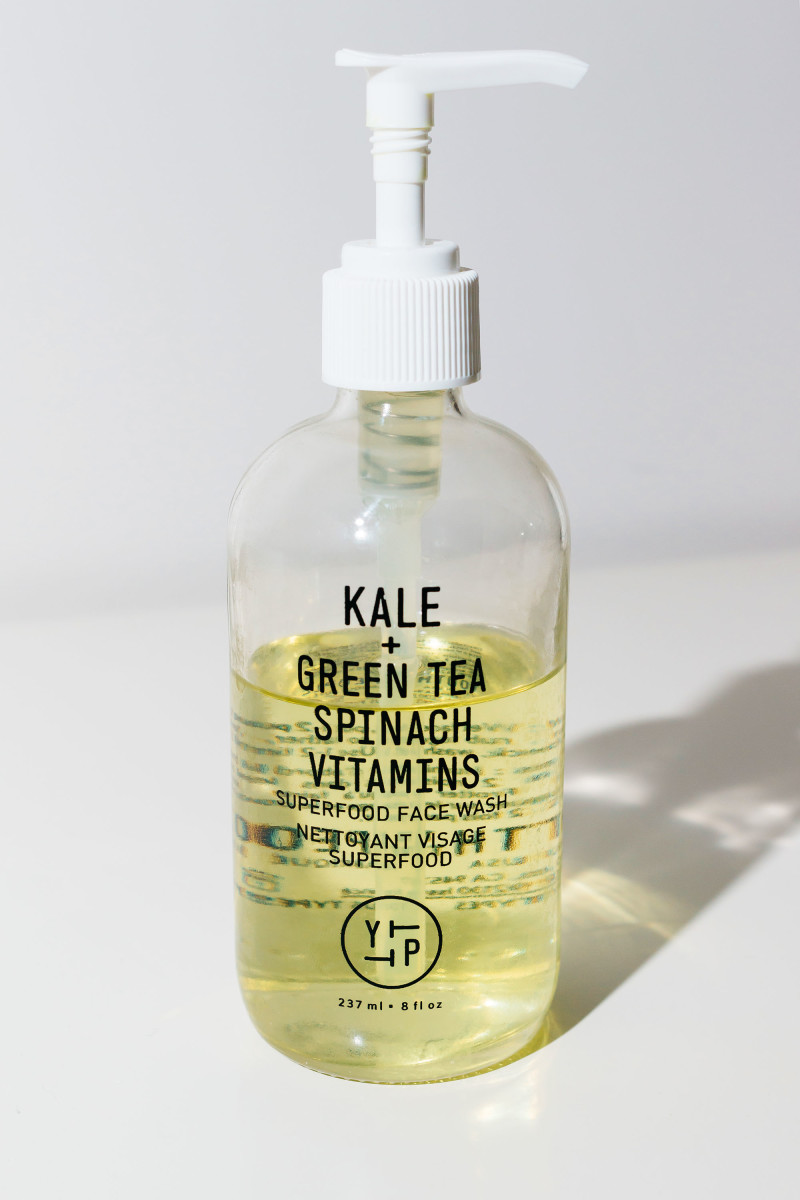
Youth to the People Superfood Cleanser
My morning cleanser right now is Youth to the People Superfood Cleanser, which I was also using in the spring. This has become one of my favourite gel cleansers—it’s sulfate-free, and I don’t find it drying at all. (But it might be not be moisturizing enough for dry skin, so I think it’s best if you are normal to oily.) While I’m only using it in the mornings, you could also use it at night as the second step in a double cleanse.
I’m also still using the S.W. Basics Cleanser on a Shiseido Facial Cotton on days when I’m not hopping in the shower right away. It’s a three-ingredient cleansing water that’s great for a quick, gentle cleanse.
2. BHA:
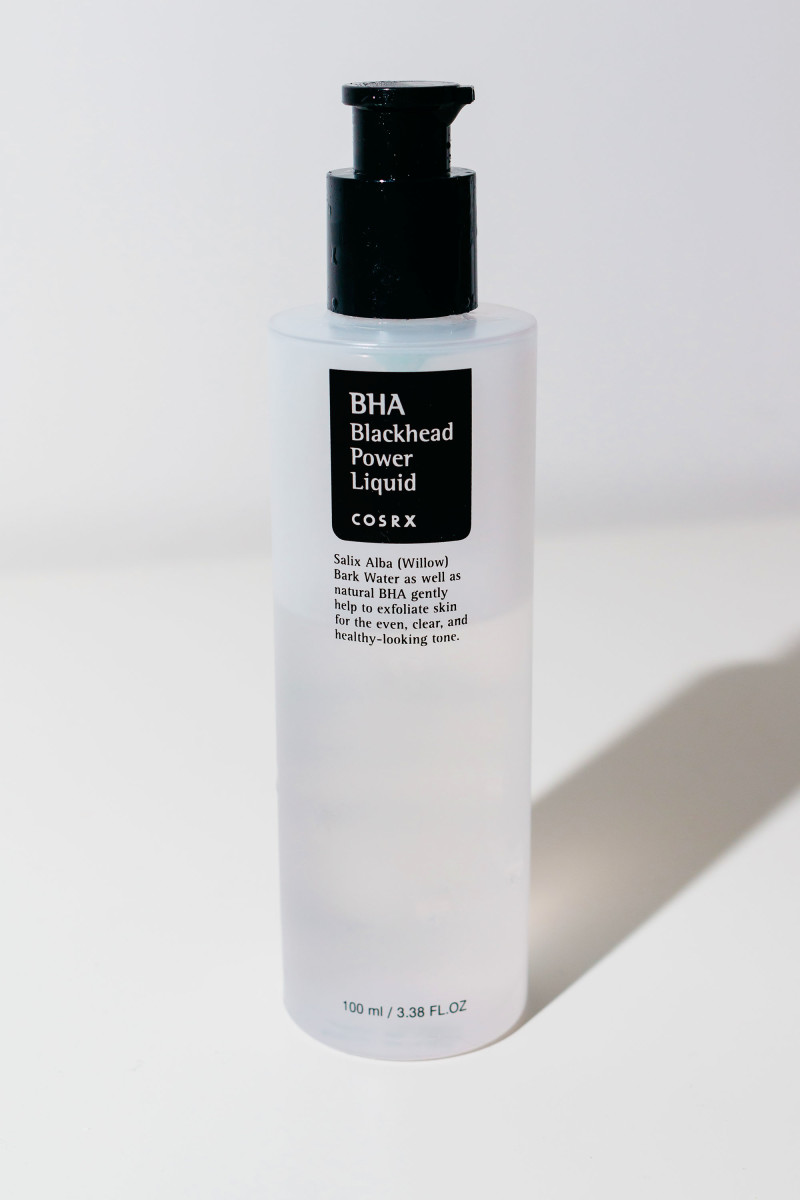
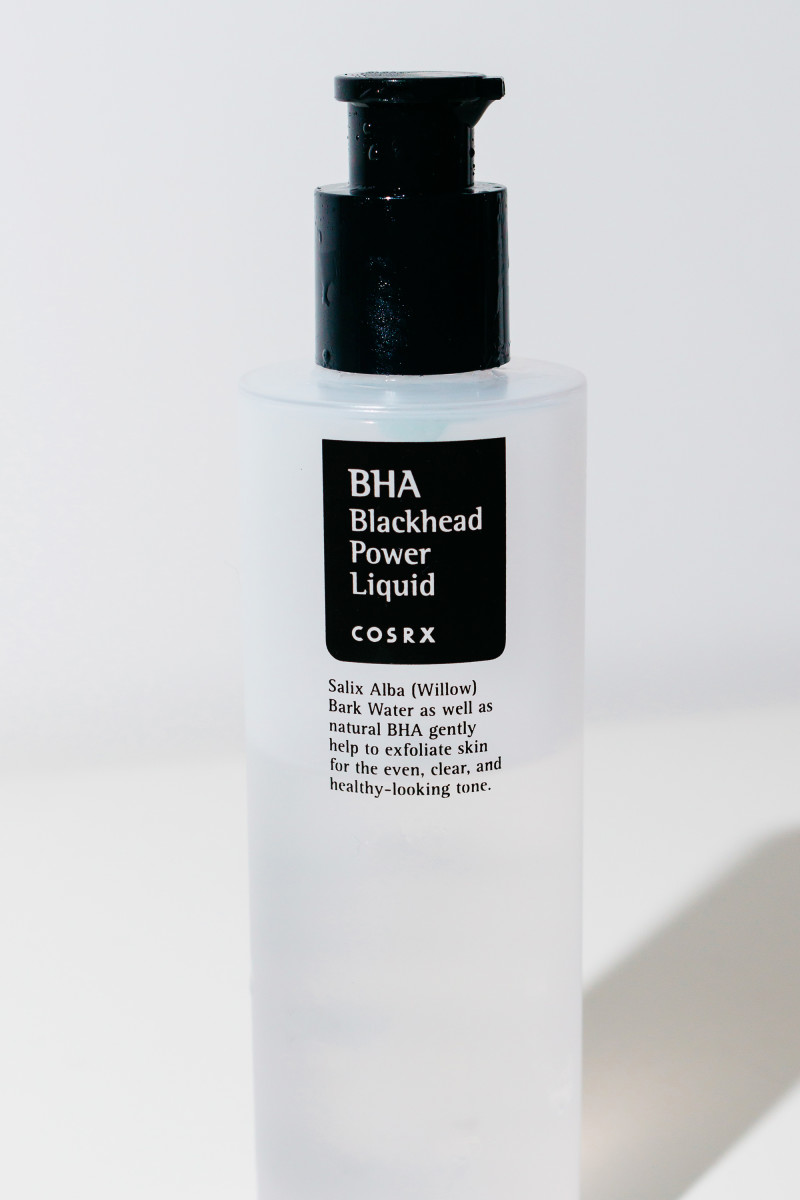
COSRX BHA Blackhead Power Liquid
What a surprise, COSRX BHA Blackhead Power Liquid is next! I can’t see myself EVER giving up this beta-hydroxy acid treatment that I’ve been using since 2017. As I explained in this review, it treats and prevents breakouts, exfoliates and brightens your skin, fades pigmentation and more. The texture is a liquid gel, and I use my fingers to smooth a generous layer all over my face (excluding the lips and eye area).
3. Serum:
GEORGANIC Propolis Care Acne Serum
Then I wait about 20 minutes or so to give the BHA time to work before I apply the GEORGANIC Propolis Care Acne Serum. Ignore the name, because this serum is not just going to help acne-prone skin, but also dry or sensitive skin and pigmentation.
First of all, it’s got 78 percent Centella Asiatica extract, which is an Asian herb that both moisturizes and strengthens the skin barrier. It also has 10 percent propolis (bee “glue”), which soothes and reduces inflammation, and two percent niacinamide, which has all of these benefits (including brightening). So it’s doing a lot more than other serums—and with fewer ingredients! It has a lightweight texture and is highly unlikely to irritate you or break you out.
4. Moisturizer:
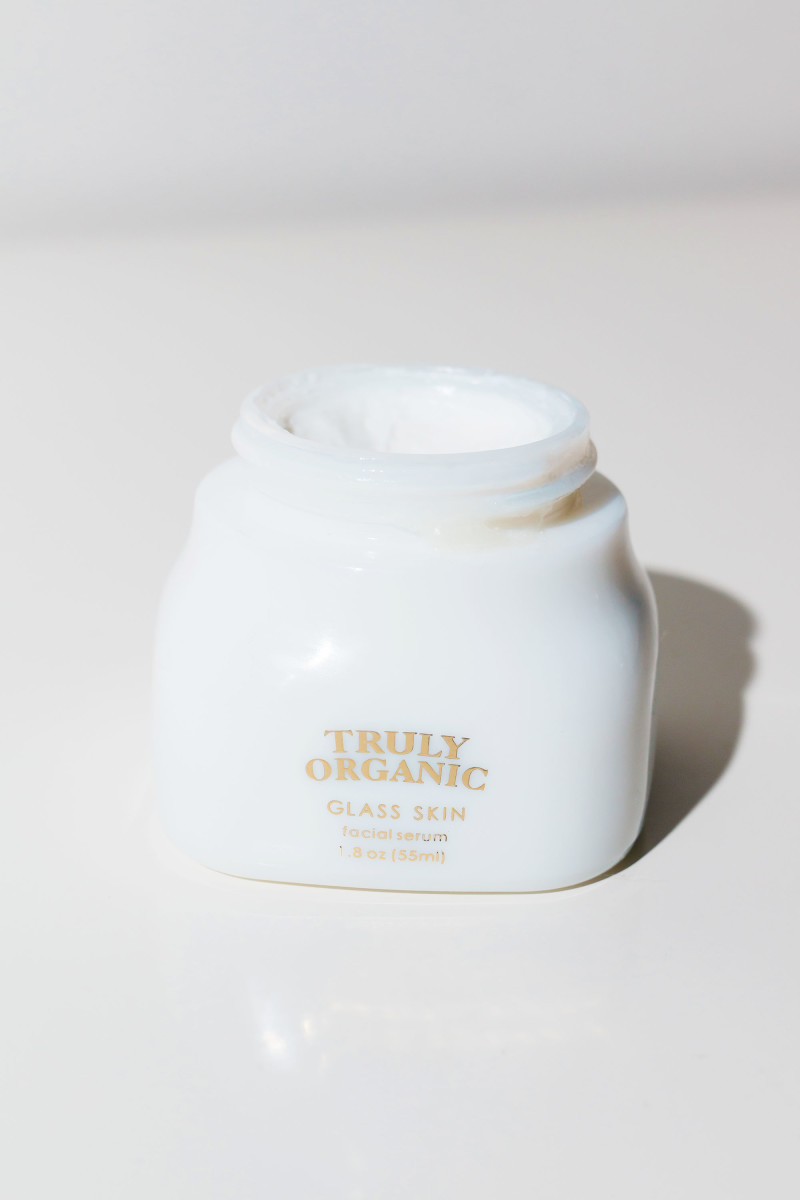
Truly Organic Glass Skin Facial Serum
In summers past, I usually skipped this step and went straight from serum to sunscreen, since moisturizer would make me too greasy. This time, I’ve been experimenting with Truly Organic Glass Skin Facial Serum, and it’s not having that effect at all! (The sunscreen I’m using is lighter, too, but more on that in a second.)
It’s interesting that the brand is calling this a serum, because the texture is definitely a cream. It becomes more fluid once you spread it on your skin, so maybe that’s why? Anyway, I absolutely love it. Who knew you could make a lightweight but nourishing cream out of soy lecithin, xanthan gum, aloe vera, coconut oil, cocoa butter and vitamin E?!
5. Eye Cream:
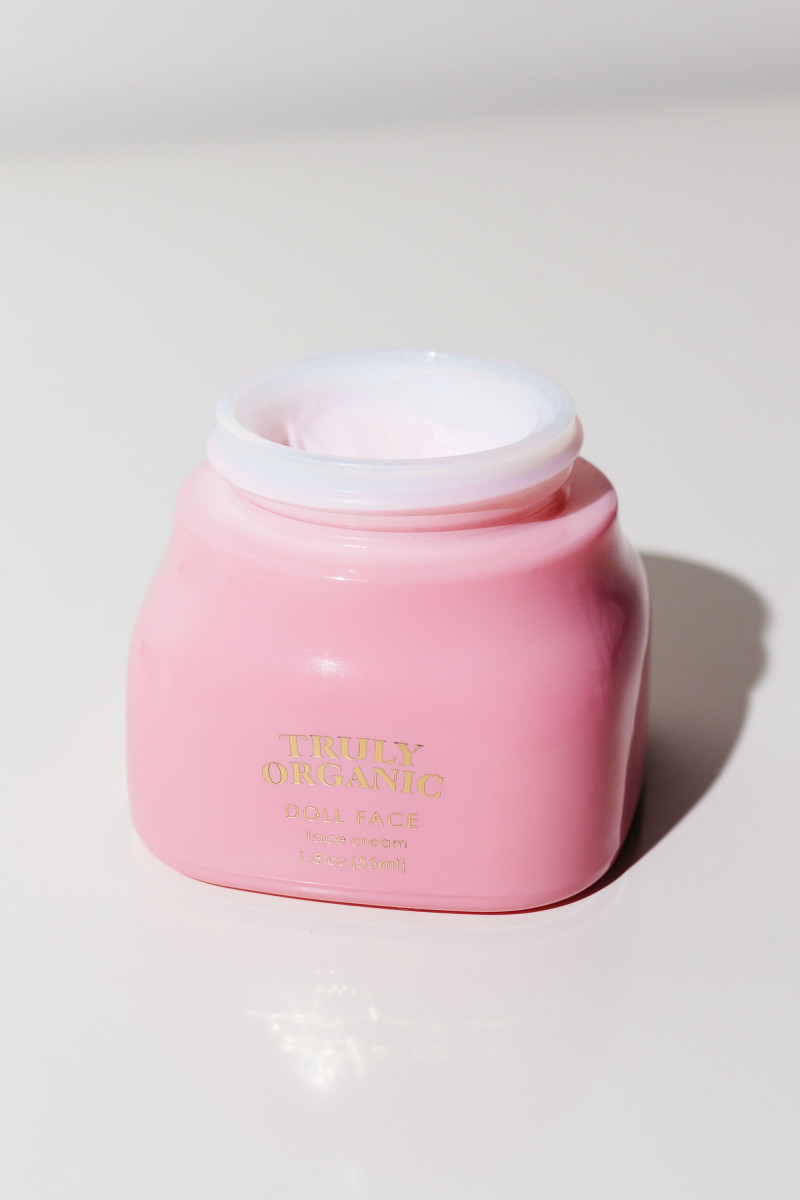
Truly Organic Doll Face Face Cream
Instead of eye cream, I’m using Truly Organic Doll Face Face Cream right now. (I swear, this brand is one of my BEST discoveries this year!) Lately, I’ve been getting some irritation in my eye area, probably from some makeup I’ve been using, so I wanted to try a very basic cream that wouldn’t cause any more issues. I find that I can’t use a lot of eye creams because their ingredients lists are too complex, with too many potential irritants.
Like the Glass Skin Serum, this cream has a very simple, natural ingredients list—in fact, the ingredients are almost the same. Doll Face, however, has a slightly thicker texture and a pink tint (maybe from the seaweed extract?). It’s perfect as an eye cream, and I also wouldn’t hesitate to use it as a face cream, which I’ll be doing once it gets colder. (I’ve already tested it all over my face, and it doesn’t break me out.) Truly obsessed with this brand!
6. Sunscreen:
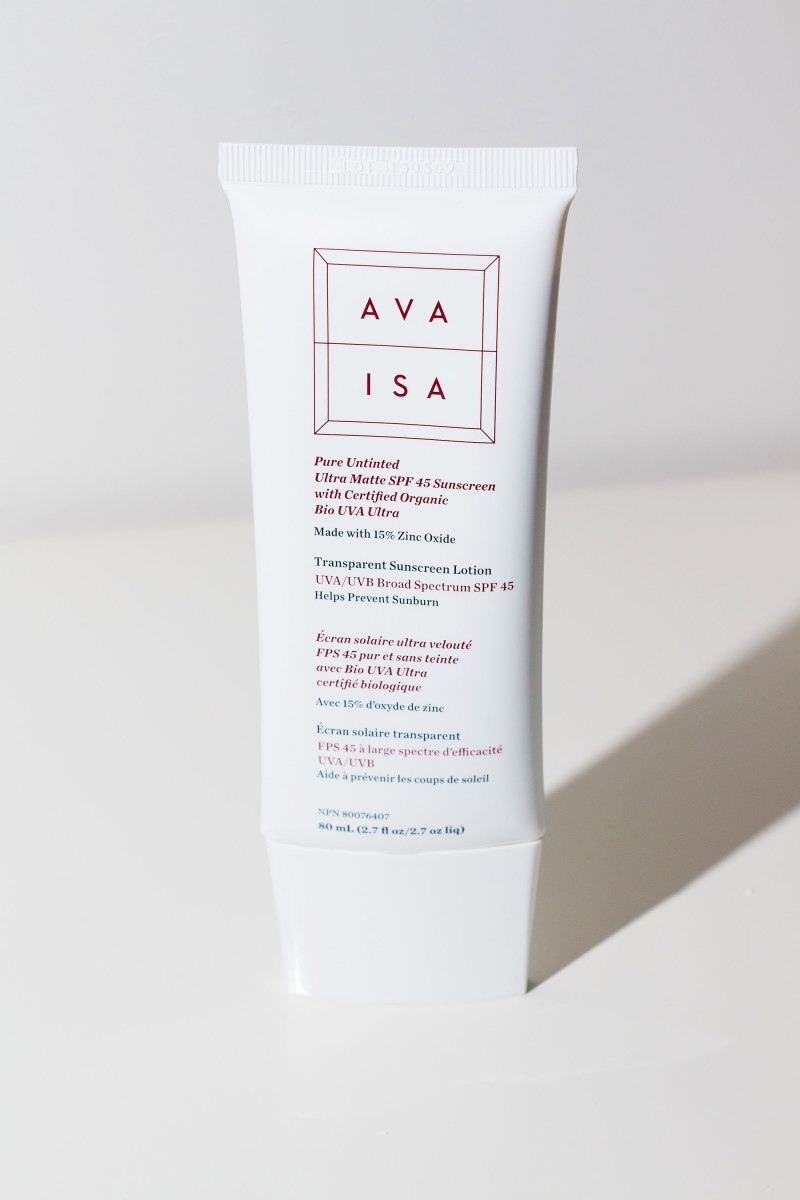
Ava Isa Pure Untinted Ultra Matte SPF 45 Sunscreen
For my mineral sunscreen this season, I’ve got a brand new tube of Ava Isa Pure Untinted Ultra Matte SPF 45 Sunscreen, which the company recently tweaked to create a creamier texture. (There’s also a tinted version, by the way, and you can now find them in the US at Credo Beauty!) This is such a great SPF for anyone who hates heavy, greasy sunscreens. It’s so light on the skin, and the protection from UVA rays (the aging type of rays) is incredible.
I JUST received a PR sample of the new REN Clean Screen Mattifying Face Sunscreen SPF 30, so I’m going to be adding that to the rotation, too. It’s not available yet here in Canada, but you can find it in the US and UK. You can learn more about all my sunscreen picks in this year’s mineral sunscreen guide!
7. SPF Lip Balm:
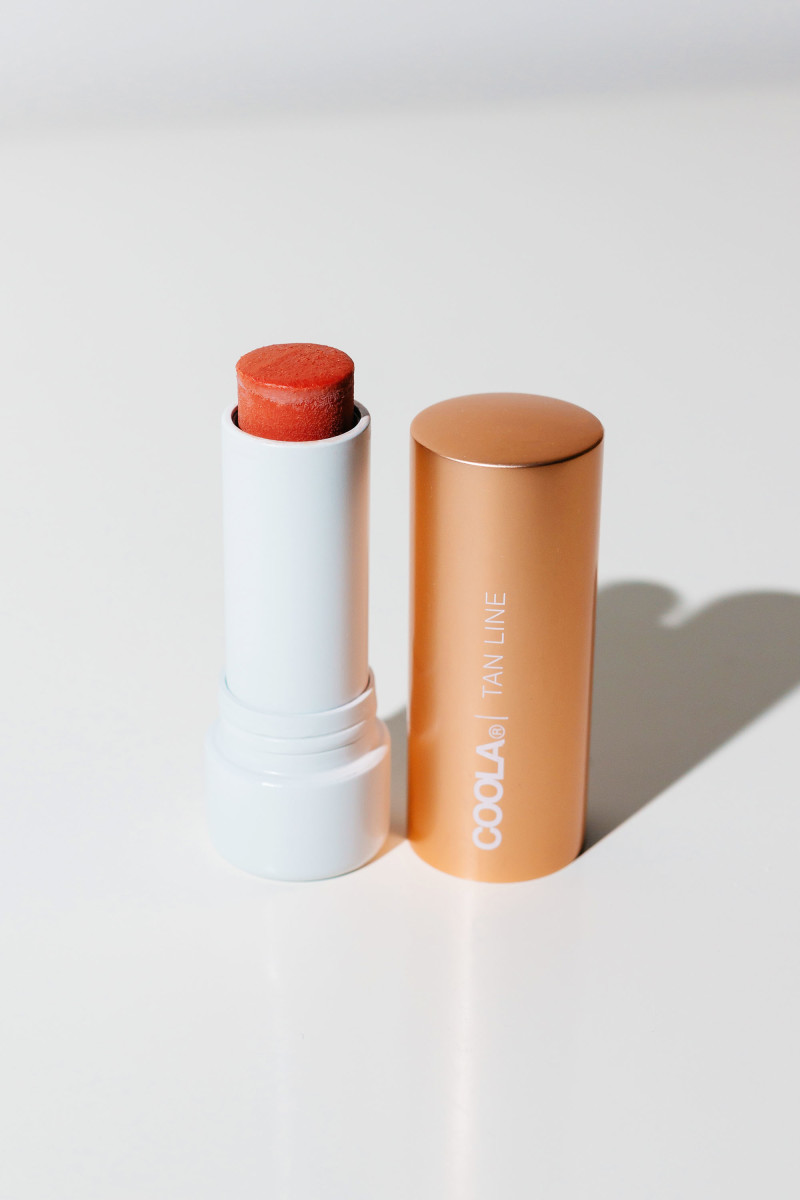
COOLA Tinted Mineral Liplux SPF 30
As I mentioned in my recent review, COOLA Tinted Mineral Liplux SPF 30 is my top pick for an SPF lip balm. You’re getting all-mineral protection in a moisturizing, water-resistant formula. It comes in a bunch of different tints—see my swatches here. My favourite is the coral shade called Tan Line.
Tatcha The Satin Skin Mist, BIOeffect OSA Water Mist and Pai Rice Plant & Rosemary BioAffinity Skin Tonic
My last step in the morning (and throughout the day, actually) is face mist. I’m BIG on face mists in the summer. Tatcha The Satin Skin Mist is my latest purchase, a “liquid powder” that you shake and then spray on to mattify your skin. I’ve been experimenting with this instead of regular face powder, and it does a good job of taking away shine without making my skin look dry or dull.
I also like BIOeffect OSA Water Mist, which I was using last summer, too. This one is also slightly mattifying thanks to the silica, and hydrating thanks to the glycerin and hyaluronic acid. The packaging is great to pop in your handbag.
And I just bought another Pai Rice Plant & Rosemary BioAffinity Skin Tonic, which I used two or three years ago and loved. This one is super juicy and refreshing, and is specifically formulated to help balance combo skin.
My Nighttime Skincare Routine
1. Makeup Remover:
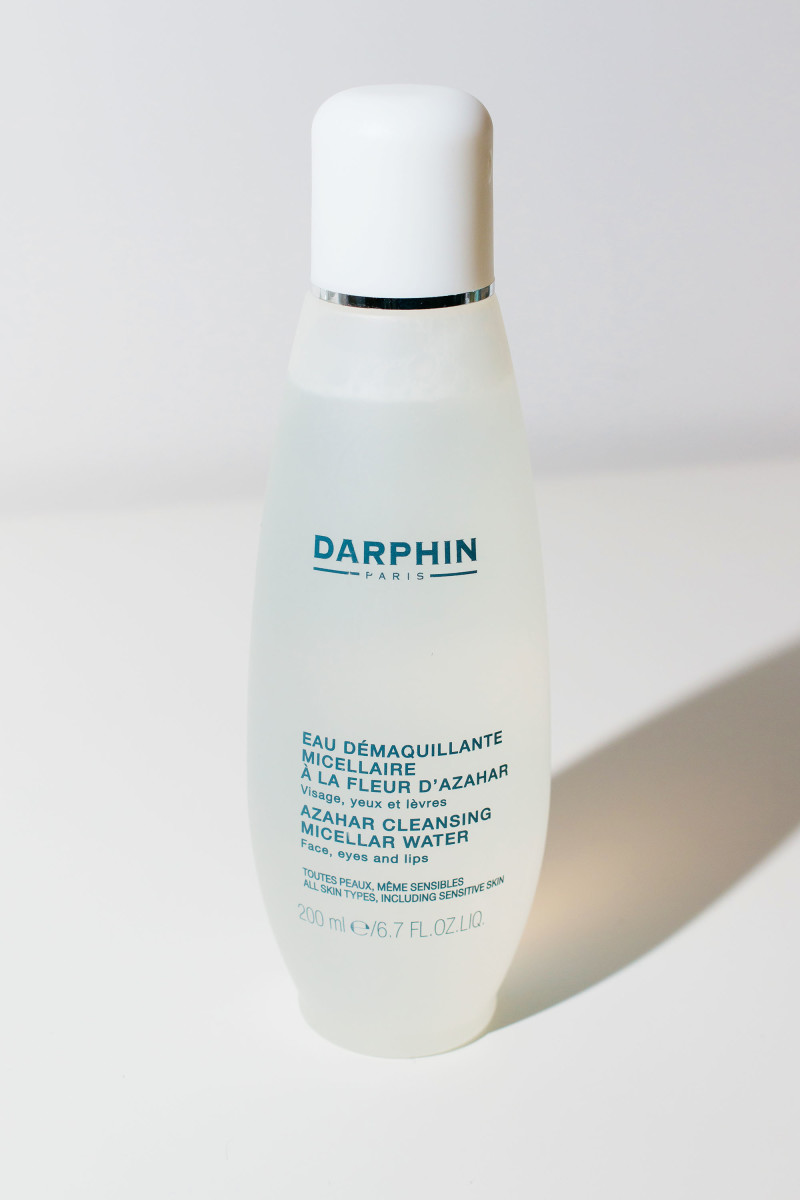
Darphin Azahar Cleansing Micellar Water
Moving on to evening… my first step is always micellar water, and I decided to try out another one to share with you, the Darphin Azahar Cleansing Micellar Water. If you feel like splurging, it does the job, with 94 percent natural ingredients (although BIOeffect’s formula is technically more “clean”). It doesn’t cause any irritation for me, but I’m also rinsing it off with the next step.
2. Cleanser:
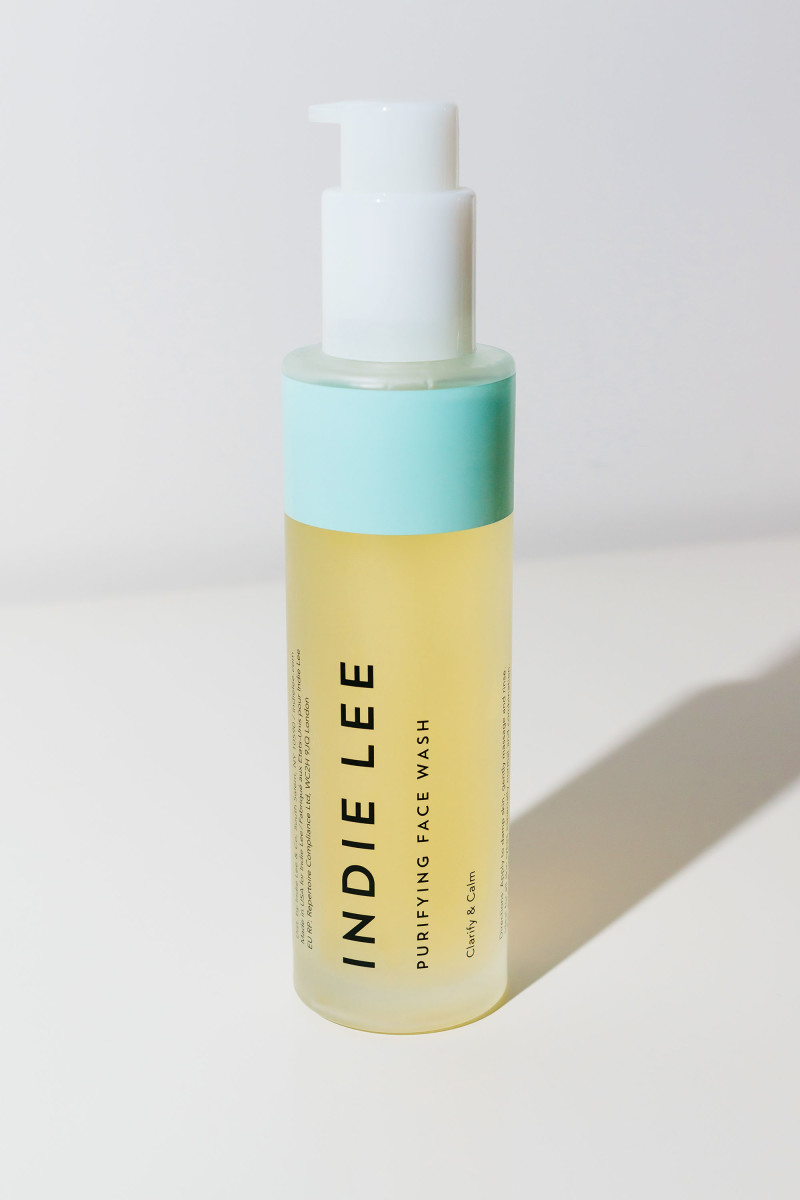
Indie Lee Purifying Face Wash
There’s nothing like a foaming face wash in the summer to get off all the sweat and grime that’s been seeping into your pores all day—am I right? I finally got around to trying Indie Lee Purifying Face Wash, which I bought a while back but somehow forgot about (I have way too many cleansers!).
This has a unique jelly texture that turns into a light creamy foam once you massage it over wet skin. Honestly, it’s great (just like ALL the cleansers from this brand). It’s gentle, sulfate-free and doesn’t leave my skin feeling tight. Keep in mind that it’s more for oily and combo skin, though. If you are dry, I think the Indie Lee Rosehip Cleanser is better for you.
3. Cleansing Brush:
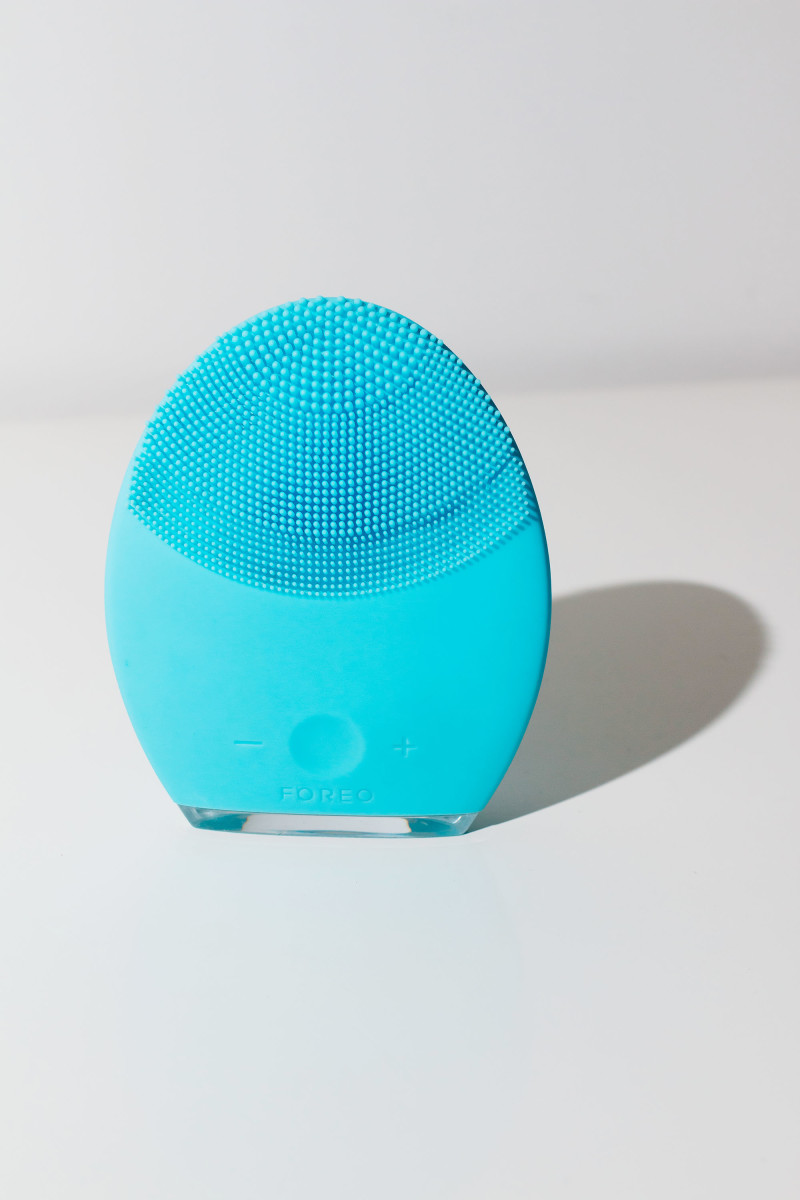
Foreo Luna 2 for Combination Skin
As usual, I pair my cleanser with the Foreo Luna 2 for Combination Skin, my favourite gentle cleansing brush. Summer is when I use this puppy the most, since sunscreens have a tendency to clog pores and I’m paranoid of leaving any traces on my skin.
By the way, a new version of this brush has just come out, the Luna 3. The main difference is that there’s now an app, so you can customize the treatment intensity with your phone. I’m not sure if they are discontinuing the older one but I hope not! Personally, I feel like I don’t need the 3 as the 2 already works perfectly.
4. Toner:
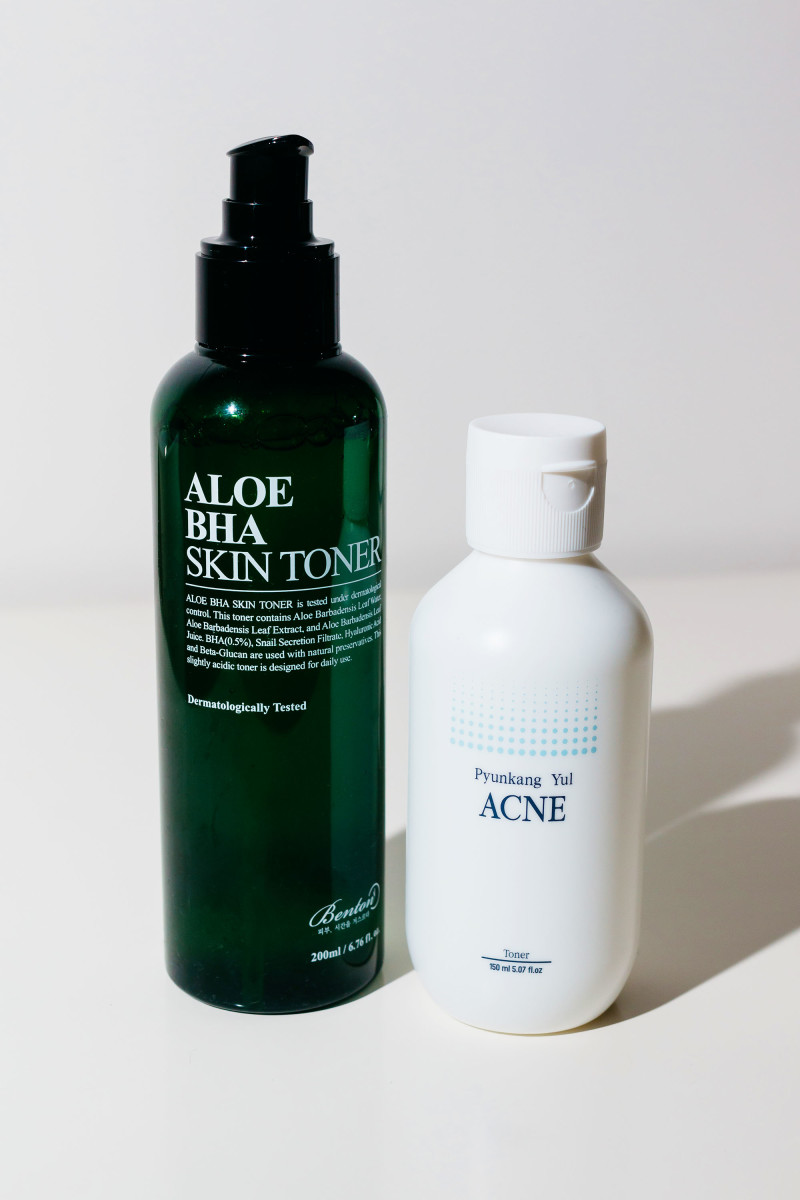
Benton Aloe BHA Skin Toner and Pyunkang Yul Acne Toner
In the spring, I mentioned that I’ve started to incorporate a toner step in the evenings, after cleansing and before my acid. I was inspired by NYC facialist Christine Chin, who believes that skipping toner is the number one mistake most people make! My problem was finding the RIGHT toner. Most toners I’ve tried don’t play well with the COSRX BHA for some reason, and my skin goes red, hot and flushed when I use them together. Then I got the idea to try Lotion P50 as my toner, and it didn’t do that!
However, Lotion P50 isn’t the most accessible product, so I wanted to find some other options I could recommend to you guys. Thank goodness for K-beauty. I found two more toners that are compatible with acids! Benton Aloe BHA Skin Toner contains soothing aloe vera, hydrating snail mucin and 0.5 percent salicylic acid. Pyunkang Yul Acne Toner has willow bark extract (a natural BHA), niacinamide and Centella Asiatica extract. They’re both quite cheap!
5. BHA:
COSRX BHA Blackhead Power Liquid
After the toner, I apply COSRX BHA Blackhead Power Liquid, same as the morning. In past routines, you might remember me using it only in the mornings, with another salicylic acid treatment at night. But since the spring, I’ve stuck with this twice a day, and I really notice that my skin is always clear now. Like, I can be walking around all day sweating, or going through PMS time, and not even have ONE pimple. This stuff is GOLD!
6. Serum:
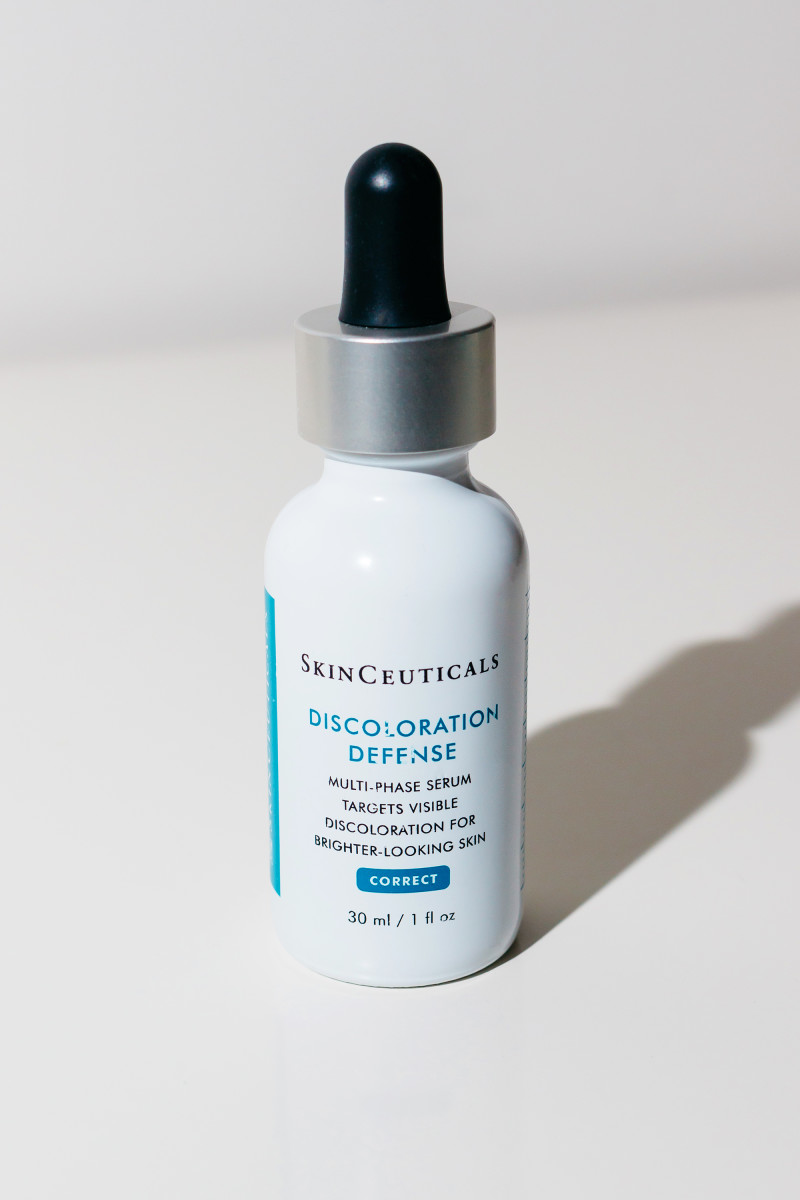
SkinCeuticals Discoloration Defense
As much as I love A313 (reviewed here), I’m taking a little break from retinoids for the next month or so. One, because I finished the tube and had to order another, and two, because I plan to be spending a lot of time outside in August. This paper talks about retinoids and phototoxicity, so I just like to be careful!
Instead, I’m applying SkinCeuticals Discoloration Defense, which was also in my spring routine. I use this about 20 minutes after the acid. It has five percent niacinamide, which acts as an antioxidant and will help me combat any sun-induced pigmentation. There are also tons of studies about niacinamide’s ability to repair radiation-induced DNA damage (see here for a few). Yes, I am obsessed with niacinamide and prefer it to vitamin C!
7. Lash Serum:
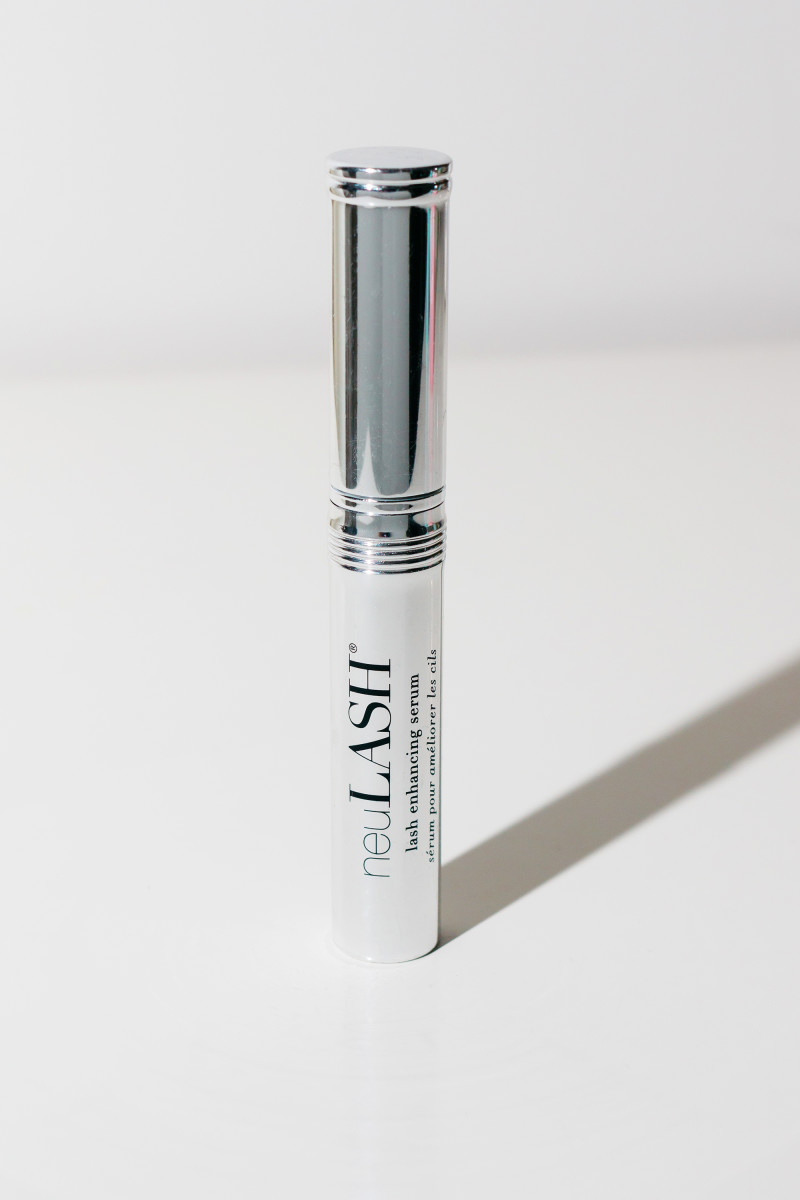
neuLASH Lash Enhancing Serum
In my last few routines, I’ve forgotten to include lash serum, so I wanted to let you know that I’ve been using neuLASH Lash Enhancing Serum for a while now. You just paint this along your upper lash lines, and it helps strengthen your lashes so that they hang around longer (and therefore look thicker). Coming from Latisse, I think this has helped me maintain those results!
8. Eye Cream:
Truly Organic Doll Face Face Cream
Again, my “eye cream” right now is Truly Organic Doll Face Face Cream. No, it doesn’t have any anti-aging ingredients, but it’s keeping my eye area nice and hydrated. I wish more brands would take a cue from this company’s ultra-simple formulas! With eye creams especially, the fewer ingredients, the better.
9. Lip Balm:
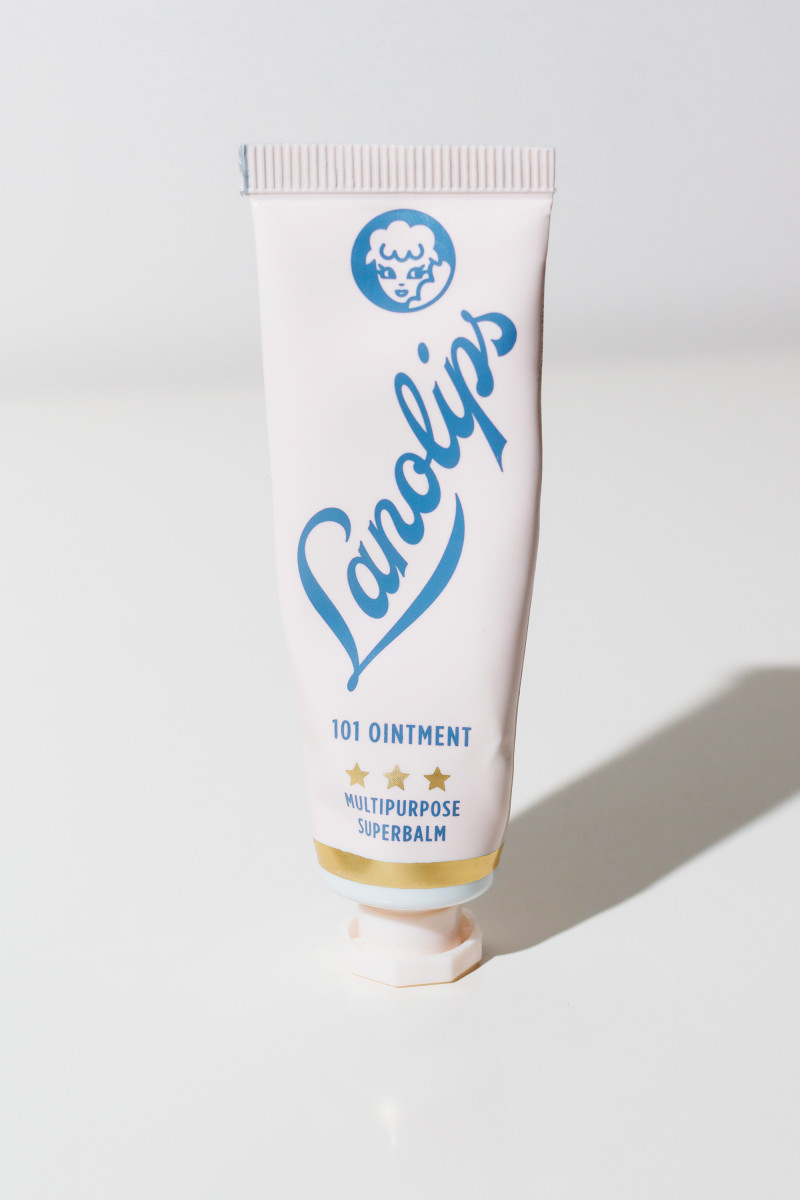
Lanolips 101 Ointment Multipurpose Superbalm
As always, my last step is some lanolin lip balm. All that’s in Lanolips 101 Ointment Multipurpose Superbalm is medical-grade lanolin, which I think is the best thing for healing dry lips. Ever since I got onto this stuff, I NEVER experience chapping.
My summer skincare products from Pai, Benton, Darphin, Indie Lee, Ava Isa, Pyunkang Yul, Youth to the People, GEORGANIC, Tatcha, SkinCeuticals, BIOeffect and Truly Organic.
I hope you enjoyed reading about this routine!
Even though I’d describe my skin as combination, I think a lot of these products would work for drier skin than mine, too. I can’t say enough good things about Truly Organic in particular. The fact that they can make such incredible creams without a long list of weird synthetic ingredients is just amazing to me!
I hope you also check out GEORGANIC, because that’s another one I’d recommend for ALL skin. It’s a K-beauty brand, by the way (as are COSRX, Benton and Pyunkang Yul). I’m a bit late to the party but I’m working on a Korean “clean skincare” guide to share with you soon. Stay tuned!
Shop My Skincare Routine
Have you tried any of the products in my summer routine? Which skincare products are you loving lately?


 Here’s another video on the science behind makeup products! After my video on why foundation clumps, the focus this time is on make-up setting sprays. Some of the topics I cover in this video: The difference between the types of makeup setting spray How makeup setting sprays work How to tell which type of setting…






 Dawn Siler