Glass Skin and Pure Beam, A Dream Pair.

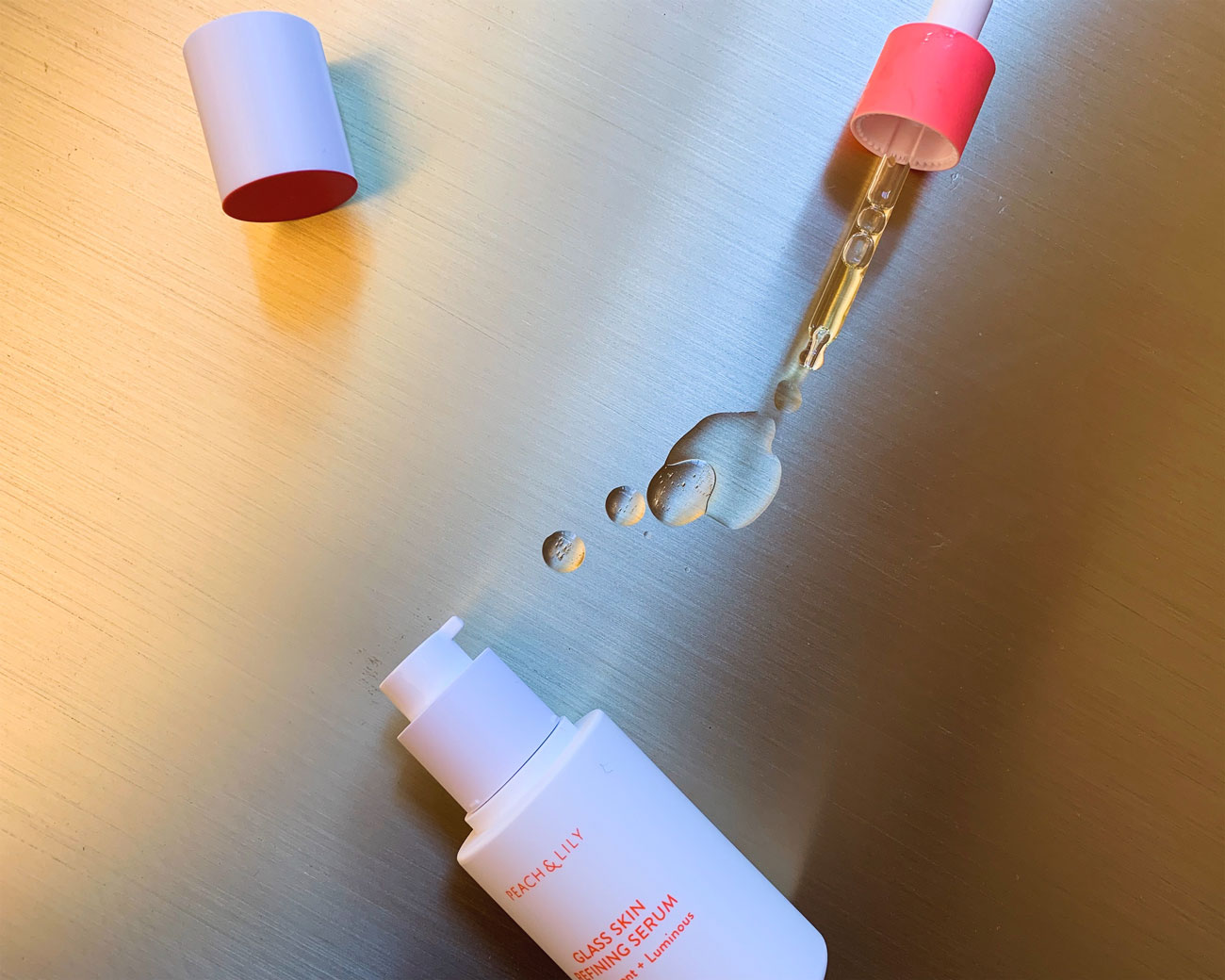
June is the one-year birthday of the Peach & Lily Glass Skin Refining Serum, but it’s also Acne Awareness Month. Glass Skin, in and of itself, can help with acne-prone skin by deeply hydrating and helping calm inflammation, but it also plays well with other products to help prevent acne and balance skin.

In particular, Glass Skin pairs well with the Peach & Lily Pure Beam Luxe Oil, a blend of six plant-based, cold-pressed oils (and vitamin E).

Right off the bat, we’re sure you’re wondering:

Why are you recommending an oil, even for acne-prone skin?

It might seem counterintuitive because excess oil can contribute to clogged pores and, ultimately, to acne. It’s true that there are bad oils that can do just that, but there are also good oils that can actually help balance skin, regulate excess sebum production, and properly hydrate skin. There are a few ways oils can do that.

Studies show that the sebum of people with acne-prone skin tends to be thicker and stickier than “normal” sebum, and that texture can contribute to clogged pores. This thicker, stickier sebum is higher in oleic acid, a monounsaturated fatty acid that’s heavy and super occlusive, so it can block the entrance to pores, trapping oil and bacteria inside.

One way to help balance sebum and make it thinner in texture is to introduce more linoleic acid. Topically, you can do that by using a facial oil that is higher in linoleic acid, an unsaturated fatty acid that helps thin out the thick, sticky sebum common to acne-prone skin. Oils like grape seed oil, safflower seed oil, and rosehip oil, amongst others, are high in linoleic content.

Another way to help balance sebum production is by using oils that mimic the molecular structure of human sebum. These oils can “trick” sebaceous glands into thinking they’ve produced enough, thus helping stop the excess production of sebum. Jojoba oil, squalane, and sea buckthorn oil are examples of these kinds of balancing oils.

How often should I use a facial oil?

Every day if you’d like! We recommend using just 1-3 drops — a little bit of oil tends to go a long way. You can either apply it directly to skin after you apply your serums/ampoules, or you can mix it into your moisturizer.

glass skin refining serum pure beam luxe oil acne

Why are you recommending these two products?

If the Glass Skin Refining Serum helps provide skin with essential nutrients and antioxidants, the Pure Beam Luxe Oil helps provide skin with essential lipids.

Pure Beam contains only seven ingredients: jojoba oil, squalane, grape seed oil, camellia japonica seed oil, sea buckthorn oil, olus oil, and vitamin E. Let’s break down a few of the main oils.

  1. Jojoba oil is technically a wax, but it’s liquid at room temperature. It’s similar to human sebum, so it can help balance sebum production. It’s also high in vitamins and antioxidants, and it has natural antimicrobial qualities, which makes it good for acne-prone skin. It’s also suitable for sensitive skin.
  2. Squalane is a naturally-occurring substance in our bodies, though it’s called “squalene” in the body. Squalene, however, is unstable and will oxidize when exposed to air, but squalane, a byproduct of squalene, is highly stable. It’s non-comedogenic (aka doesn’t clog pores) and readily absorbs into skin, helping support the natural skin barrier.
  3. Grape seed oil is high in linoleic acid, which helps thin out the thicker, stickier sebum common to acne-prone skin types. It is also non-comedogenic.
  4. Camellia japonica seed oil is also known as tsubaki oil, which is rich in oleic acid and vitamins A, D, and E. It is a lightweight, dry oil that is non-comedogenic, and it contains more antioxidants than any other botanically-derived oil. It helps soften skin, and its molecular structure means it absorbs quickly into skin.
  5. Sea buckthorn oil is an incredible source of the rare omega-7, an essential fatty acid that helps skin retain its firmness. It also helps balance sebum production, and it has natural antibacterial and anti-inflammatory qualities that make it particularly good for acne-prone skin.


All the oils in Pure Beam are plant-based and cold-pressed, and, altogether, it helps balance skin, whether by hydrating dry skin, helping regulate sebum production in oily skin, or boosting the natural skin barrier. An intact skin barrier is key to healthy skin because it helps skin retain hydration, nutrients, and balance. That, in turn, can help stave off breakouts and calm acne-prone skin.

Of course, this pairing is also great for all skin types! Together, Glass Skin and Pure Beam work together beautifully to help provide skin with all the essential nutrients, hydrators, and lipids it needs to thrive, helping you get closer to the glass skin of your dreams, skin that is so healthy and hydrated it appears poreless, luminous, and translucent.

We hope that was helpful! If you have any questions, please leave them in the comments below!

The post Glass Skin and Pure Beam, A Dream Pair. appeared first on Pibuu.

Glass Skin and Pure Beam, A Dream Pair.
Originally posted here: https://www.pibuu.co/2019/06/11/glass-skin-pure-beam-dream-pair/

Is La Roche Posay Toleriane Dermo-Cleanser The Best Cleanser For Sensitive Skin?

la roche posay toleriane dermo cleanser reviewla roche posay toleriane dermo cleanser review

Is your skin so sensitive, every cleanser you’ve tried stings like crazy?

I hear ya. The cleansing process is always traumatic for skin. You risk raising its pH, breaking down its protective barrier, stripping away its natural oil… It’s a minefield.

But it’s not like you can skip cleansing. Ugh. So what’s a girl to do, use only water? That may do in the morning, but it ain’t gonna take your makeup off…

Enter La Roche Posay Toleriane Demo-Cleanser. When you’ve tried everything, this baby comes to the rescue and takes everything off without the sting. Here’s what makes it the gentlest cleanser for sensitive skin:

Key Ingredients In La Roche Posay Toleriane Dermo-Cleanser

Ethylhexyl Palmitate

The real reason why La Roche Posay Toleriane Dermo-Cleanser is so gentle? It has NO cleansing agents.

Wait, what?! How can it cleanse skin if it has no cleansing agents?!

Ethylhexyl Palmitate. It’s a derivative of mineral oil and works in pretty much the same way. It acts like a solvent that dissolves the oils and impurities on your skin so they can they easily be wiped off your face.

Plus, it’s so moisturizing, it makes even the driest of skin types softer and smoother. No way this is gonna strip your skin. It moisturises as it cleanses.

FYI, don’t let its origin scare you. Mineral oil undergoes a strict purifying process to remove all toxins. At the end of this process, it has no resemblance to oil anymore. It’s super safe even for sensitive skin and non-toxic.

Related: 5 Myths About Mineral Oil You Need To Stop Believing Right Now

Glycerin

Glycerin is a humectant. That’s a fancy way of calling ingredients that attract moisture from the air into the skin.

As your skin goes through the cleansing process, glycerin draws enough extra water to it to keep its moisture levels high. Once you’re done with it, your skin’s so soft and smooth. Like you’ve just moisturised instead of cleansed.

Related: Why Is Glycerin In All My Skincare Products?!

Let’s Put It To The Test: Personal Use & Opinion

La Roche Posay Toleriane Dermo-Cleanser has a creamy, milky texture that leaves a moisturizing residue behind – unless you wipe off the cleanser with a cotton pad or washcloth. That’s what I do.

It does a great job at removing dirt, impurities and most makeup from skin. I say “most” because it all depends on how much makeup you’re wearing.

I know the Kardashian look is very popular today. Personally, I’m not a fan of covering your skin under that many layers of long-lasting, waterproof makeup every single day.

But if that’s your cup of tea, cool. Just don’t expect this to take it all off. I recommend you use an oil-based cleanser for that and keep this as a morning cleanser.

If you’re more of the minimalistic type, La Roche Posay Toleriane Dermo-Cleanser doubles up as makeup remover. I favour sheer foundations and non-waterproof mascaras that subtly enhance my natural look and this cleanser takes them all off effortlessly.

It’s also super gentle and does not irritate skin. If you feel like that tight, post-cleansing feeling is totally normal, give this one a go. Not only you don’t get that, but your skin feels so soft afterwards!

Available at: $23.99/£12.50 at Dermstore, Escentual, Feel Unique and Walgreens

SHOP THE POST

Have you tried La Roche Posay Toleriane Dermo-Cleanser? Share your thoughts in the comments below.

Ingredients: Water/Aqua, Ethylhexyl Palmitate, Glycerin, Dipropylene Glycol, Carbomer, Sodium Hydroxide, Capryl Glycol/Caprylyl Glycol, Ethylhexylglycerin.

Take The Guesswork Out Of Skincare Shopping

Screenshot from 2017 04 30 11 51 35Screenshot from 2017 04 30 11 51 35

Get access to the “Pro Skincare Library” for exclusive skincare routine “cheat sheets” and tricks to help you navigate the beauty aisles jungle like a pro and immediately know what to pick off the shelves to achieve the gorgeous skin of your dreams – even when you’re drowning in an endless sea of skincare products.

Success! Now check your email to confirm your subscription and get access to the skin library.

Is La Roche Posay Toleriane Dermo-Cleanser The Best Cleanser For Sensitive Skin? syndicated from Beautiful With Brains
June 11, 2019 at 08:16AM

CFDA Awards 2019: The Best Skin, Hair and Makeup on the Red Carpet

This article may contain affiliate links. See our Disclosure for more information. The annual CFDA Awards (that’s short for Council of Fashion Designers of America Awards) are always one of my favourite events for spotting flawless skin and interesting hair and makeup. The model and celebrity …

Continue reading

CFDA Awards 2019: The Best Skin, Hair and Makeup on the Red Carpet syndicated from The Skincare Edit
June 10, 2019 at 05:10PM

Five Ways to Help Dry Skin.

Summer can mean different things for skin depending on your skin type and the climate you live in. In more humid climates, skin, especially dry skin, can get support from the extra moisture in the air, but more arid climates combined with summer heat can exacerbate dry skin. Sometimes, dry skin is just dry skin.

Whatever the season and climate, here are five tips to help dry skin.

Avoid hot baths and showers.

Also, avoid using cold water to wash your face (and cold baths and showers) — basically, try to avoid extreme temperatures of either kind; they can dry skin out further. When washing, use warm water and keep things short. Exposing skin to water for too long can also aggravate skin.

dry skin exfoliator

Exfoliate regularly.

Skin, like all the cells in our body, is constantly generating new cells, pushing dead cells to the surface of skin where they will ideally fall away naturally. Unfortunately, sometimes, dead skin cells accumulate on skin’s surface instead, which can make skin appear dull, feel flaky and itchy, and make it difficult for products to absorb fully into skin.

Exfoliating helps slough those dead skin cells away. There are two types of exfoliators — physical, where you use a scrub or a towel to remove the surface layer of dead skin cells, and chemical, where you use acids (AHAs, BHAs, PHAs) to help “unglue” dead skin cells from the surface of skin. We recommend chemical exfoliators over physical ones because the latter can sometimes be too abrasive and can even cause micro-tears or micro-abrasions in skin. (Read more about exfoliators here!)

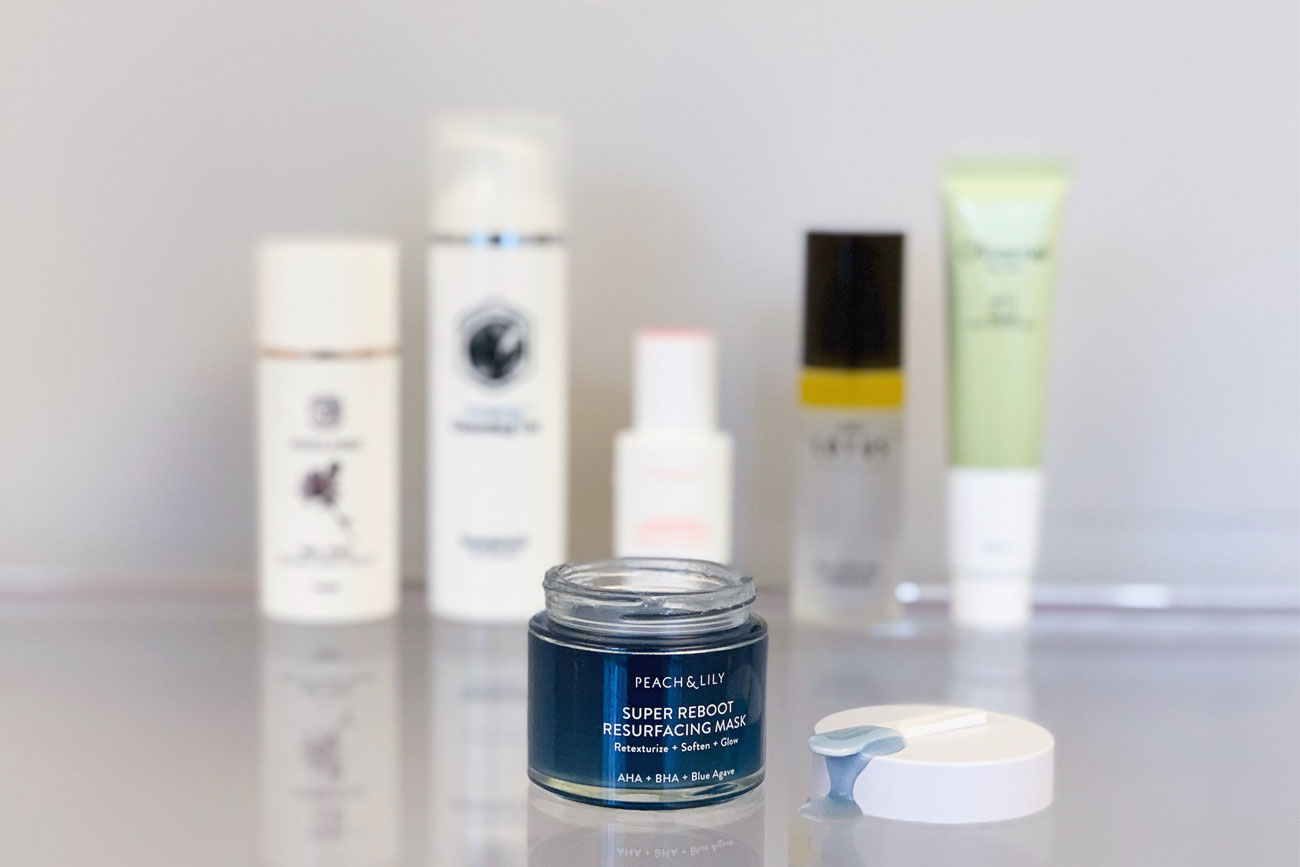
Whether you’re new to chemical exfoliators or a seasoned expert, we recommend the Peach & Lily Super Reboot Resurfacing Mask; it was formulated with sensitive skin in mind; so it is super gentle but also highly effective with 10% AHA and 0.5% BHA. Start by using it once every 2 weeks, leaving the mask on for 5-7 minutes. A minor tingling sensation is normal; that’s the mask working. We recommend slowly working up to using Super Reboot once every 10 days, then once a week, then no more than 2-3 times a week, eventually leaving it on for 10-20 minutes if your skin can tolerate it.

Apply products to damp skin.

Pat your skin dry after cleansing, wicking away excess water but not vigorously toweling until fully dry. Go straight into your skincare routine when your skin is still damp; this can help with absorption, as well as provide extra moisture for your products, particularly your moisturizer, to seal in.

essence dry skin

Layer on hydration — and don’t skip essence.

Instead of just using a thick moisturizer, you really want to be layering on hydration with every step of your routine.

Start with a gentle, hydrating cleanser that will cleanse away makeup, excess sebum, and impurities without disrupting your natural oils. When you have dry skin, it already does not produce enough sebum to hydrate skin sufficiently, so stripping skin of all its oils can only exacerbate the situation. We recommend avoiding foam cleansers, which can be more drying, and opting instead for gentle, hydrating gel cleansers (like the Shangpree S-Energy Cleansing Gel) — and, of course, double cleansing to remove makeup, excess oil, and other impurities gently but effectively.

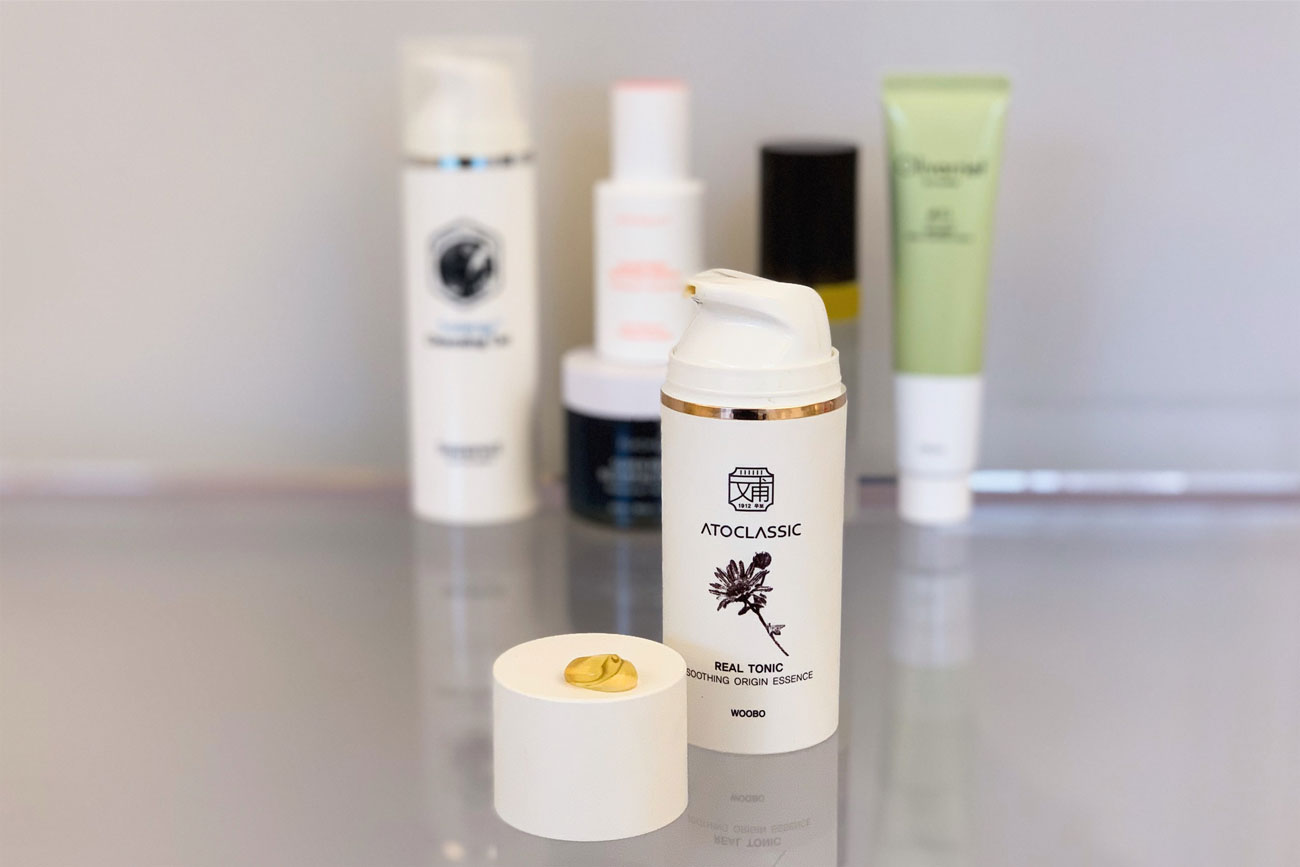
As you go into your skincare routine, layer on hydration with each step — and don’t skip essence! An essence might be that missing step in your routine, and it’s a staple in Korean skincare for a reason. The primary task of an essence is to flood skin with hydration, helping prep it to absorb the products that come after, and make sure to follow your essence (like the Atoclassic Real Tonic Soothing Origin Essence) with a hydrating serum (like the Peach & Lily Glass Skin Refining Serum) and a hydrating moisturizer (like the Olivarrier Emollient Extra Comfort Cream).

Use a mist throughout the day for a spritz of hydration.

Korean facial mists aren’t simply water in a spray bottle; they’re serious formulas that contain hydrating, soothing ingredients and help give you that dewy (but not greasy) look. A facial mist can be incorporated into a skincare routine, or it can be used during the day whenever skin needs some refreshing.

If you have particularly dry skin, you may want to carry a facial mist around to give your skin a boost of hydration throughout the day as needed. Hold your mist (we like the Pure Lotus’ Lotus Leaf & Lemon Mist) 6-12 inches from your face, close your eyes, and spritz evenly over your face. Remember to pat the formula into skin.

(Fun fact: a facial mist can also be incorporated into a makeup routine to help veil skin in hydration and set makeup. Lagom’s Kowon Hye, a celebrity makeup artist, sprays the Lagom Cellus Mist Toner between every step of a makeup routine.)

We hope that helps! As always, leave any questions in the comments below!

The post Five Ways to Help Dry Skin. appeared first on Pibuu.

Five Ways to Help Dry Skin.
Originally posted here: https://www.pibuu.co/2019/06/10/five-ways-to-help-dry-skin/

Calamine For Sensitive Skin: The Secret To Soothe Itchy, Inflamed Skin

calamine soothes sensitive skincalamine soothes sensitive skin

Remember when you were lying in bed with chickenpox and your mum doused you in a pink lotion to make that relentless itch go away? Ah – fun times.

That was calamine. And it ain’t just for chicken pox. Calamine is a skin saviour you can call to scratch any kind of itch.

Got sensitive skin that got red and inflamed – again? Check.

Had a close brush with poison ivy? Check.

Stayed too long under the sun and now have a bad sunburn? Check.

No matter what upset your skin, calamine can rescue it. Here’s what makes it so soothing:

What The Heck Is Calamine?

Calamine isn’t an ingredient. It’s two. WT… Let’s start again…

Calamine is the combination of zinc oxide and ferric (a.k.a. iron) oxide. It’s a pink lotion that has anti-itching and antiseptic properties to calm down sensitive skin.

FYI, calamine CAN’T treat any skin conditions. It only soothes itchiness and all the other symptoms of inflammation.

What Skin Conditions Can Calamine Soothe?

You can use calamine to soothe any itchy condition, including:

  • Acne
  • Dermatitis
  • Eczema
  • Insect bits
  • Insect stings
  • Poison ivy
  • Psoriasis
  • Sunburn

Plus any other itch that just won’t go away!

How Does Calamine Soothe Skin?

Zinc oxide. Yep, the UV filter in mineral sunscreen. It doesn’t just protect you from UV rays. It has all sorts of tricks up its sleeve:

  • Anti-bacterial: It damages the cell membrane of bacteria, so they die off.
  • Anti-pruritic: It soothes itching by inhibiting the release of histamine (the hormone that makes you itch).
  • Anti-inflammatory: It reduces… well, inflammation (the cause of your skin’s tantrum) by – again – inhibiting the release of histamine.
  • Skin protectant: It forms a barrier on the skin that protects you against irritants (including itchiness), giving skin time to heal.
  • UV filter: It provides broad spectrum protection from all UV rays.

In other words, it protects damaged and inflamed skin, soothes the itch and gives it time to recover.

Related: Is Zinc Oxide The Best UV Filter Ever?

What Does Ferric Oxide Do?

Remember when I told you calamine is a mix of zinc oxide and ferric oxide? You already know what zinc oxide does – the bulk of the work! So, what’s the job of ferric oxide, then?

It gives the lotion a pink colour.

I’m not kidding. If you’ve ever used a sunscreen with zinc oxide, you know all too well it can leave a white, ghastly cast on your skin. Ugh.

Ferric oxide’s a rusty red. Mix it with white zinc oxide and you get a cute pink shade. Now you’re more likely to slather that on your skin, aren’t you?

What Are The Best Products With Calamine?

  • Boots Calamine Lotion BP (£1.39): Available at Boots
  • Care Aqueous Calamine Cream (£3.40): Available at Amazon
  • Uriage Pruriced Soothing Cream (£12.65): Available at Escentuals

The Bottom Line

Got an itch that just won’t go away? Get yourself some calamine. From sunburns to eczema and bug bites, this baby soothes them all.

Have you tried calamine? Share your experience in the comments below.

Take The Guesswork Out Of Skincare Shopping

Screenshot from 2017 04 30 11 51 35Screenshot from 2017 04 30 11 51 35

Get access to the “Pro Skincare Library” for exclusive skincare routine “cheat sheets” and tricks to help you navigate the beauty aisles jungle like a pro and immediately know what to pick off the shelves to achieve the gorgeous skin of your dreams – even when you’re drowning in an endless sea of skincare products.

Success! Now check your email to confirm your subscription and get access to the skin library.

Calamine For Sensitive Skin: The Secret To Soothe Itchy, Inflamed Skin syndicated from Beautiful With Brains
June 10, 2019 at 08:15AM

Free Webinar with LisaLise at Tisserand Institute

There’s a brand spanking new webinar coming up at Tisserand Institute, and there’s going to be a guest speaker presenting.

Guess who the guest speaker is?

Hint: check the jump-for-joy pink figure up there for a clue

Read more »

Free Webinar with LisaLise at Tisserand Institute syndicated from LisaLise Blog – Natural Skin Care
June 9, 2019 at 07:40AM

Can I use AHAs/BHA and Retinoids Together?

Are Retinoids friends with the AHAs/BHA families?

The gossip on the grapevine changes every week. Some of us have heard rumours they can’t stand each other. Put them in the same room, they’ll neutralise each other and lose all their antiaging powers.

But there are a few single voices who claim the feud’s made up. Retinoids and the AHAs/BHA families are the best of buddies. Put them in the same room and they’ll work together to get those pesky wrinkles and red breakouts off your face.

Who’s right? Who is really in the know and who is spreading malicious rumours out of jealousy? Let’s get to know the families. It’s the only way to find out if AHAs/BHA and Retinoids can really be used together:

the ordinary salicylic acid 2 solutionthe ordinary salicylic acid 2 solution

What The Heck Are AHAs and BHA?

Exfoliants.

The Alpha Hydroxy Acids (AHAs) family has some famous members, including Glycolic Acid and Lactic Acid (I’m sure you’ve heard of them).

The Beta Hydroxy Acids (BHA) family only has one member currently working in skincare: Salicylic Acid.

These acids all work in the same way: they dissolve the glue that holds skin cells together, so they can slough off and reveal the brighter, smoother, more even toned skin underneath. Their exfoliating action brightens the complexion, fades away wrinkles and dark spots and smoothes out skin.

The main difference between them? Salicylic Acid is oil-soluble so it can penetrate the pores and unclog them from within. Bye bye breakouts! Alpha Hydroxy Acids are humectants: they boost the skin’s moisture content and amp up its collagen production a notch or two.

If Salicylic Acid is a godsend for oily, acne-prone skin, Alpha Hydroxy Acids are best for dry, sun damaged skin.

The catch? AHAs and BHA work better at a low ph (less than 4). They’ll still work a little if the ph is higher – just not as well.

Related: AHAs VS BHA: Which One Is Right For You?

Best Picks:

Shop Exfoliants

peter thomas roth retinol infusion pm night serum 01peter thomas roth retinol infusion pm night serum 01

What The Heck Are Retinoids?

Retinoids are forms of Vitamin A. Retinol’s the most famous member of the family but Retinol Palmitate and Hydropinacolone Retinoate are starting to get more noticed to.

Retinoids are awesome. They’re one of the very few things proven to reduce wrinkles AND they bust acne, too. They work in three ways:

  • Boost collagen production
  • Fight free radicals
  • Speed up cellular turnover (the skin’s natural exfoliating process)

If you’re serious about antiaging, retinoids should be part of your skincare routine. Period.

The catch? Retinol (and most forms of OTC Retinoids – Hydropinacolone Retinoate is the exception) need to be converted into Retinoic Acid for it to work its magic. The optimal ph for this activation is 5.5/6. 

Related: Three Reasons Why You Should Use Retinoids

Best Picks:

Shop Retinol Serums

the ordinary glycolic acid toning solutionthe ordinary glycolic acid toning solution

Can You Use AHAs/BHA and Retinoids Together?

A serum or cream can only have one ph. If acids need a low ph and Retinoids a neutral one, it makes sense they don’t play well together.

Yet, we have plenty of studies showing just the opposite:

  • A 2008 study tested the efficacy of Glycolic Acid, Retinol and Lactose on photoaged skin and found out the combo helped treat some of the sun damage.
  • A 2015 study tested a skincare regime made up of AHAs, BHA, Retinoids and sunscreen and discovered it’s a “safe and effective for treatment of moderate-to-severe photodamage”.
  • A 2015 study tested the combination of Retinoic Acid and Glycolic Acid to treat acne scars and claims it is an effective alternative to more invasive procedures.

What’s going on here? Why are the families working together when they should be fighting each other?

A lot of it depends on the formula. As Dr. Jeanette Graf, M.D. explains:So much of it depends on the formulation. Retinol converts to its active all-trans retinoic acid form once it has already penetrated the skin, and therefore the pH is more physiologic when the reaction takes place. In today’s formulations with newer delivery systems, which make for more efficient products without the need to irritate the outer layer, I would say they can both be used.”

The old advice about keeping your acids and Retinoids separate may have made sense once but has now become outdated. Now you can use AHAs/BHA together with Retinoids.

Yes, you can use AHAs/BHA with retinoids. But if you have sensitive skin, you probably shouldn’tClick to Tweet

Why I Wouldn’t Use AHAs/BHA With Retinoids Anyway

Huh?

If the science says they can be used together, why am I suggesting you don’t?

Because both AHAs and Retinoids can be irritating (BHA is usually fine). If you’ve never used them before, when you finally go for it, you may experience some stinging, peeling and flaking. This is absolutely normal and should disappear after a few weeks, when your skin has finally gotten used to their potency.

Even so, I always recommend you start small with both ingredients. A low concentration a couple of times a week. Then, you slowly build up both dose and frequency.

If your skin is pretty resilient and, like mine, can deal with anything you throw at it, then yes, you could be able to use them both together.

If your skin is more sensitive, you should stick to using acids in the morning and Retinoids at night. If your skin is very sensitive, you may not tolerate any of this stuff at all!

The Bottom Line

Technology in skincare has progressed by leaps and bounds and now allows us to use AHAs/BHA together with Retinoids without compromising their effectiveness. But all these ingredients are pretty powerful and could irritate skin. If yours is delicate, you may want to keep using them separately to avoid the risk of irritation.

Do you use products with AHAs/BHA and Retinoids? Share your experience in the comments below.

Take The Guesswork Out Of Skincare Shopping

Screenshot from 2017 04 30 11 51 35Screenshot from 2017 04 30 11 51 35

Get access to the “Pro Skincare Library” for exclusive skincare routine “cheat sheets” and tricks to help you navigate the beauty aisles jungle like a pro and immediately know what to pick off the shelves to achieve the gorgeous skin of your dreams – even when you’re drowning in an endless sea of skincare products.

Success! Now check your email to confirm your subscription and get access to the skin library.

Can I use AHAs/BHA and Retinoids Together? syndicated from Beautiful With Brains
June 9, 2019 at 04:25AM

How to care for oily skin

how to take care of oily skinhow to take care of oily skin

Is there anything more annoying than oily skin?

It looks like a greasy frying pan ALL day long. Pores are so large, you can see them from the moon. And why can’t pimples leave you alone?

It feels like you can never catch a break. But… you can. Here’s how to take care of your oily skin and finally say bye bye to all that excess oil:

How do I recognize oily skin?

You probably already know if you have oily skin. I mean, why else would your face be shiny ALL the time?

But, in case you’re still not sure, and you need some help figuring out if your skin is really oily, here are the symptoms you should look out for:

  • Your skin is shinier than a frying pan.
  • Your pores are so big, they can be seen from Mars (ok, maybe not, but it definitely feels that way).
  • Breakouts galore! Whiteheads, blackheads, pimples… you have them all.
  • Your skin ages more slowly and you get less wrinkles – there had to be something positive about it, right?

Related: How To Determine Your Skin Type (+ Free Test!)

What causes oily skin?

Workaholic sebaceous glands.

You see, skin MUST produce sebum. Yes, really. Sebum is skin’s natural moisturizer. It’s what keeps skin naturally smooth and hydrated, and the reason why your skin ages so much better that your dry-skinned’s best friends.

In moderation, sebum is a good thing. It’s when your skin starts producing way more than it needs that problems start. But, why are you cursed with it, while lots of your friends aren’t?

You’re not gonna like this. It’s hormones and genetics.

Basically, it’s the hormone dihydrotestosterone (DHT) that controls the production of sebum. And, hear this, its levels are genetically determined – that’s why you have to put up with all that oil, and your friends don’t.

DHT levels also tend to be higher during puberty and menopause. That’s why oily skin is worse during those awful high school years and after your 50s.

I told you you weren’t gonna like this. But, if it can make you feel better, you can blame this one on men. DHT is a male hormone. It just so happens that both men and women have it.

Is your oily skin driving you crazy? Here’s the perfect skincare regime to keep it under control.Click to Tweet

So, how do I treat oily skin?

The key to saying “goodbye oily skin” is to keep oil production under control WITHOUT drying out skin. Here’s how to achieve this seemingly unachievable balance:

1. Choose a mild cleanser

The biggest mistake you’re making? Cleansing skin with a harsh cleanser in the hope it’ll remove ALL that oily from your face.

Trust me, you DON’T really want that. Skin needs a little sebum. Take it all away, and your skin is gonna go into a frenzy and start producing even more to compensate!

What you need is a gentle foaming cleanser that removes the most of the EXCESS oil, but still leaves some behind, so skin won’t be tempted to produce too much oil again too soon.

Best Picks:

  • Corsx low PH Good Morning Gel Cleanser ($11.00): pH 5.5. Available at Sokoglam and YesStyle.
  • Paula’s Choice Moisture Boost Cleanser One Step Face Cleanser ($18.00): pH 5.5. Available at Paula’s Choice.
  • Paula’s Choice Skin Balancing Oil-Reducing Cleanser ($18.00): pH 5.5. Available at Nordstrom and Paula’s Choice. 

SHOP CLEANSERS

Related: Are Foaming Cleansers Bad For Skin?

2. If You Must Use A Toner…

(You totally don’t), choose one with antiaging or anti-acne ingredients.

Anything with antioxidants or niacinamide (a skincare superstar that moisturises skin and treats acne) fits the bill.

Unfortunately, they’re hard to find. 99% of toners for oily skin out there are astringents (you know, those crappy toners that contain alcohol and little else). Like harsh cleansers, they strip all sebum from your skin, tricking it into believing it needs to produce more (as if!).

Best Picks:

SHOP TONERS

Related: Why You Don’t Need A Toner

3. Exfoliate the right way

I don’t care what you’ve heard of the wonders of glycolic acid or the benefits of lactic acid. There’s ONLY ONE WAY to exfoliate oily skin: salicylic acid.

You see, all these acids exfoliate the surface of the skin. But salicylic acid is the ONLY ONE that can get inside the pores and remove all the gunk that clogs them up and gives you pimples and blackheads.

I’ll say this again: salicylic acid is the ONLY exfoliant that can get rid of pimples and blackheads. Cheat on it at your own peril.

Best Picks:

SHOP EXFOLIANTS

Related: Why Salicylic Acid Is Key To Keeping Oily Skin Spot-Free

4. Use An Oil-Free Moisturizer

Let’s face it, most moisturizers don’t work for you. They’re way too heavy and greasy, and turn your face into a shiny war zone.

Blame oils. Your skin has enough of it already and they add another dollop. It’s a recipe for disaster.

Instead, opt for oil-free moisturizers. They contain emollients, i.e. ingredients that behave like oils: they lock in moisture into your skin BUT without adding more oil.

Plus,  they’re rich in humectants. These are ingredients like hyaluronic acid that attract and bind moisture to the skin. Again, without adding more oil. Awesome, right?

Best Picks:

SHOP THE BEST OIL-FREE MOISTURIZERS

Related: Oily Skin? Here’s Why You Should Use An Oil-Free Moisturiser

5. Wear Sunscreen

I know, I know, it’s an extra layer. A super greasy one at that. But, you need to protect your skin from UV rays too.

Sunscreen is NOT optional. You’re already dealing with shine, breakouts, and excess oil. Do you want to add wrinkles, sun spots, and maybe even cancer to the list?

Thought so. Pick a lightweight sunscreen and wear it daily.

Best Picks:

  • EltaMD UV Pure Broad-Spectrum SPF 47 ($25.00): available at Dermstore and Walmart
  • Shiseido Ultimate Sun Protection SPF 50 Sunscreen + WetForce For Sensitive Skin & Children ($42.00): available at  Nordstrom and Ulta
  • Skinceuticals Physical Fusion UV Defense SPF 50 ($34.00): available at Blue Mercury and Dermstore

Shop Sunscreens

6. Use Clay Masks

Covering your face in mud may not make for a good look, but it certainly helps keep all that extra oil in check.

Clays like bentonite and kaolin are very absorbent, and can soak up all excess oil, so that it doesn’t end up trapped in your pores and gives you breakouts.

Best Picks:

SHOP CLAY MASKS

Related: All You Ever Wanted To Know About Bentonite Clay

7. Don’t forget a mattifying primer

Oily skin and makeup don’t go that well together, do they? You spend all that time putting makeup on and, after a few hours, it’s all gone. Shine is reigning supreme again.

To give your makeup a fighting chance, always use a mattifying primer. It’s an extra layer and an extra step in the morning, but it can really make a world of difference.

Best Picks:

SHOP MATTIFYING PRIMERS

Related: What Are The Best Primers For Oily Skin?

8. Blot, blot, blot

When you have oily skin, you always have to be on the alert for any sign of shine starting to appear on your face.

If you notice any, no problem. Blot it away with an oil-blotting paper. It gets the job done without ruining your makeup.

Best Pick:

  • Boscia Green Tea Blotting Paper ($10.00): available at Sephora

SHOP OIL-BLOTTING PAPER

Related: The Trick To Keep Oily Skin Shine-Free In Summer

Don’t know how to fit all these products into your skincare routine? Click on the image below to subscribe to my newsletter and receive the “Oily Skin Skincare Routine Cheatsheet.” It tells you the right order for both your AM and PM skincare routine + my fave product recommendations:

Oily Skin Cheat Sheet

Sign up to receive the best skincare routine for oily skin cheat sheet.

Success! Now check your email to confirm your subscription and receive the best skincare routine for oily skin cheat sheet.

How do you care for your oily skin? Share your skincare routine and fave products in the comments below.

Take The Guesswork Out Of Skincare Shopping

Screenshot from 2017 04 30 11 51 35Screenshot from 2017 04 30 11 51 35

Get access to the “Pro Skincare Library” for exclusive skincare routine “cheat sheets” and tricks to help you navigate the beauty aisles jungle like a pro and immediately know what to pick off the shelves to achieve the gorgeous skin of your dreams – even when you’re drowning in an endless sea of skincare products.

Success! Now check your email to confirm your subscription and get access to the skin library.

How to care for oily skin syndicated from Beautiful With Brains
June 8, 2019 at 03:15AM

Dissolving Microneedle Patches: Science and Review (Vice Reversa)

This post is sponsored by Vice Reversa.

Dissolving microneedle patches are a relatively new technology. They’ve been researched for use in medicine for delivering vaccines, human growth hormone and insulin, but they’ve been showing up in skincare recently too, especially in Asia and K-beauty. Vice Reversa is the first brand with these patented dissolving microneedle patches that you can get widely in store in Australia (they’re distributed through Priceline, and can be purchased online as well).

Dissolving Microneedle Patches: Science and Review (Vice Reversa)

Dissolving microneedle patches consist of a sticky bandage (in Vice Reversa’s case, a hydrocolloid bandage) with a water-soluble chip on top that’s covered in tiny pyramid-shaped microneedles. Vice Reversa has two types: a bean-shaped anti-wrinkle patch that fits the undereye and smile lines, and a round pimple patch. They look like this:

Dissolving Microneedle Patches: Science and Review (Vice Reversa)

eye microneedle plumping patches

And if you zoom in:

Dissolving Microneedle Patches: Science and Review (Vice Reversa)

What Do Microneedles Do?

Microneedling with tools like dermarollers and dermastampers has been popular recently, for both increasing delivery of active skincare ingredients and for skin rejuvenation. What’s the point of poking yourself with tiny needles? It’s to do with your skin’s anatomy.

The outermost layer of your skin is the stratum corneum. It’s made of tightly packed dead skin cells (keratinocytes), with intercellular lipids (fatty molecules) sitting in between them, a bit like bricks and mortar. It’s a thin layer, only about 10 to 15 micrometres thick, but it makes a fantastic barrier.

This barrier is really useful since it stops water and other essential things inside our bodies from leaking out into the environment, and it also stops toxins and irritants from the environment from leaking in. But when it comes to skincare, it’s not as great – we actually want ingredients to penetrate into our skin to where they can work!

Some skincare ingredients with the right properties can penetrate through our skin barrier, but many of them can’t get in. That’s why lots of products are formulated with penetration enhancers to help them get into the skin.

Microneedles are a really clever way of increasing the delivery of skincare actives that can’t be done with conventional skincare products. The needles go through the skin barrier and create little tunnels for the ingredients to get through.

Dissolving Microneedle Patches: Science and Review (Vice Reversa)

The length of the microneedles makes a huge difference. Longer needles can get into the dermis, which is why you might’ve seen microneedling videos online where there’s a ton of blood. But shorter microneedles can be designed to go deep enough to get past the dead stratum corneum, but not so deep that you can feel any pain or end up with any bleeding.

How do dissolving microneedles work?

There are a few different types of microneedles. There are solid steel microneedles, like the type you see in dermarollers and dermastampers, and there are hollow microneedles, which can be used to inject ingredients. Then there’s dissolving microneedles.

Dissolving microneedles gently penetrate the stratum corneum to reach the living epidermis, then slowly dissolve to deliver the active ingredients inside them. The needles are made of water-soluble ingredients, so they can dissolve when they’re applied and meet the water in your skin. After they dissolve and deliver the active ingredients (around 2 hours), there’s no solid material left in the skin so the risk of irritation is very low.

Vice Reversa’s products use trehalose, a type of sugar, and cellulose gum (also called carboxymethyl cellulose or CMC), in addition to the active ingredients. The needles are each about a third of the width of a human hair, and have a square pyramid shape.

Dissolving Microneedle Patches: Science and Review (Vice Reversa)

Vice Reversa’s pyramid shaped needles before application (each microneedle is around 250 microns long)

Dissolving Microneedle Patches: Science and Review (Vice Reversa)

After 10 minutes

Dissolving Microneedle Patches: Science and Review (Vice Reversa)

After 2 hours

A few studies have found that dissolving microneedle patches worked better than essences with the same ingredients:

Dissolving microneedle patches have also been used in studies to deliver skincare ingredients like ascorbic acid, retinyl retinoate, and tretinoin (1, 2)

As well as delivering active ingredients, there’s also some evidence that the microneedles themselves can be beneficial, much like how solid microneedles can stimulate the skin to repair itself. For example, another study found that an adenosine-containing wrinkle cream worked around as well as a hyaluronic acid microneedle patch with no other active ingredients.

But unlike dermarollers and dermastampers, there’s no concerns about sterilising equipment or spreading infections. The patches are single use and stay in the one place on your skin.

There’s also an extra benefit: putting active ingredients into microneedles can also help them last longer without degrading.

Vice Reversa’s Patches

Vice Reversa currently have two products: Pimple Patches and Plumping Patches, containing active ingredients targeted for treating acne and decreasing fine lines and wrinkles, respectively.

Vice Reversa Pimple Patches

Vice Reversa Pimple Patches (8 patches for ‎$39.95 AUD) are small circular hydrocolloid stickers with stiff microneedle patches stuck on top. 

Dissolving Microneedle Patches: Science and Review (Vice Reversa)

The microneedles contain ingredients that act to kill acne bacteria and decrease inflammation, two of the main factors that cause acne. The ingredients in the patches include:

  • Totarol: an antimicrobial compound that comes from yew and cypress trees and has been found to act against Propionibacterium acnes.
  • Salicylic acid: also called beta-hydroxy acid, it’s a chemical exfoliant that can unclog pores, and acts as an anti-inflammatory as well.
  • Hyaluronic acid: a humectant, water-holding ingredient that’s already present in your skin. It decreases as you age, which is partly why your skin looks less plump as you get older.
  • Green tea extract (EGCG): a popular antioxidant ingredient that has anti-inflammatory effects.
  • Madecassoside: a terpenoid ingredient from Centella asiatica, the key botanical ingredient in “cica” products that are super popular in K-beauty products at the moment. It could help skin heal faster and reduce any post-inflammatory hyperpigmentation (PIH) that hangs around after the pimple heals, and is also antioxidant and anti-inflammatory.

Ingredients: Trehalose, Cellulose Gum, Hydrolyzed Hyaluronic Acid, Glycerin, Sodium Hyaluronate, Aqua, Butylene Glycol, PEG-60 Hydrogenated Castor Oil, Madecassoside, Epigallocatechin Gallate, Salicylic Acid, Totarol, Ethoxydiglycol.

microneedle patch

The pimple patches are a two-for-one deal – the needles deliver the anti-acne actives deep into the skin, then the hydrocolloid bandage protects the area and draws out gunk.

Vice Reversa Plumping Patches

Vice Reversa Plumping Patches (8 patches for ‎$79.95 AUD) have bean-shaped arrays of microneedles, so they fit nicely around your eye and in the smile lines around the mouth. They contain a bunch of anti-aging ingredients:

  • Hyaluronic acid: A humectant moisturiser that’s naturally found in your skin and decreases as you age. Putting it back into skin as a moisturiser can help plump up skin and prevent dehydration, since dehydrated skin is one of the main causes of fine lines and wrinkles.
  • Collagen: This is usually just a humectant moisturiser, since it can’t get through the stratum corneum, but because of the microneedles this is much less of an issue. Adding broken (hydrolysed) collagen to the skin can stimulate it to produce more collagen, which is how collagen supplements could potentially work.
  • Adenosine: An anti-inflammatory ingredient that could potentially increase collagen, and has been found to decrease wrinkles.
  • Madecassoside: also in the Pimple Patches. It’s an antioxidant and anti-inflammatory terpenoid extracted from Centella asiatica (from K-beauty “cica” products) that could help skin heal faster and reduce hyperpigmentation.
  • Peptides: There are some peptides that have been found to be beneficial for skin, although there’s very little independent clinical data. This patch contains a few popular ones:
    • Acetyl hexapeptide-8 (also known as Argireline): it’s a section of Botox, which could potentially relax wrinkles slightly
    • Copper tripeptide-1 (GHK-Cu): thought to increase copper delivery to skin, has been found to increase collagen, elastin, proteoglycan and glycosaminoglycan production
    • Palmitoyl pentapeptide-4 (Matrixyl or Pal-KTTKS): increases production of collagen, elastin and glucosaminoglycans, can decrease photoaging and wrinkles

The needles themselves could also act to make the skin regenerate itself, like a mild version of microneedling with dermarollers. The microtrauma caused by the needles stimulates the skin’s regenerative response.

Ingredients: Trehalose, Cellulose Gum, Hydrolyzed Hyaluronic Acid, Glycerin, Sodium Hyaluronate, Aqua, Hydrolyzed Collagen, Butylene Glycol, PEG-60 Hydrogenated Castor Oil, Madecassoside, Adenosine, Acetyl Hexapeptide-8, Copper Tripeptide-1, Palmitoyl Pentapeptide-4, PEG-40 Hydrogenated Castor Oil, PPG-26 Buteth-26, 1,2-Hexanediol, Caprylyl Glycol.

How to use dissolving microneedle patches

Because the microneedles are water soluble, it’s important not to let them get into contact with water before they have a chance to penetrate your skin – otherwise the effectiveness will decrease! This includes humidity in the air, and water on your hands or your skin’s surface.

The Pimple Patches come in a resealable ziplock bag with a dessicant packet inside to keep the needles fresh (the Plumping Patches are sealed in pairs since they’re designed to be used immediately after opening).

Vice Reversa Microneedling Patches

  1. Wash your skin, and dry it thoroughly.
  2. Making sure your hands are dry, take the patches out of the protective case and remove them from the protective film. Make sure you don’t touch the microneedles in the middle of the patch, since they can break.
  3. Place the patch with the microneedle side down on the area of skin to be treated.
  4. Gently press the patch into place to help the needles penetrate. Don’t rub the patch.
  5. Leave in place for at least two hours, although it’s best to leave it overnight.
  6. Peel off and you’re done!

It’s recommended that you use the Pimple Patches at the first sign of a pimple, and the Plumping Patches twice a week to begin with.

My experience with microneedling patches

These patches sounded a little intimidating at first, but I shouldn’t have worried! I personally found that there’s a slightly coarse feeling when you first apply the patches, but it goes away quickly. It’s not painful or uncomfortable, and doesn’t feel like a dermaroller at all – it feels more like there’s a slightly stiff piece of fabric touching you.

The plumping patches contain popular and effective actives like peptides and adenosine, which can penetrate deeper into skin than other anti-aging products. The microneedles can also stimulate skin rejuvenation on their own. I don’t really have many fine lines (yay oily skin!), so I couldn’t see much change with the plumping patches. They started off feeling a little stiff, but within a few minutes they warmed and started to soften, and became almost unnoticeable.

Vice Reversa Plumping Patch

Vice Reversa’s pimple patches contain some great science-backed actives that are trending in K-beauty, like green tea extract, centella extract, salicylic acid and hyaluronic acid. I found that they stopped developing pimples in their tracks and calmed them down significantly after a few hours.

The pimple patches didn’t work as quickly on a couple of giant cystic hormonal pimples I tried them on, but those are very deep under the skin, so I didn’t really expect a miracle there. But on shallower pimples, the pimple patches worked really well – they stopped them in their tracks and reversed their progress, calming them down significantly after a few hours. This was much better than watching them get worse like they normally would!

Here’s a before and after of one pimple I had. It was a hard and inflamed bump in the morning. I took the first photo before I put the patch on at 11 am, then took the patch off at 5 pm and waited an hour for the sticker mark to disappear. The pimple area was almost completely flat – it was still a little red, but nowhere near the red angry spot it was in the morning!

Vice Reversa Before

Before

vice reversa after

After

I was really surprised when I saw the two photos side by side – while the results were obvious to me (the nasty pressure from the pimple was completely gone), I didn’t expect to see such a huge difference on camera!

Using them overnight is even better – I found that the fact they were attached to a hydrocolloid bandage really nifty, since the hydrocolloid bandage can continue to suck out gunk from the pimple afterwards.

used-microneedle-patch

The patch after 2 hours of use – the dissolvable portion is gone.

Vice Reversa patches can be purchased in Priceline stores and online through vicereversaskin.com.

Further Reading

Kim YC, Park JH & Prausnitz MR, Microneedles for drug and vaccine delivery (open access), Adv Drug Deliv Rev 2012, 64, 1547-1568. DOI: 10.1016/j.addr.2012.04.005

Park KY, Kwon HJ, Lee C, et al Efficacy and safety of a new microneedle patch for skin brightening: a randomized, split-face, single-blind study, J Cosmet Dermatol 2017, 16, 382–387. DOI: 10.1111/jocd.12354

Hong, JY, Ko, EJ, Choi, SY, et al. Efficacy and safety of a novel, soluble microneedle patch for the improvement of facial wrinkle, J Cosmet Dermatol 2018, 17, 235–241. DOI: 10.1111/jocd.12426

Kang G , Tu TN, Kim S et al., Adenosine‐loaded dissolving microneedle patches to improve skin wrinkles, dermal density, elasticity and hydration, Int J Cosmet Sci 2018, 40: 199–206. DOI: 10.1111/ics.12453

Choi SY, Kwon HJ, Ahn GR et al., Hyaluronic acid microneedle patch for the improvement of crow’s feet wrinkles, Dermatologic Therapy 2017, e12546. DOI: 10.1111/dth.12546

This post is sponsored by Vice Reversa; however, the content is all based on my independent research and my honest experience. For more information, see Disclosure Policy.
Dissolving Microneedle Patches: Science and Review (Vice Reversa) syndicated from Lab Muffin Beauty Science
June 7, 2019 at 07:07PM

Editor’s Picks: 17 of the Best Makeup and Skincare Products You Can Find at Walmart

When you think of Walmart, you probably think about its vast array of homewares, appliances, clothing, toys or groceries. But makeup and skincare? Maybe not. That’s why you NEED to check out what I found in the beauty department! While it has long been a destination for drugstore …

Continue reading

Editor’s Picks: 17 of the Best Makeup and Skincare Products You Can Find at Walmart syndicated from The Skincare Edit
June 7, 2019 at 02:43PM