Pictured: all kinds of magical skincare goodness that we are going to get up close and personal with today.
(insert excited squeal)
My lovely colleague at Formulators Kitchen is an old hand at working with resins and has over the last couple of years allowed me to peek over her shoulder while she worked and experimented with different materials and methods.
Today, I am absolutely thrilled that she said yes to sharing her method for making an oil based frankincense extract with one of my all time favorite oils.
Apart from explaining the method in detail, she has also taken all of the photographs you see on this post. Please join me in welcoming Rebecca Wright of Botanical Formulations to the blog.
Sometimes, it does. Other times, it stays with you long after that. No matter what you do, it stubbornly refuses to leave your face alone.
Oh, why can’t you just go away, acne?
If it doesn’t get the message alone, you need a bouncer to show it the door (and keep it out). The best candidates for the job?
Benzoyl Peroxide and Salicylic Acid.
Their CVs say they’re both good at getting rid of acne. But, they have slightly different skills and do the job in different ways.
Which one gets the job depends on your specific needs. Will your skin react better to Benzoyl Peroxide or Salicylic Acid? Let’s find out!
Benzoyl Peroxide
Why Is Good At Treating Acne?
Benzoyl Peroxide is one of the most effective acne treatments available. Fact.
It works thanks to its peeling action: it exfoliates skin, getting rid both of the dead cells on its surface, and the dirt and sebum that’s clogging your pores.
Once all that crap is out of the way, your pores never get clogged up enough to erupt in breakouts. Plus, P.Acnes. the bacteria that causes acne, feeds on these dead cells. The fewer it has to eat, the weaker its gets.
That’s why you should use small doses (2.5% is more than enough) only on the areas affected by acne. This is definitely not something you want to slather all over your face, trust me!
Best Picks:
Paula’s Choice Clear Regular Strength Daily Skin Clearing Treatment with 2.5% Benzoyl Peroxide ($18.00): available at Dermstore and Paula’s Choice.
Proactive & Proactiv+ Pore Targeting Treatment ($42.00): available at Sephora and Ulta.
Salicylic acid, a.k.a BHA (Beta Hydroxy Acid), is an exfoliating acid derived from the bark of the willow tree.
Like benzoyl peroxide, salicylic acid exfoliates skin too: it unclogs the pores and gets rid of the dull, dead skin cells that accumulate on its surface. This starves P.Acne and prevents breakouts.
Salicylic acid is better for prevention, benzoyl peroxide for cure. Start with salicylic acid and, if your acne’s really stubborn, upgrade to benzoyl peroxide (if you have sensitive skin, you may want to stick to benzoyl peroxide anyway).
Do you use products with benzoyl peroxide or salicylic acid to treat your acne? Share your experience in the comments below.
Take The Guesswork Out Of Skincare Shopping
Get access to the “Pro Skincare Library” for exclusive skincare routine “cheat sheets” and tricks to help you navigate the beauty aisles jungle like a pro and immediately know what to pick off the shelves to achieve the gorgeous skin of your dreams – even when you’re drowning in an endless sea of skincare products.
Success! Now check your email to confirm your subscription and get access to the skin library.
Silicones are one of the Big Bad ingredients in skincare, make-up and haircare. They’ve been demonised by natural brands, and there are more warnings about them than you can count. So I was delighted when Grant Industries (ingredient manufacturer, maker of Granactive Retinoid, physical sunscreens and of course, silicones) asked me to do a video to bust some myths about silicones.
For the video, scroll down to the bottom (or head to my YouTube channel) – otherwise, here’s the wordy version!
What is a silicone?
Silicones in beauty products are organosiloxanes. These contain alternating silicone-oxygen-silicone atoms, bonded to carbon. They’re made from sand (silicon dioxide).
There are a few different types of silicones in products, with varying properties and uses. In general, their names end in -cone, conol or -siloxane (ingredients that end in -silane usually don’t contain enough silicone to be classified as silicones and have different properties).
The major types of silicones are:
Small silicones: these tend to be very liquid, are often volatile (evaporate and don’t stay on hair or skin), e.g. phenyl trimethicone, cyclopentasiloxane
Silicone polymers: long chain molecules made up of repeating siloxane units, can be liquid or solid, e.g. dimethicone (polydimethylsiloxane or PDMS), polysilicone-11, polymethylsilsesquioxane
Functionalised silicones: contain other atoms on their structures which give them special properties on top of the usual silicone properties, e.g. amodimethicone, dimethiconol
Silicones have been used and researched since the 1950s, and are super common in beauty products, for good reason. They have some really cool properties that other ingredients just don’t have.
A lot of this comes from the fact silicones are very unreactive ingredients with a smooth glide. They’re also cruelty-free and vegan.
In skincare:
Silicones are hypoallergenic, non-irritating and non-comedogenic
They’re good moisturisers, and help products spread on your skin
They can enhance the penetration of active ingredients, and protect them from degrading before you apply them
Waterproofing silicones can be used in sunscreens to help them stay on
Silicones can be used to coat mineral sunscreen particles to stop clumping and to reduce free radical formation in sunlight
Silicones can also be used to protect your skin from wind and chafing.
In make-up:
Silicones glide onto your skin, so make-up blends easily
In make-up primers, they fill in lines and pores, making skin look plumper with less wrinkles, giving a smooth canvas for make-up
Silicones can give longwear properties to foundations and lipsticks, while keeping them flexible enough not to crack
Mattifying silicones can blur light, making skin look airbrushed
In hair care products:
Silicone Myths
So if silicones are so great, why are there so many myths about them?
Like with a lot of other beauty topics online, you’ll see myths that have no basis in reality, and you have myths that start with a grain of truth and quickly mutate into something else entirely.
Silicones are synthetic and not natural
This is true, and coupled with the fact they’re so popular, I think this is the main reason there are so many myths about silicones!
I’ve covered this topic before in an older video. Us humans have a bias towards thinking that natural means better, safer, more environmentally friendly, etc.
But that’s not true. Natural does not mean safer, and synthetic does not mean more dangerous for you or the environment! The most toxic substances in the world are natural. In beauty products, natural plant extracts are some of the ingredients that cause the most irritation and allergic reactions. When we use natural products, sometimes it’s incredibly destructive to the environment – things like palm oil, sandalwood, ivory, shark’s fin. You can check out my video on whether natural is better if you want more details.
So if the word “natural” doesn’t mean much – let’s ignore the “natural” part, and focus on the actual issues instead: the perception that natural things are safer for your body in terms of health, and better for the environment.
Silicones are bad for sensitive skin
This isn’t true – in fact it’s the opposite! Silicones are frequently used in medicine because they’re so hypoallergenic, non-irritating and unreactive.
A lot of the logic for why silicones are bad comes from the idea that they form a an occlusive, solid film on the skin. For example, you’ll often see that silicones are described as a “layer of rubber”, or that they trap dirt and germs in your pores like plastic wrap. Supposedly, this film interferes with your skin’s natural processes, so your skin can’t exfoliate, sweat, regulate its temperature properly, or even produce cells (though I’m not sure how that works, since cells are produced way lower than silicones can reach).
But this isn’t the case, and it’s hard to work out where it comes from other than just speculation – there’s zero research that shows any of this! (And in fact, there’s a study that found positive effects on skin physiology when a dimethicone-containing product was used.)
Silicones actually form a breathable layer on your skin – they’re permeable to oxygen and water vapour, and this is actually a problem when silicone rubber is used in equipment, since it can’t actually form a gas-tight seal. Oxygen and water molecules can wiggle out in between the flexible siloxane chains in a silicone layer.
Silicones also have low comedogenicity according to standard tests – dimethicone has a rating of 1, while cyclomethicone has a rating of 0. Any ingredient can cause acne, and silicones are the same as any other ingredient in that regard.
If you’ve used some products in the past and you’ve concluded that silicones are problematic for you – keep this in mind:
Lots of people will get breakouts from products and look for ingredients common in ingredients lists, and see dimethicone or other silicones and blame that. But silicones are incredibly common, some of the most common ingredients after water. And since so many products have silicones – somewhere around half of all skincare products – the chance of seeing them as ingredients in products that break you out is super high, even if they’re not actually the culprit.
There’s a perception that because silicones are used for longwear products, they’re hard to remove from your skin at the end of the day, and build up on your skin. But it’s really hard to make anything occlusive that stays on forever, because you shed one layer of skin cells a day. A buildup of silicone on your skin just doesn’t happen.
Silicones just makes your skin look nice but don’t actually do anything/makes your skin worse
In general, this is talking about dimethicone is in skincare, and it’s a similar accusation that gets thrown at petrolatum or petroleum jelly as well – that it forms an impenetrable occlusive film on your skin that dries out your skin and make it dehydrated.
But apart from the fact that water can actually pass through silicone films, some studies also show that silicones can improve your skin!
In one study, 2% silicone in cream led to greater skin hydration and lower TEWL than cream alone, so while it wasn’t entirely occlusive, it did help prevent water loss.
Another study found that TEWL was unaffected, which means that it wasn’t occlusive and it didn’t moisturise.
This study found positive effects on skin physiology when dimethicone was applied in combination with glycerin.
Silicones aren’t entirely occlusive, and the film they form breaks down over time. Silicones are actually used to deliver active ingredients in pharmaceuticals, and petroleum jelly, which is much more occlusive, is used for this as well. So yes, active ingredients can get through silicone films, and it won’t build up on your skin. Dimethicone also usually isn’t in products at a very high concentration, and even when it’s meant to form a barrier, sometimes… it just doesn’t work. Depending on your products though, within your skincare routine, it still might make sense to layer it over other ingredients if you want more immediate effects.
Silicones do nothing for your hair except coat it and make it look shiny
It’s true that silicones form a shiny coating on your hair… but this is a good thing!
Hair is pretty fragile, and if your hair is damaged it tends to snag, which leads to more damage. Smoothing out your hair is good – it stops cuticle scalesfrom snapping off (which is what happens when you feel friction when you pull a comb through your hair), and it can make it stronger and more resistant to snapping. Silicones also protect your hair from heat when you dry or curl or straighten it. So they’re great at protecting your hair from damage, which is definitely doing something for your hair!
There’s one potential issue here though. Hairdressers tend to hate silicones because they stay on your hair and stops treatments from getting to your hair, so colouring and perming might not turn out as predicted. To avoid this issue, use a clarifying treatment before you go to the hairdresser, and stop using silicones a few days before you go to the salon.
Silicones stay on your hair and weigh it down
This can be the case for some people, for particular silicones. Different people have different hair needs, and not all silicones are the same. This “your mileage may vary” concept applies to other hair ingredients too, like oils and fatty alcohols.
For example, before I bleached and dyed my hair, I found that dimethicone was fantastic for my hair. Now it can sometimes feel a little heavy, but amodimethicone is amazing. It wasn’t heavy enough for my hair before bleaching, but now it’s perfect for targeting damage.
Silicones are non-biodegradable and toxic for the environment
Technically yes, silicones aren’t really biodegradable. But it’s important to note that this isn’t necessarily a bad thing!
“Biodegradable” means that something can be broken down by living things (e.g. bacteria). But non-biodegradable doesn’t mean that something is bad. For example, glass is non-biodegradable, but it’s inert and non-toxic, therefore it isn’t a big issue.
Silicones, on the other hand, aren’t biodegradable, but they are degradable– they degrade in the environment, and turn back into silica (sand), carbon dioxide and water.
For example, dimethicone is non-biodegradable, but it’s mostly removed in wastewater treatment, and degrades in contact with clays and sediment. It’s not very water soluble, so most of the time it ends up touching clay or so therefore probably ends up touching clay or sediment and degrading – just without any intervention by living organisms.
The other issue is environmental toxicity. Most authorities around the world (Japan, Canada, Australia, US) think silicones areof little concern, given the low concentrations in the environment and their low solubility in water. The only region which has limits on silicones at the moment is the EU (ECHA), which limits D4 (cyclotetrasiloxane) and D5 (cyclopentasiloxane). The difference in the regulation between regions comes from Europe’s use of the precautionary principle, which means they focus on laboratory studies and the potential for harm over environmental evidence when making safety assessments.
At the moment with what we know, it doesn’t look like silicones are likely to be an environmental problem – although of course if new evidence comes up, it’ll need to be revisited.
This video was sponsored by Grant Industries; however, the content is all my independent research and honest experience. For more information, see Disclosure Policy.
I know it’s a shock. If you’ve rosacea, eczema or just sensitive skin that throws a tantrum every time you try something new, you’re probably scouring the shops for safe products that won’t cause another flareup.
Hypoallergenic products promise you just that. But they can’t deliver on their promises. Truth is, it’s impossible to formulate a product that won’t cause a negative reaction to someone.
You could use the gentlest ingredients out there, and still someone will react badly to them. There are people out there who are allergic to water, and it’s pretty hard to find something more gentle and natural than that!
So, what does hypoallergenic mean?
Nothing. Nada. Niente.
That’s right, there is no standard definition of the term hypoallergenic. No agency, governmental or otherwise, that policies its use. No rules to determine what products can be labelled hypoallergenic or not.
You know what that means?
Anyone can put the word hypoallergenic on any product. Someone could create a nasty thing chock full of mint, sodium lauryl sulfate and fragrance (the worst irritants in skincare products), and still label it as hypoallergenic. Isn’t that a joke?
P.S. The word hypoallergenic was coined by advertisers. That says it all, doesn’t it?
But, wait! Don’t brands have to test hypoallergenic claims?
Some brands (the more serious ones) do. But you can’t take them seriously.
Here’s the deal: without a clear definition of the term hypoallergenic and strict standards to meet it, every company can devise its own test. Some may test a new product for irritations on 20 people. Another company on 200 people.
If one of them has a negative reaction, the brand may tweak the formula. If no one is harmed, they’ll sell it as hypoallergenic.
But, no matter on how many people they test it on (and the more the better), there is still no guarantee the product won’t cause a negative reaction to someone else. We’re all different, and we all react differently to the same substance.
Again, take water. You could test it on a million people and no one would have an allergic reaction. So few people are allergic to it, chances are you won’t find one in the testing group.
But, what if you are allergenic to it and, because you read hypoallergenic on the label, you put it on your skin without checking the ingredient list first? It’s gonna be nasty.
So, how can you choose products that won’t irritate your skin?
There are several things you can do to protect yourself:
1. Check the ingredients
I know, those ingredient lists are long and boring, and most of the names on there don’t make any sense. But, if you know you can’t tolerate or have an allergy to something, checking the ingredients to make sure the product you plan to buy is free from it is the ONLY way to stay safe.
If your skin is particularly sensitive, choose products with very short ingredient lists. The less stuff is in there, the less likely it is to cause problems.
3. Do a patch test
Even if you followed all the tips above, you should still do a patch test. Why? Because you may not know you’re allergic to something yet. Or maybe you didn’t recognize the name on the label (some ingredients can have up to 5 or 6 names, and they’re all complicated and hard to remember, of course). Or, maybe you can tolerate an ingredient in small doses, but this particular lotion has a high amount of it and will trigger an irritation. You don’t want to end up with a red, itchy rash all over your face, do you? Do the patch test.
Hypoallergenic means nothing. If you want to be sure a product won’t irritate your skin, check the label for any ingredients you know your skin hates. And always do a patch test!
P.S. Hypoallergenic isn’t the only unregulated term in skincare. For a list of misleading marketing terms that mean nothing, click on the image below and download the “Misleading Skincare Claims Cheatsheet”:
✕
More Misleading Claims!
Sign up to my newsletter to receive the “Misleading Cosmetic Claims Cheatsheet” and find out more ways beauty brands trick you into buying their products.
Success! Check your email to confirm your subscription, so I can send you your free copy of “3 Misleading Cosmetic Claims.”
Did you know what hypoallergenic means and how do you feel about it? Share your thoughts in the comments below.
Take The Guesswork Out Of Skincare Shopping
Get access to the “Pro Skincare Library” for exclusive skincare routine “cheat sheets” and tricks to help you navigate the beauty aisles jungle like a pro and immediately know what to pick off the shelves to achieve the gorgeous skin of your dreams – even when you’re drowning in an endless sea of skincare products.
Success! Now check your email to confirm your subscription and get access to the skin library.
Hello, grooms! You have your big day coming up, and maybe you’re thinking about your skin, maybe you’re not. We have a few basic tips we’d love to share, though, because your wedding is your big day, too!
Cleanse thoroughly — and gently.
You had to know we’d start with cleansing. Generally, thanks to higher levels of testosterone, male skin is thicker than female skin, and it’s also generally prone to produce more sebum that is also thicker in texture. That doesn’t mean you should be cleansing your skin to the point of it being squeak clean, all the oils swept away! We recommend a foam cleanser like Eco Your Skin’s Oil-to-Foam Cleanser, which combines both steps of a double cleanse (an oil-based cleanser, followed by a water-based cleanser) in one. It will cleanse skin thoroughly, sweeping away excess sebum and helping unclog pores (and, thus, helping prevent breakouts), all while keeping the natural skin barrier intact and skin hydrated.
Tone skin to balance skin.
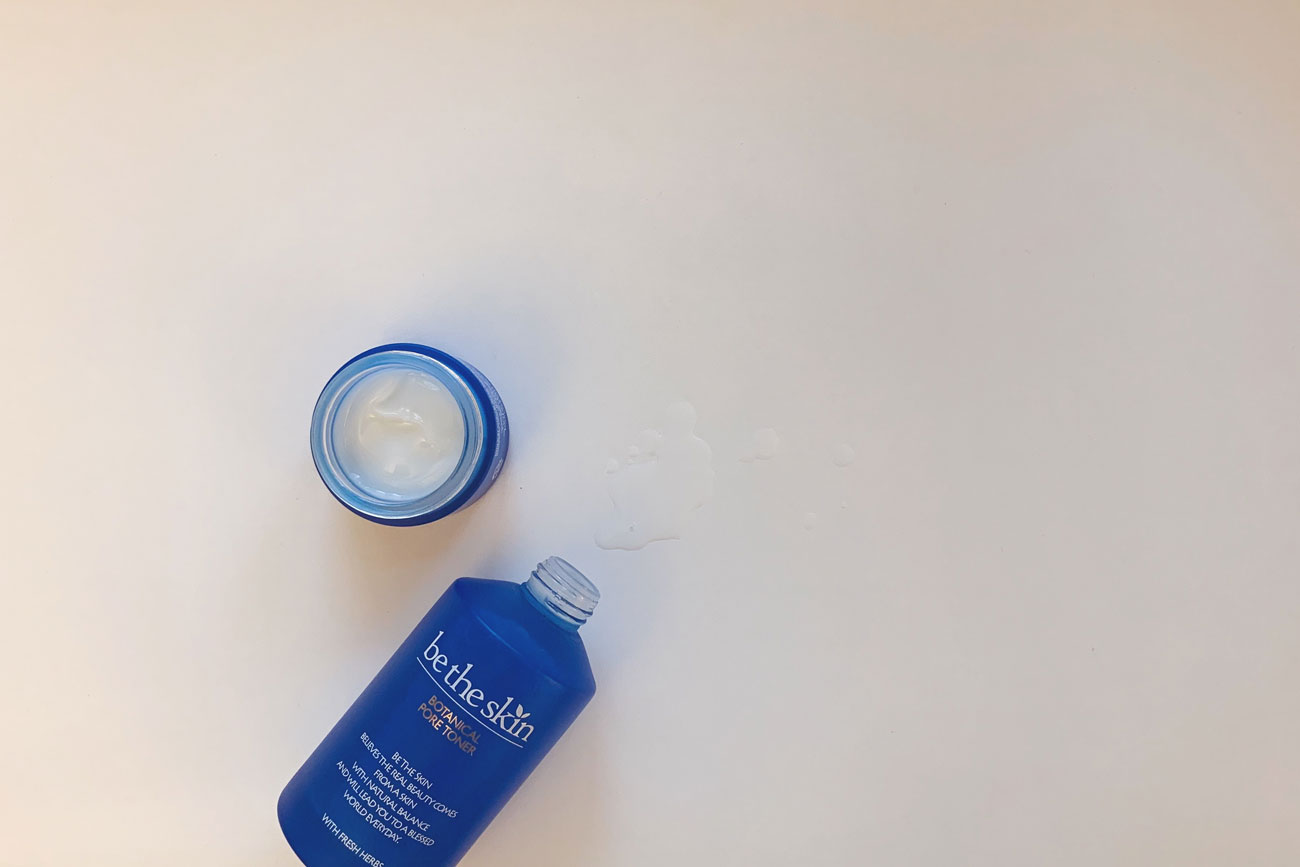
A toner helps balance the pH level of skin after cleansing, getting skin back to its ideal range of 4.5 to 5.5 — skin likes to be slightly acidic to help good bacteria flourish while keeping bad bacteria away. That helps maintain general skin health, even helping prevent breakouts. Be the Skin’s Botanical Pore Toner is a classic, balancing skin’s pH level after cleansing with all-natural ingredients and botanical herbs, and we recommend it particularly for its ability to help balance sebum production. It contains witch hazel, a natural astringent, which helps soothe skin and combat breakouts, while brown algae extract helps nourish, hydrate, and soften skin.
Nourish and support.
Thanks to marketing, it’s easy to think of skincare as a gendered thing, but it’s not — skin is skin, and it’s still the largest organ in your body. As such, it should be nourished and supported with good products and ingredients, just like you’d nourish and support your body with good food and exercise. The Peach & Lily Glass Skin Refining Serum provides vitamins, fatty acids, and hydrators to help promote skin health, and it also helps even skin tone and protect skin from environmental stressors, thanks to its wealth of antioxidants. Most importantly (maybe), it has no scent and is easy to apply — pump it out onto your hand 2-3 times and apply all over skin. There’s no tackiness or residue or anything left behind, so it’s like you’ve applied nothing at all.
Moisturize!
A moisturizer delivers more hydration to skin and then seals everything in, reducing or slowing down transepidermal water loss. That means that, thanks to the occlusive barrier created by a moisturizer, your skin is better able to hold onto hydration instead of it potentially being pulled from your skin and lost into the environment. This is important because keeping skin sufficiently hydrated is an essential part of keeping skin happy and healthy! Proper hydration also helps manage sebum production — when skin is dehydrated, that can actually trigger more sebum production because skin starts compensating, thinking it needs more oil because it’s feeling parched.
A moisturizer helps balance sebum production by locking hydration into skin, and we recommend opting for something lightweight. The Be the Skin Botanical Moisturizing Soothing Cream is in the same line as the Botanical Pore Toner mentioned above, and it’s a cooling gel texture that absorbs quickly into skin.
Don’t forget to apply sunscreen.
Sun damage is real! And it happens to all of us. The main thing with sunscreen, we think, is to find a sunscreen that works for you, one you’ll be happy to apply everyday — and reapply throughout the day. We think the Village 11 Factory Daily Mild Sun Cream is perfect for that; it absorbs quickly into skin and leaves no white cast or residue behind. You won’t look like a ghost, and you’ll be well-protected from the sun.
I handed the bottle to Mr BWB in frustration. After taking it apart, he figured out what the problem was: the tube connected to the pump dispenser is so short, it doesn’t even touch the serum inside!
I don’t know if I was given a faulty bottle (I sincerely hope so!), but I have to shake it and turn it upside down to get something out of it. Not worth the hassle for the results I got…
Key Ingredients In Prai Radiant Gemstone Caviar Triple Matrixyl Serum
Matrixyl: The fancy name of Palmitoyl Pentapeptide-4, it stimulates collagen production in concentrations between 4% and 8% and reduces wrinkle depth by 68%.
Matrixyl 3000: Made up of Palmitoyl Oligopeptide and Palmitoyl Tetrapeptide-7, it stimulates the production of collagen and hyaluronic acid (according to the manufacturer).
MATRIXYL® synthe’6™: A.k.a. Palmitoyl Tripeptide- 38, it stimulates the production of 6 components of the skin’s matrix, including 3 types of collagen and hyaluronic acid (according to the manufacturer).
I’m not a huge fan of Matrixyl. The initial research is promising and I know people who use it with good results. But I need to see more independent research supporting these claims before I switch from retinol.
If you’re 50+, are already using retinol and other collagen boosters, and want to throw Matrixyl in the mix because you feel your skin needs all the help it can get, go ahead. If you’re younger, stick to sunscreen and retinol. Don’t use what you don’t need yet – especially when there’s not much proof it works.
Glitter has no place in skincare. Sure, I want my skincare to give me a dewy glow, but not by adding shimmers to my serums, you know what I mean?
The shimmers in Prai Radiant Gemstone Caviar Triple Matrixyl Serum are really fine. You need to be super close to your skin to see them. Still, I feel cheated. Why not use hydrating hyaluronic acid or collagen-boosting Vitamin C to achieve the same effects? They do something good for the skin.
Mica (that’s the glitter here) can only play tricks with the light. It reflects light from the face, so that it looks smoother and brighter.
Glycerin
Glycerin is a moisture magnet. Literally.
Glycerin acts like a magnet that attracts to it the moisture in the air. Once it’s in its grasp, it drops this moisture into the skin and binds it there.
The result? More moisture = softer, smoother, more hydrated skin.
It’s way too shiny for my taste. If you have oily skin, you may want to use a mattifying powder on top to counteract the shine. That’s my issue here. I want a dewy glow, not a slick shine, if you know what I mean? I just use it at night, so it doesn’t bother me much.
The first thing I noticed is how soft it makes my skin. I accidentally touched my face when I woke up the next morning and was like “Wow! Why is it so silky?!”
I can’t say it did much else. It makes my skin a little smoother, but that may have something to do with its light tricks. But is it firmer?
Hard to tell. After a month, it feels a little tighter, but it’s not a massive difference that makes me want to put up with the crazy shine and crappy bottle. You may feel differently about that and that’s cool.
Get access to the “Pro Skincare Library” for exclusive skincare routine “cheat sheets” and tricks to help you navigate the beauty aisles jungle like a pro and immediately know what to pick off the shelves to achieve the gorgeous skin of your dreams – even when you’re drowning in an endless sea of skincare products.
Success! Now check your email to confirm your subscription and get access to the skin library.
Prepping for a wedding? Here are a few tips on how to care for your skin leading up to your big day.
Cleanse thoroughly but gently.
Here at Pibuu, we’re big proponents of the double cleansing technique. It’s a way to make sure skin is cleansed thoroughly but gently, which is a key thing to remember — keep your cleansing step gentle! Even if you have oily and/or acne-prone skin!
It can be tempting to strip skin dry because many of us have likely grown up thinking that we haven’t cleansed our skin properly if it isn’t feeling squeaky clean. However, there are good oils and good bacteria that exist on the surface of skin, and they help make up what is called the natural skin barrier (aka the lipid barrier). Maintaining that natural skin barrier is crucial to overall skin health; the skin barrier helps protect skin, reduce transepidermal water loss, and keep skin balanced. Harsh, intense cleansing can damage this natural skin barrier, which can make skin particularly vulnerable to bad bacteria and dehydration, which can, in turn, trigger breakouts or irritation and sensitivity.
When you’re leading up to a big event like a wedding, you might want to keep skin as calm and balanced as you can, and gentle but thorough cleansing is a crucial way to help stay in that state. The double cleansing technique starts with an oil-based cleanser (we like Be the Skin’s Daily Complete Cleansing Oil) to dissolve away makeup and other oil-based impurities — because oil attracts oil, an oil-based cleanser is able to go deep into pores and help decongest them, pulling out oil, bacteria, and other gunk that may have gotten trapped.
Follow that with a water-based cleanser (The Pure Lotus’ Jeju Botanical pH Balancing Cleanser is great!) to sweep away water-based impurities like sweat, dirt, and grime, as well as any remaining residue from your oil-based cleanser. With these two steps, the double cleanse technique will thoroughly cleanse skin while keeping it hydrated and without disrupting that precious balance!
Properly nourish and hydrate.
Giving skin the support it needs is obviously necessary for it to thrive, and the Peach & Lily Glass Skin Refining Serum makes it super easy to do so. This serum is packed with vitamins, hydrators, and antioxidants to help give skin what it needs to thrive, and the cooling gel-texture serum absorbs quickly into skin, leaving behind dewy, glassy skin.
Decongest clogged pores without drying skin.
When skin feels congested, a clay mask can help clear out clogged pores and reduce the appearance of pores. The problem with most clay masks, though, is that they can be super drying, leaving skin feeling uncomfortably tight and dry. We recommend the Femmue Gypsy Rose Calming Mask because it does not dry out skin; it has a light, fluffy texture that doesn’t harden on skin, staying light and fluffy as kaolin clay pulls oil and grime out of pores. Squalane, rose oil, and green tea oil help hydrate and soothe skin, while also helping control sebum production, so skin can be clearer, happier, and healthier.
Treat blemishes when they happen.
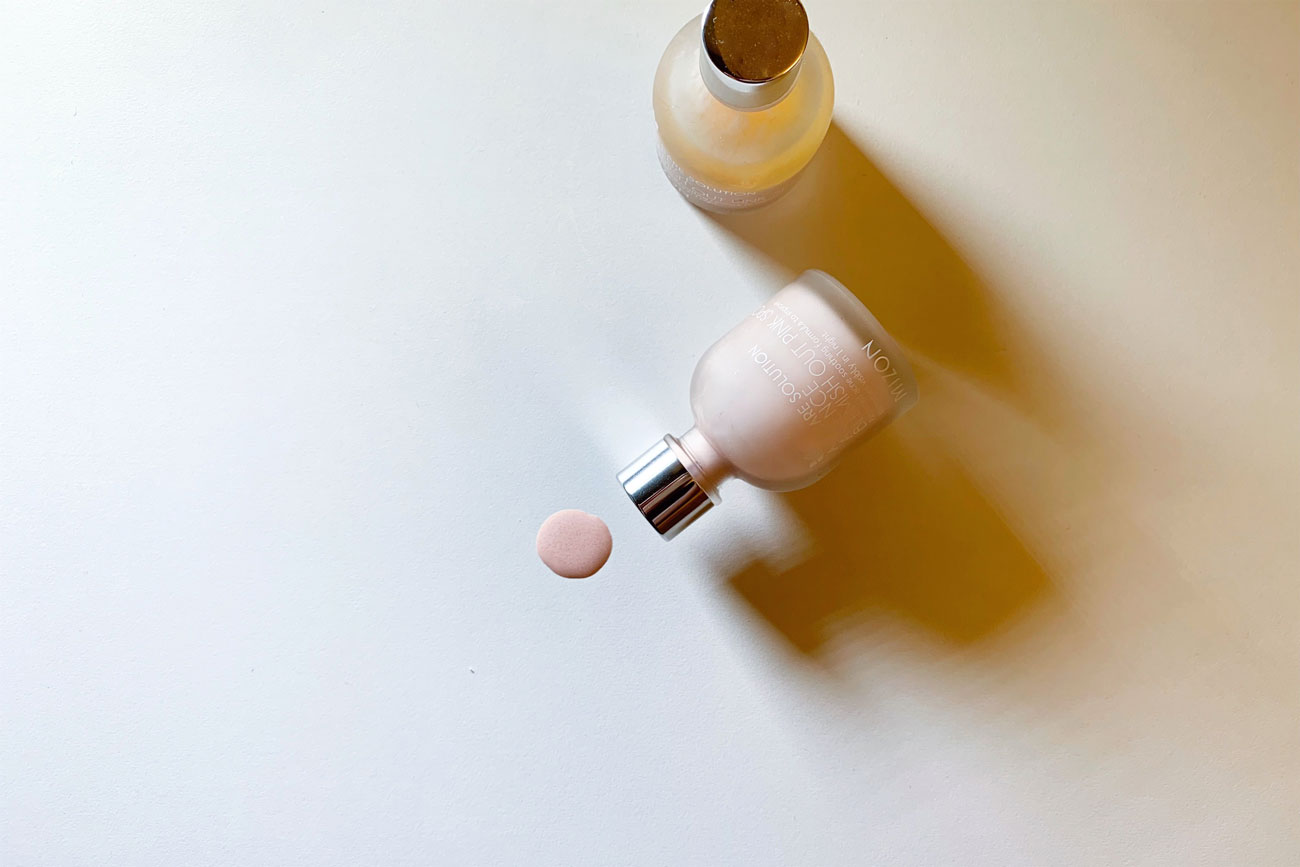
Breakouts happen! Instead of stressing out over them, treat them with this Acence Blemish Out Pink Spot from Mizon. This concentrated spot solution has two layers — the top yellow layer has AHA and BHA to help slough away residue, and the bottom pink layer, which is actually a calamine-based powder, helps calm spots and reduce redness and irritation. Shake the solution together before applying, and dab it on your blemishes before you go to bed, applying on clean skin, so the spot treatment can work its magic while you sleep!
It takes a lot for me to sit down and want to type several hundred words about a conditioner (feel free to count them), I mean it is just conditioner after all. However if like myself your hair is coloured/bleached/heat-damaged/all of the above on a regular basis, and perhaps to add insult to injury you wash it more than frequently, you are going to need all the help you can get. I know I do.
A quick overview of my hair: long, blonde (somewhat naturally but with a lot bleach to boot), tinted, more often than not straightened and washed far more regularly than I care to admit. In a word – damaged and yet I have neither the time, patience nor funds to indulge in regular hair masks. So the Pantene Pro-V 3 Minute Miracle Repair & Protect Conditioner is pretty much the answer to my hair care prayers and woes; it’s quick, easy and dare I be crass and state that it is cheap?
The best way I can think to describe Pantene Pro-V 3 Minute Miracle Repair & Protect Conditioner is to compare it to Aussie’s 3 Minute Miracle, especially in terms of texture (thick but not overly so) but for frequent use; so rather than stashing it away for a once a week/fortnight treatment you can reach for it every wash. Think of it as not quite your everyday conditioner as it is slightly thicker (the consistency is almost like mayonnaise but at the same time, balm-like as it melts onto the hair) and a whole lot more effective and yet it doesn’t have the gloppy/paste texture of a standard hair mask. As a result Pantene Pro-V 3 Minute Miracle Repair & Protect Conditioner does do what it says on the tin (repairs damage, smooths the hair, conditions and generally treats) without weighing down the hair, even on finer hair textures such as my own.
Basically if you need a middle-ground product: something that bridges the gap between gentle hydration for your locks (aka your everyday conditioner) and a deeply, nourishing mask that you all but have to plaster on your hair, Pantene Pro-V 3 Minute Miracle Repair & Protect Conditioner is the one for you. Ditto, if you are over sloppy and frankly messy hair oils and all else that leaves your bathroom slippery then this is what you’ve been waiting for.
And the best part? You can find Pantene Pro-V 3 Minute Miracle Repair & Protect Conditioner in just about every supermarket (as well as Boots and Superdrug) and it is seldom ever more than £4.
What are the best Neogen Dermalogy skincare products?
This is one of my fave Korean skincare brands. Ok, it uses a bit too much fragrance for my taste, but I can get past that. You know why?
Most Korean skincare products focus on hydration only. Neogen has that nailed down, too, of course. But it also has what it takes to prevent wrinkles, soothe irritations and fade away dark spots. It’s skincare that works.
So what should you try first? Here are the best Neogean Dermalogy skincare products, in my humble opinion:
Neogen Real Ferment Micro Serum ($38.00)
Got sensitive, easily irritated skin that gets triggered by everything? You need Neogen Real Ferment Micro Serum in your life (and I don’t use the word “need” lightly). It’s packed to the brim with every anti-inflammatory ingredient you can think of, including probiotics, centella asiatica and green tea. They help soothe redness and irritations and keep skin calm and happy. Plus, it has a huge dollop of niacinamide, a mutlitasking vitamin that does everything: it hydrates skin, strengthens its protective barrier, soothes redness, reduces the appearance of fine lines, fades away dark spots and even helps treat acne! The best part? It’s one of the few Neogen products without fragrance.
P.S. The matching essence has a very similar formula but without niacinamide. If that’s what you’re using, do your skin a favour and upgrade to the serum.
Neogen Real Cica Micellar Cleansing Water ($17.00)
Let’s get one thing straight: micellar waters are NOT makeup removers. But they’re a gentle way to cleanse skin in the morning, especially if you have sensitive skin or are too lazy to wash your cleanser off. Neogen Real Cica Micellar Cleansing Water does a great job at removing dirt and impurities from the skin without stripping it of the natural oils it needs to stay soft and supple. Plus, it’s enriched with ceramides and centella asiatica to moisturize and soothe skin during the cleansing process. It has fragrance, but if it doesn’t bother your skin, why hold it against it?
Neogen Real Flower Cleansing Water Calendula ($22.00)
Another cleansing water, but what can I say? Neogen does them really well. Real Flower Cleansing Water Calendula is loaded with soothing ingredients, including allantoin, chamomile and cucumber to keep skin soft and calm as it goes through the traumatic cleansing process. Actually, that’s not too traumatic as this water uses very mild surfactants that cleanse skin without irritation. It’s just not powerful enough to remove makeup. Use it in the morning only. By the way, this has fragrance, too.
Forget the white truffle. Niacinamide is the star of the show here. You know what it does by now: hydrates, soothes, fights acne, wrinkles, dark spots… The best part? It’s so gentle, anyone can use it. Even sensitive skin. Plus, Neogen White Truffle Serum In Oil Drop is loaded with all the best moisturizing ingredients: ceramides strengthen the skin’s protective barrier against external aggressors, hyaluronic acid draws moisture from the air into the skin and avocado oil seals it in. If you’ve got dry skin, this one’s a keeper.
Want to try chemical exfoliations but find common acids like glycolic too harsh for your skin? Try Neogen Real Cica Pads. It uses gluconolactonic and lactobionic acid, two gentle exfoliants that remove dead cells without irritating your skin. To make it even gentler, Neogen added hyaluronic acid to hydrate skin, ceramides to strengthen its protective barrier and centella asiatica to soothe. I could do without the fragrance, but it’s still well worth a try.
What do you think are the best Neogen skincare products? Share your picks in the comments below.
Take The Guesswork Out Of Skincare Shopping
Get access to the “Pro Skincare Library” for exclusive skincare routine “cheat sheets” and tricks to help you navigate the beauty aisles jungle like a pro and immediately know what to pick off the shelves to achieve the gorgeous skin of your dreams – even when you’re drowning in an endless sea of skincare products.
Success! Now check your email to confirm your subscription and get access to the skin library.
Summer is on its way in, and temperatures are getting warmer — wedding season is upon us.
We know it can be stressful preparing for a wedding, especially because life doesn’t stop just because you’re getting married. Most of us have to juggle full-time jobs, families, and other day-to-day life stuff while planning for our big days, and everything combined can have an effect on our skin.
We asked one of our team members, Nathalie, for her advice. She planned her wedding while also juggling other major life transitions. Here’s what she said.
How long did you have to prepare for your wedding?
Six months! I wasn’t only planning my wedding — I was also renovating my apartment and starting a new, very demanding job, so I had a lot of stressful things going on at once. I’m not someone to just let go and let someone else handle things, either, and I’m a frenetic planner who’s meticulous about all the small details. I had to taste everything, too, from the champagne and wine to all the food we were going to serve, and, of course, all the tastings affected my skin.
To add to that, let’s admit it — few people actually sleep the number of hours required by our bodies, even when they’re not planning a wedding, and I’m no different. So, the lack of sleep, high levels of good stress, all the tastings — my skin started developing different issues.
Did you follow a strict routine?
I was super cautious with my skincare routine, and I made sure to cleanse my face thoroughly everyday, never ever leaving makeup on. In the morning, I used a toner lotion, serum, and moisturizer, and, in the evening, I did the same thing, just swapping the moisturizer for a cream and adding a mask.
Because my skin was reacting so much to all the stress, my solution was to mask everyday. I’d even check in on my apartment renovations while wearing a mask because, sometimes, that’s the only time I had to mask.
What about your bridal party?
I sent my same routine to all my bridesmaids! They were under strict command to cleanse thoroughly and do masks and follow my routine.
Did you do anything special on your wedding day?
Not really. I made sure to cleanse thoroughly the night before and use a hydrating overnight pack, but, on the day of, I left things to my makeup artist. It’s important to hire and test a makeup artist you trust who knows your skin.
Skin isn’t perfect, though, and it can always potentially react on the big day. I prepared a wedding rescue kit just in case, with acne spot treatments, a hydrating mist, and a super nourishing balm for dry patches. Including elbows. You don’t want to walk down the aisle with ashy elbows.
Any tips for our readers?
There’s no perfect scenario! You should of course try to get plenty of sleep every night and eat healthy and drink a lot of water, but planning a wedding and working at the same time can be really stressful. That’s why it was important for me to establish a routine and stick to it every day — having a routine I knew and could commit to meant my skin was one less thing for me to stress about. Cleanse thoroughly and stick to products that really support your skin. And use whatever time you have to do masks!
On your wedding day, delegate the really big tasks to your bridesmaids. Your wedding is your day, and you should be able to enjoy it!
—
Thank you, Nathalie!
Here are a few products she recommends:
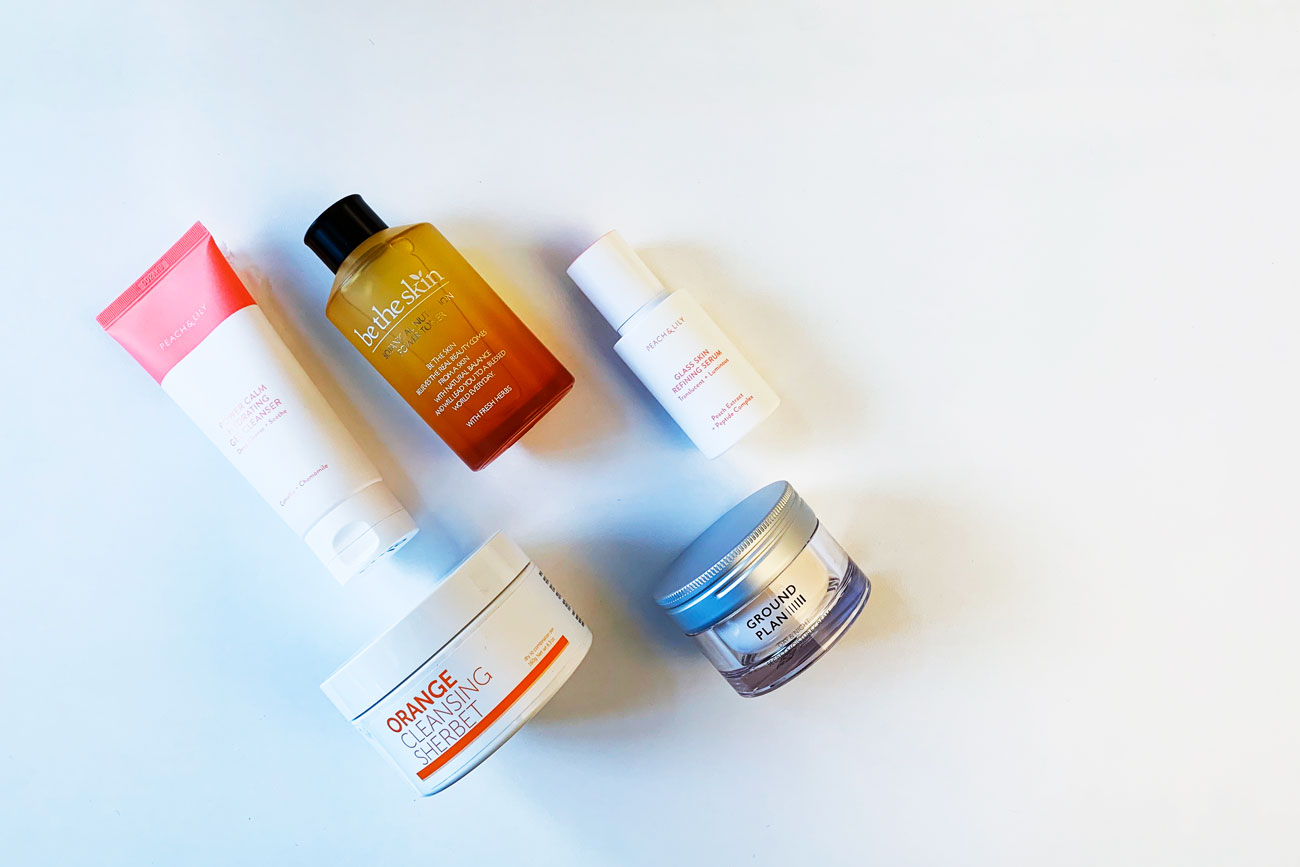
Aromatica, Orange Cleansing Sherbert Nathalie really stressed the importance of thorough cleansing, even on nights she was exhausted. She’s committed to the double cleanse, recommending this oil-based cleanser from Aromatica because it starts in solid form, with a sherbert-like texture that scoops out without mess. It melts onto skin, dissolving away makeup (even waterproof makeup!) and impurities while also hydrating, so skin is left calm, clean, and supple.
Peach & Lily, Power Calm Hydrating Gel Cleanser Follow up with a water-based cleanser! Nathalie likes the Power Calm Hydrating Gel Cleanser because it’s gentle and calming. A cooling gel texture, the Power Calm Cleanser clears away sweat, grime, and any other remaining impurities without stripping skin dry.
Be the Skin, Botanical Nutrition Power Toner Keeping skin balanced is key to keeping skin healthy and happy. This Be The Skin Botanical Nutrition Power Toner is alcohol-free and helps balance the pH level of skin while also deeply hydrating.
Peach & Lily, Glass Skin Refining Serum Nathalie couldn’t stress nourishing skin enough, recommending a serum like the Peach & Lily Glass Skin Refining Serum — it just makes it so easy to give skin the deep support it needs. Full of vitamins, antioxidants, and hydrating ingredients, the Glass Skin Serum helps keep skin healthy and happy.
Ground Plan, Day and Night Secret Moisture Cream The Day and Night Secret Moisture Cream from Ground Plan is a rich, creamy moisturizer that isn’t greasy or heavy, and, as the name goes, it can be suitable for day and night use! If you have drier skin or want more moisture overnight, though, you could always swap this out for a thicker overnight mask.
A few sheet masks she recommends: Peach & Lily, Good Skin Day for deep hydration.
Atoclassic, Real Tonic Perfect Treatment Mask for days when skin feels sensitive and irritated.
Eco Your Skin, Face Blanket Mask for a truly intensive, deeply hydrating, overnight sheet masking experience.






 Dawn Siler