Wedding Prep, Bride Edition.

Prepping for a wedding? Here are a few tips on how to care for your skin leading up to your big day.

Cleanse thoroughly but gently.

Here at Pibuu, we’re big proponents of the double cleansing technique. It’s a way to make sure skin is cleansed thoroughly but gently, which is a key thing to remember — keep your cleansing step gentle! Even if you have oily and/or acne-prone skin!

It can be tempting to strip skin dry because many of us have likely grown up thinking that we haven’t cleansed our skin properly if it isn’t feeling squeaky clean. However, there are good oils and good bacteria that exist on the surface of skin, and they help make up what is called the natural skin barrier (aka the lipid barrier). Maintaining that natural skin barrier is crucial to overall skin health; the skin barrier helps protect skin, reduce transepidermal water loss, and keep skin balanced. Harsh, intense cleansing can damage this natural skin barrier, which can make skin particularly vulnerable to bad bacteria and dehydration, which can, in turn, trigger breakouts or irritation and sensitivity.

When you’re leading up to a big event like a wedding, you might want to keep skin as calm and balanced as you can, and gentle but thorough cleansing is a crucial way to help stay in that state. The double cleansing technique starts with an oil-based cleanser (we like Be the Skin’s Daily Complete Cleansing Oil) to dissolve away makeup and other oil-based impurities — because oil attracts oil, an oil-based cleanser is able to go deep into pores and help decongest them, pulling out oil, bacteria, and other gunk that may have gotten trapped.

Follow that with a water-based cleanser (The Pure Lotus’ Jeju Botanical pH Balancing Cleanser is great!) to sweep away water-based impurities like sweat, dirt, and grime, as well as any remaining residue from your oil-based cleanser. With these two steps, the double cleanse technique will thoroughly cleanse skin while keeping it hydrated and without disrupting that precious balance!

Properly nourish and hydrate.

Giving skin the support it needs is obviously necessary for it to thrive, and the Peach & Lily Glass Skin Refining Serum makes it super easy to do so. This serum is packed with vitamins, hydrators, and antioxidants to help give skin what it needs to thrive, and the cooling gel-texture serum absorbs quickly into skin, leaving behind dewy, glassy skin.

Decongest clogged pores without drying skin.

When skin feels congested, a clay mask can help clear out clogged pores and reduce the appearance of pores. The problem with most clay masks, though, is that they can be super drying, leaving skin feeling uncomfortably tight and dry. We recommend the Femmue Gypsy Rose Calming Mask because it does not dry out skin; it has a light, fluffy texture that doesn’t harden on skin, staying light and fluffy as kaolin clay pulls oil and grime out of pores. Squalane, rose oil, and green tea oil help hydrate and soothe skin, while also helping control sebum production, so skin can be clearer, happier, and healthier.
acne spot treatment wedding skincare

Treat blemishes when they happen.

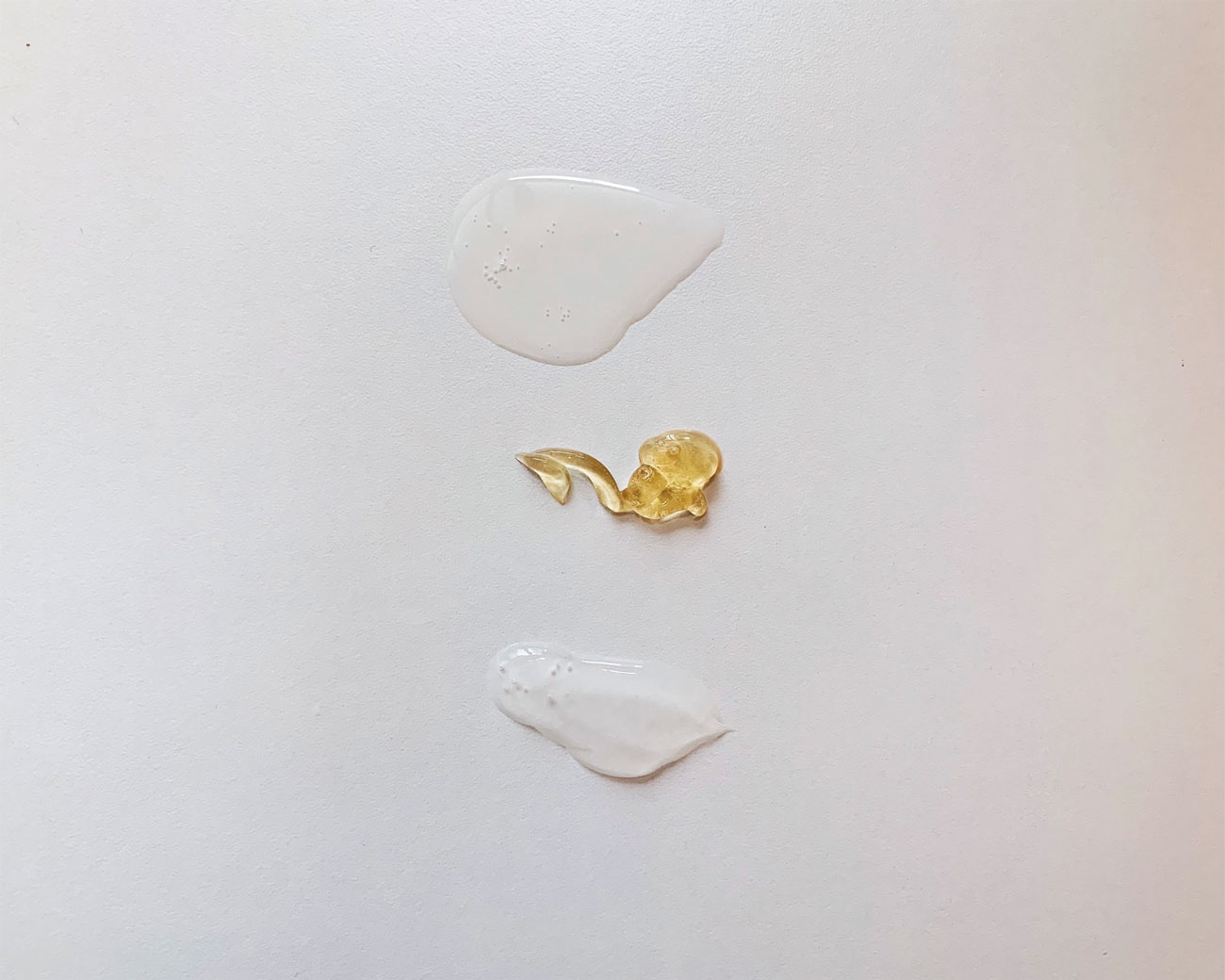
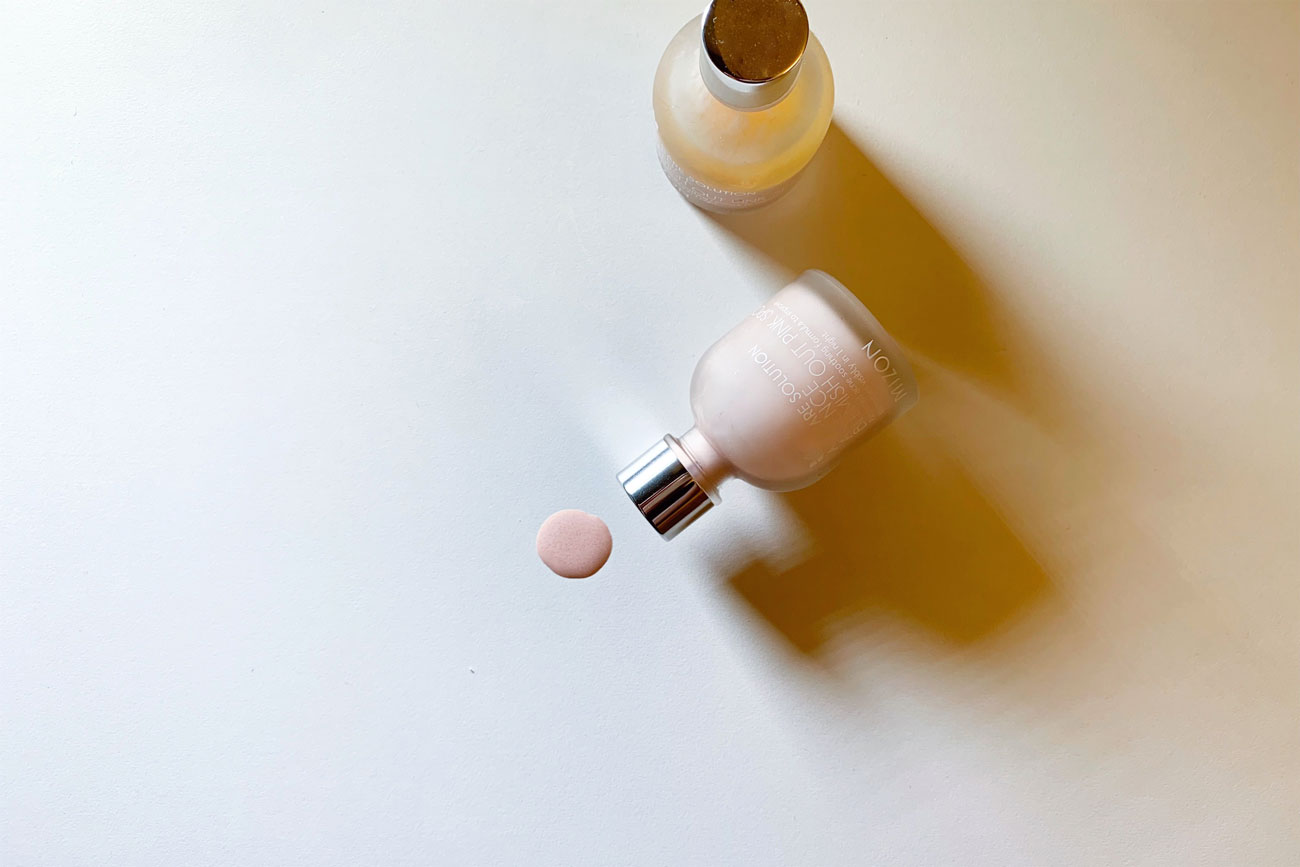
Breakouts happen! Instead of stressing out over them, treat them with this Acence Blemish Out Pink Spot from Mizon. This concentrated spot solution has two layers — the top yellow layer has AHA and BHA to help slough away residue, and the bottom pink layer, which is actually a calamine-based powder, helps calm spots and reduce redness and irritation. Shake the solution together before applying, and dab it on your blemishes before you go to bed, applying on clean skin, so the spot treatment can work its magic while you sleep!

The post Wedding Prep, Bride Edition. appeared first on Pibuu.

Wedding Prep, Bride Edition.
Originally posted here: https://www.pibuu.co/2019/05/29/wedding-prep-bride-edition/
Tips From a Bride for Brides.

Summer is on its way in, and temperatures are getting warmer — wedding season is upon us.

We know it can be stressful preparing for a wedding, especially because life doesn’t stop just because you’re getting married. Most of us have to juggle full-time jobs, families, and other day-to-day life stuff while planning for our big days, and everything combined can have an effect on our skin.

We asked one of our team members, Nathalie, for her advice. She planned her wedding while also juggling other major life transitions. Here’s what she said.

How long did you have to prepare for your wedding?

Six months! I wasn’t only planning my wedding — I was also renovating my apartment and starting a new, very demanding job, so I had a lot of stressful things going on at once. I’m not someone to just let go and let someone else handle things, either, and I’m a frenetic planner who’s meticulous about all the small details. I had to taste everything, too, from the champagne and wine to all the food we were going to serve, and, of course, all the tastings affected my skin.

To add to that, let’s admit it — few people actually sleep the number of hours required by our bodies, even when they’re not planning a wedding, and I’m no different. So, the lack of sleep, high levels of good stress, all the tastings — my skin started developing different issues.

Did you follow a strict routine?

I was super cautious with my skincare routine, and I made sure to cleanse my face thoroughly everyday, never ever leaving makeup on. In the morning, I used a toner lotion, serum, and moisturizer, and, in the evening, I did the same thing, just swapping the moisturizer for a cream and adding a mask.

Because my skin was reacting so much to all the stress, my solution was to mask everyday. I’d even check in on my apartment renovations while wearing a mask because, sometimes, that’s the only time I had to mask.

What about your bridal party?

I sent my same routine to all my bridesmaids! They were under strict command to cleanse thoroughly and do masks and follow my routine.

Did you do anything special on your wedding day?

Not really. I made sure to cleanse thoroughly the night before and use a hydrating overnight pack, but, on the day of, I left things to my makeup artist. It’s important to hire and test a makeup artist you trust who knows your skin.

Skin isn’t perfect, though, and it can always potentially react on the big day. I prepared a wedding rescue kit just in case, with acne spot treatments, a hydrating mist, and a super nourishing balm for dry patches. Including elbows. You don’t want to walk down the aisle with ashy elbows.

Any tips for our readers?

There’s no perfect scenario! You should of course try to get plenty of sleep every night and eat healthy and drink a lot of water, but planning a wedding and working at the same time can be really stressful. That’s why it was important for me to establish a routine and stick to it every day — having a routine I knew and could commit to meant my skin was one less thing for me to stress about. Cleanse thoroughly and stick to products that really support your skin. And use whatever time you have to do masks!

On your wedding day, delegate the really big tasks to your bridesmaids. Your wedding is your day, and you should be able to enjoy it!

Thank you, Nathalie!

bridal skincare

Here are a few products she recommends:

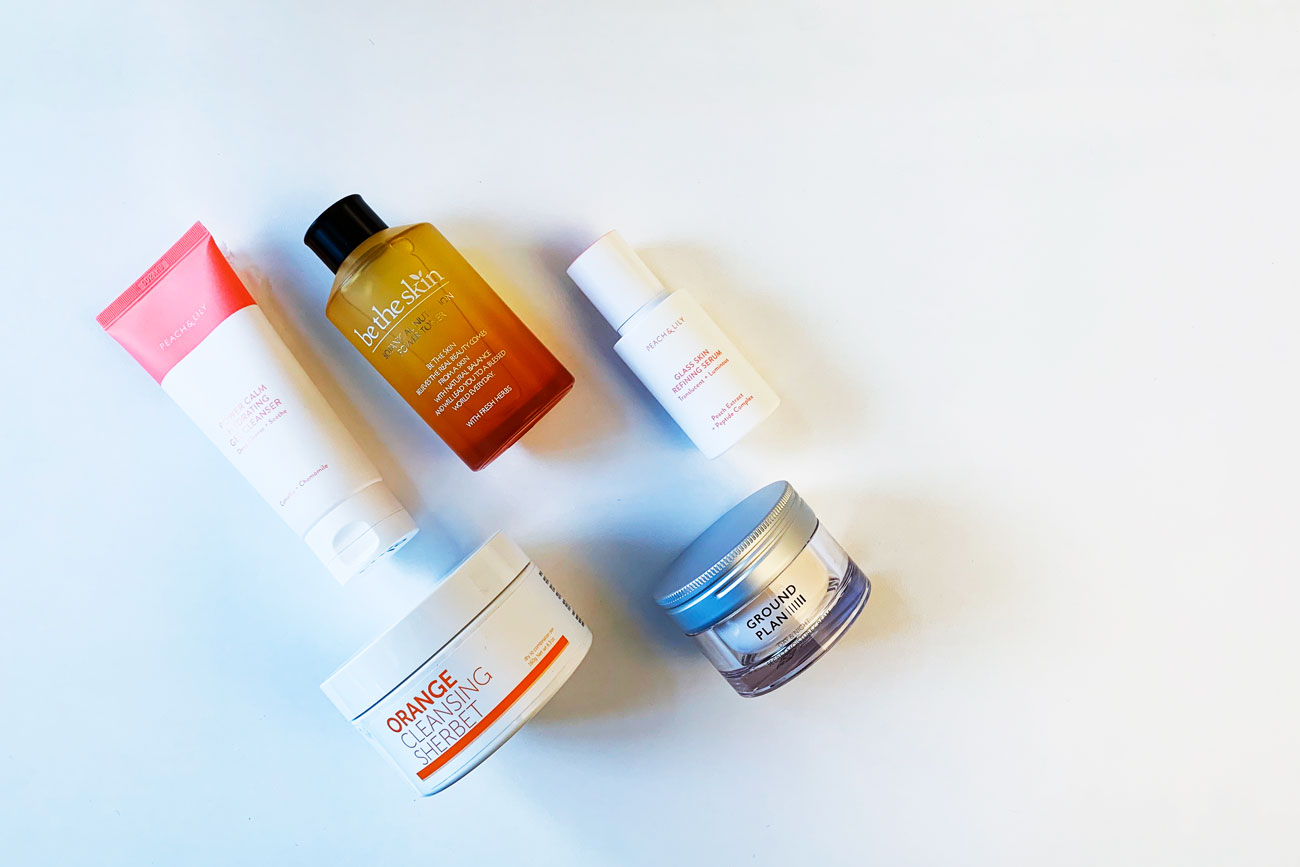
Aromatica, Orange Cleansing Sherbert
Nathalie really stressed the importance of thorough cleansing, even on nights she was exhausted. She’s committed to the double cleanse, recommending this oil-based cleanser from Aromatica because it starts in solid form, with a sherbert-like texture that scoops out without mess. It melts onto skin, dissolving away makeup (even waterproof makeup!) and impurities while also hydrating, so skin is left calm, clean, and supple.

Peach & Lily, Power Calm Hydrating Gel Cleanser
Follow up with a water-based cleanser! Nathalie likes the Power Calm Hydrating Gel Cleanser because it’s gentle and calming. A cooling gel texture, the Power Calm Cleanser clears away sweat, grime, and any other remaining impurities without stripping skin dry.

Be the Skin, Botanical Nutrition Power Toner
Keeping skin balanced is key to keeping skin healthy and happy. This Be The Skin Botanical Nutrition Power Toner is alcohol-free and helps balance the pH level of skin while also deeply hydrating.

Peach & Lily, Glass Skin Refining Serum
Nathalie couldn’t stress nourishing skin enough, recommending a serum like the Peach & Lily Glass Skin Refining Serum — it just makes it so easy to give skin the deep support it needs. Full of vitamins, antioxidants, and hydrating ingredients, the Glass Skin Serum helps keep skin healthy and happy.

Ground Plan, Day and Night Secret Moisture Cream
The Day and Night Secret Moisture Cream from Ground Plan is a rich, creamy moisturizer that isn’t greasy or heavy, and, as the name goes, it can be suitable for day and night use! If you have drier skin or want more moisture overnight, though, you could always swap this out for a thicker overnight mask.

A few sheet masks she recommends:
Peach & Lily, Good Skin Day for deep hydration.

Atoclassic, Real Tonic Perfect Treatment Mask for days when skin feels sensitive and irritated.

Eco Your Skin, Face Blanket Mask for a truly intensive, deeply hydrating, overnight sheet masking experience.

The post Tips From a Bride for Brides. appeared first on Pibuu.

Tips From a Bride for Brides.
Originally posted here: https://www.pibuu.co/2019/05/28/tips-from-bride-for-brides/

Suncare, The Basics.

Sunscreen can be one of those things you know you should apply every day but find yourself avoiding because it’s really hard to find a sunscreen you love, especially when you’re as finicky as we are. We know we should apply sunscreen, but maybe we’re not sure why — so we thought we would take some time to answer a few basic questions!

Mineral vs. Chemical

Sunscreen formulations fall into two camps — or, really, three: mineral sunscreens, chemical sunscreens, and hybrid sunscreens.

Mineral sunscreens are also called physical sunscreens, and there are only two mineral sunscreen ingredients: titanium dioxide and zinc dioxide. On the other hand, there are many more chemical sunscreen ingredients, roughly 30, and they work in different ways. Mineral sunscreens reflect away UV rays, essentially repelling them away, while chemical sunscreens will take the UV rays, convert them into heat, and prevent them from doing damage.

Neither mineral or chemical sunscreens are inherently better than the other. They’re equally protective, and it really kind of comes down to what you’re looking for. Mineral sunscreens have a much lower risk of irritating skin, but they may have thicker textures and leave a white cast. Chemical sunscreens can have thinner textures, but they can potentially be sensitizing for people with extra sensitive skin. Hybrid sunscreens try to take the best of both worlds, but, really, the main thing is about finding a sunscreen that works for you. You’re going to hear us say that a lot.

UVA vs. UVB

The two types of UV (ultraviolet) rays that affect us are UVA and UVB rays. UVA rays have longer waves, and they can penetrate to deeper layers of skin, harming the elements in skin that help maintain elasticity. In other words, UVA rays are more likely to have an effect on visible signs of aging, causing wrinkles and fine lines. UVA rays can actually pass through glass, so we highly encourage wearing sunscreen even when indoors.

UVB rays are more responsible for sunburn, and they are more likely to cause things like hyperpigmentation. They are also stronger in sunny climates, and fun fact: UVB rays are actually stronger at higher altitudes! It’s why you never neglect sunscreen, even when mountain climbing or participating in winter sports — UVB rays actually reflect off surfaces like snow, so your skin is hit by UVB rays twice.

sunscreen

SPF vs. PA+

Like there are two kinds of UV light, there are two protective systems: SPF and PA+.

SPF stands for “Sun Protection Factor,” and it measures how long the sunscreen in question will protect you from the sun’s burn-causing UVB rays. The higher the number doesn’t actually indicate the strength of the sunscreen but the time it’s “good for” on your skin. For example: let’s say it takes 15 minutes for your unprotected skin to start turning pink in the sun. A sunscreen with SPF 30 is good for 450 minutes, which is when you should reapply.

PA+ helps indicate the effectiveness of a sunscreen against UVA rays. The PA+ system is starting to be seen more in the States, but typically, the phrase “broad spectrum” is used to indicate a sunscreen that protects against both UVA/UVB rays. PA+ indicates some protection against UVA rays, while PA++++ indicates extremely high protection.

We hope that helps answer some questions! If you have any other questions, leave them in the comments below!

The post Suncare, The Basics. appeared first on Pibuu.

Suncare, The Basics.
Originally posted here: https://www.pibuu.co/2019/05/24/suncare-the-basics/

Meet Your New Favorite Sunscreen.

We all know that sun damage degrades our skin taking away from our bouncy, lifted, glowing glass skin, but did you know that studies show that, for many people, about 80% of skin aging happens in the summer? We know that wearing SPF daily is key to keeping skin looking and feeling its best. Unfortunately, we also know that that’s often easier said than done. A lot of sunscreens can sit heavily on top of skin, leave a white cast, or even irritate skin, clogging pores with heavy formulations that dry out skin and just don’t feel good.

Wearing sunscreen daily then becomes that chore that never gets done — or only gets done reluctantly from time to time. We all know our skin needs protection from the sun, though.

This is why we went on one of our most important beauty curation journeys! We tested hundreds of different sunscreens, trying to find one that met all our criteria:

  1. Fast-absorbing with no residue, chalkiness, or dryness
  2. Absolutely no white cast
  3. Truly weightless
  4. Effective protection against UVA/UVB rays and environmental pollutants
  5. A matte but hydrated finish

It sounds like an impossible task, and, sometimes, along the journey, we admit we felt discouraged, too. We’d find a sunscreen that felt weightless and absorbed quickly, but it didn’t provide adequate protection. Or we’d find a sunscreen that provided excellent protection from both UVA/UVB rays and environmental pollutants, but it would leave us looking like a ghost with pallid skin. Or we’d find a sunscreen that left a matte finish but made our skin feel heavy and chalky and weighed down.

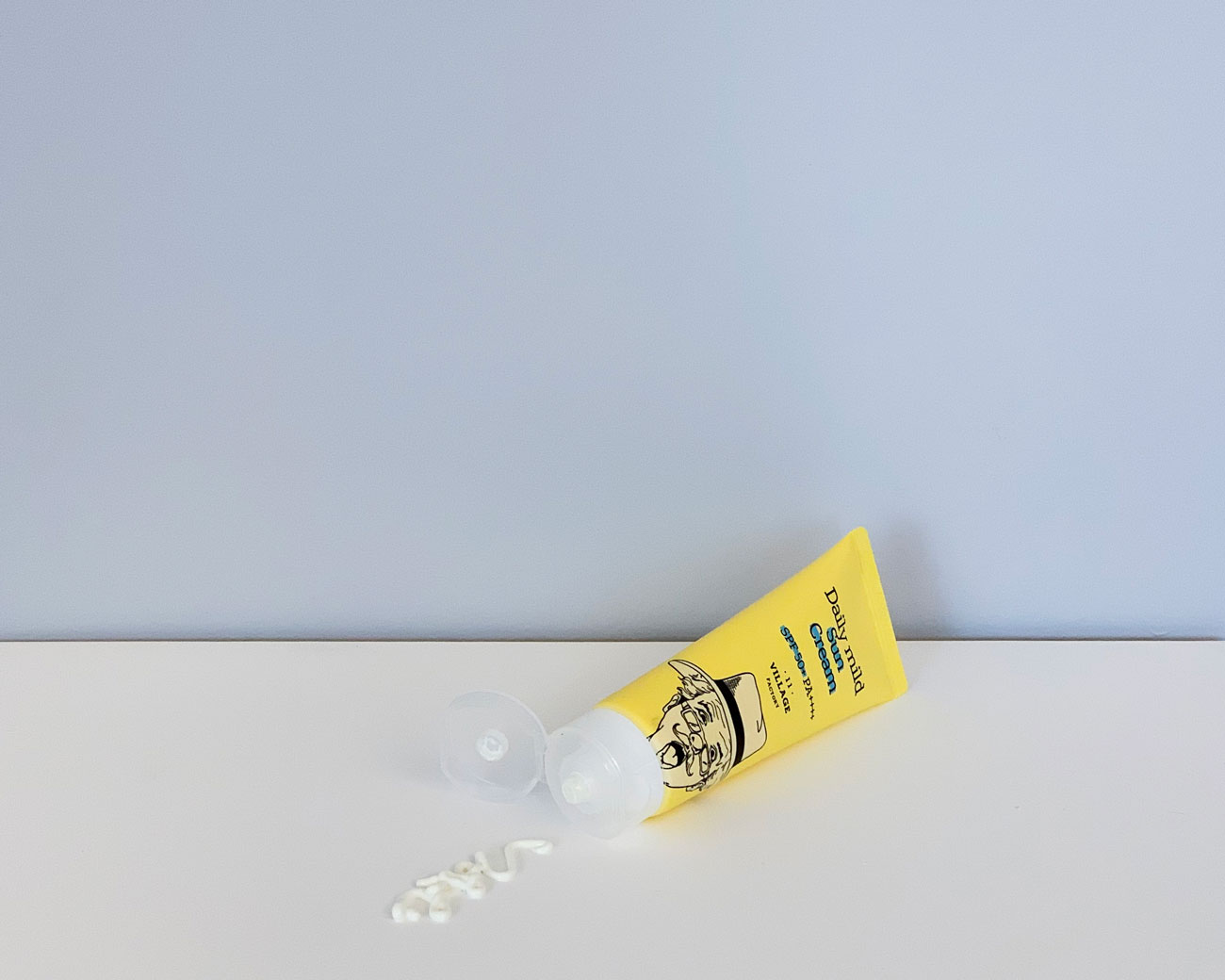
And then we found this Daily Mild Sun Cream from Village 11 Factory.

The light, almost milky cream absorbed quickly. It left zero white cast. It felt truly weightless on our skin, like we hadn’t applied anything at all. With SPF 50+ PA++++, it provided us from both UVA and UVB rays, and it was formulated using titanium dioxide, a natural mineral that reflects UV rays away from skin and rarely causes irritation. It left our skin feeling hydrated and happy, matte but dewy.

(Note: it’s important to find a sunscreen that protects skin from both UVA and UVB rays! UVA and UVB rays affect skin differently; UVA rays are more commonly linked to premature aging, while UVB rays are more commonly linked to skin diseases.)

As we started to learn more about the Daily Mild Sun Cream, we learned that it uses proprietary technology developed by Village 11 Factory that helps the Sun Cream form a barrier on skin, protecting it from pollutants and environmental stressors. The Sun Cream also contains beautiful plant-based ingredients that help hydrate, soothe, and calm skin, ingredients like portulaca oleracea extract (helps soothe skin), chia seed extract (helps protect skin), and centella asiatica extract (helps heal and calm skin). There’s also niacinamide to help brighten and even skin tone, as well as squalane that helps deeply hydrate and, even, balance oil production!

We’re so excited to bring you this wonderful sunscreen! With the Daily Mild Sun Cream, we’re sure you’ll be so excited to wear sunscreen everyday; it won’t be that product you know you need but want to avoid anymore. Now you can go out and get your daily vitamin D without worrying about sun damage — and, before you ask, studies show that sunscreen doesn’t drastically affect the absorption of vitamin D and that as little as 10 to 30 minutes of sunlight are sufficient! Our recommendation is to be diligent about applying sunscreen to protect your skin, especially with a worry-free sunscreen like the Daily Mild Sun Cream!

Cheers to radiance and happy, carefree days protected from the sun!


Meet Your New Favorite Sunscreen.
Originally posted here: https://www.peachandlily.com/blogs/news/meet-your-new-favorite-sunscreen

Three Practical Ways to Manage Stressed Skin

We think it’s fair to say that we all deal with stress on a daily level. Some days, our stress levels are low, and, on other days, our stress levels are higher — that’s pretty normal! Sometimes, though, we struggle with chronic, elevated stress, and it starts to take its toll, whether in our moods or the quality of our sleep or in our relationships. Stress also affects our skin.

When we’re stressed, our bodies respond like they do to wounds — by releasing chemicals and hormones (you’ve heard of cortisol, the stress hormone) that trigger inflammation. In a normal situation, inflammation is how the body heals; it’s one of our bodies’ immune response to damage or harm. When we’re in a state of chronic, elevated stress, though, our bodies are in a constant state of imbalance, our immune responses going haywire and triggering too much inflammation all the time, which can have an impact on skin.

If you have a pre-existing skin condition, like eczema or rosacea, you might find that chronic stress triggers a flare-up or just makes an ongoing episode so much worse. If you have acne-prone skin, you might find yourself struggling with more active breakouts; inflammation, after all, is already one of the causes for acne.

You don’t have to have a skin condition for your skin to react negatively to stress, though. Even normal skin can react to stress.

How should you help your skin when you’re stressed and your skin is getting stressed? We know it’s pretty unhelpful advice just to say, “Manage your stress levels,” so, instead of that, we’ve got three practical ways you can help your skin.

Go For Gentle.

When you’re stressed and your skin is stressed, you might want to step back from stronger products and pare things down to the basics. Stress already increases inflammation, so focus on soothing skin with gentle products that have anti-inflammatory properties and help hydrate, nourish, and calm. When your skin starts to go back to normal, you can always reintroduce stronger products like retinols, vitamin C serums, and powerful exfoliators.

We especially want to stress a gentle cleansing routine, one that doesn’t strip your skin dry or compromise your natural skin barrier. We like a cleanser like Atoclassic’s Real Tonic Soothing Multi Cleanser; it contains no sulfates and has a pH of 5.5, making it very gentle. It uses a blend of root and herbal extracts found in Korean traditional medicine to help soothe and restore skin, so it’s a great cleanser for sensitive or stressed skin.

Stay Consistent With a Routine!

Don’t neglect your routine! One of the keys when it comes to skin health is consistency, and, even if you only have time to do the very basics of cleansing, toning, and moisturizing, make sure to do that every day. Here at Pibuu, though, we believe that taking the time to do a skincare routine every day is not just good for skin health — it’s also a great way to de-stress every day, serving as a way to manage stress levels.

Maybe it sounds a little silly in the grand scheme of things, but making the time to do a skincare routine can be a way of caring for yourself. It can be mentally and emotionally calming to focus on your skin, away from the stressors in your life, and maybe even taking the time to do a facial massage while doing a breathing exercise or meditation to help calm and center your mind. The Peach & Lily Glass Skin Refining Serum is particularly suited for a facial massage, with a thicker texture that cools and soothes skin. The serum itself is packed with beneficial, antioxidant-rich ingredients like peach extract, mountain yam extract, niacinamide, and madecassoside to help nourish stressed skin, as well as hyaluronic acid to help deeply hydrate.

Get Enough Sleep.

They call it beauty sleep for a reason, after all! As we sleep, our bodies go into restorative mode, healing itself and recharging neurons, and our skin is no different. It’s why dermatologists will often tell clients to apply medication meant to help repair skin before they go to sleep, and it’s the idea behind sleeping packs, which you might apply in lieu of your moisturizer at night. Sleeping packs take advantage of the restorative period of sleep, and they’re often full of powerful ingredients and formulated in ways to help them really sink into skin and help with rejuvenation as you sleep. With the help of a sleeping pack, getting enough sleep helps manage your stress levels while helping alleviate stressed skin.

The Dream Age Sleeping Pack from Rose by Dr. Dream specifically harnesses the power found in the rose, starting with rose distilled water for its skin-conditioning properties and adding rose stem cells to help encourage skin rejuvenation. It also has aloe and hyaluronic acid to hydrate, niacinamide to brighten, and portulaca oleracea extract to help soothe, and the natural rose scent will help soothe you mentally as you drift off to sleep.

We hope those are helpful, practical ways to help manage stressed skin. If you have any questions, leave them in the comments below!

The post Three Practical Ways to Manage Stressed Skin appeared first on Pibuu.

Three Practical Ways to Manage Stressed Skin
Originally posted here: https://www.pibuu.co/2019/05/22/three-practical-ways-to-manage-stressed-skin/

A Routine to Glass Skin.

Glass skin — skin that appears like glass, poreless, luminous, translucent. We don’t mean that skin that you can literally see through (obviously), but skin that is so clear and radiant, it has that clear, glossy look of glass.

You might be thinking, That sounds impossible. I don’t have the time or money to do that.

Au contraire! To be sure, it would be nice if we could all get expensive facials and have the time for extensive, thorough routines, but we know — reality doesn’t always allow for that. However! That does not mean that glass skin is unattainable!

Glass skin is, essentially, healthy and hydrated skin; it’s about making sure your skin gets the nutrients and the hydration it needs to thrive. It’s about finding the products that work for you and your skin, that help keep your skin balanced, nourished, and, again, hydrated, and it’s about finding that routine that works for you — and sticking to it because consistency is key!

It doesn’t matter if you have a quick and easy routine or an intensive 10-step one — just make sure you’re doing it every day! Skincare is a marathon, and you’re sure to see the rewards of committing to a routine. If you’re intrigued but don’t know where to start, let us walk you through a sample routine!

Cleanse Thoroughly Every Day.

Even on your laziest days, cleanse your skin! Cleansing is one of the most essential steps because it dissolves away makeup and sweeps away excess sebum, grime, and other impurities that may have gathered on your skin during the day, helping prevent pores from clogging and gathering bacteria and other congestants. It’s key to keep cleansing gentle but thorough, so your skin is cleansed but not stripped dry, which can cause it to become dehydrated. We’re big proponents of the double cleanse, but we also love when products let us combine both steps in one, like the Eco Your Skin Oil-to-Foam Cleanser. The convenience (and gentleness and efficacy) makes it so much easier to commit to a routine!

Tone Skin to Help It Stay Balanced.

Toners help re-balance the pH level of skin after cleansing. Skin’s pH level lets you know how acidic or alkaline it is on a scale of 0 (totally acidic) to 14 (totally alkaline), and skin is considered balanced when its pH level is in the 4.5 to 5.5 range — so, slightly acidic, which allows for skin’s microbiome to thrive while fending off bad bacteria and harmful irritants. You can imagine why we stress the importance of keeping your skin balanced.

Cleansing can throw skin’s pH level off, and a toner helps “balance” it, which means bring it back into the happy range of 4.5 to 5.5. The Peach & Lily Good Acids Toner does exactly that, while also providing gentle exfoliation with a small amount of glycolic acid that’s effective and gentle enough for daily use, even for sensitive skin. The toner doesn’t just stop there, though; it also helps hydrate, soothe, and nourish skin, prepping skin for the products to follow.

Hydrate Skin With an Essence.

One of the primary characteristics of healthy skin is that it is sufficiently hydrated, and the primary task of an essence is to drench skin with hydration. Essences come with other secondary benefits, of course, like brightening or, in the case of the Atoclassic Real Tonic Soothing Origin Essence, soothing and helping calm irritation. With 14% hanbang ingredients, the Soothing Origin Essence help reduce redness and provide skin with the gentle, healing properties of hanbang ingredients and principles, while deeply hydrating skin.

Get a Boost of Nutrients With a Serum.

A serum is a treatment you can use to give your skin a boost and/or target specific skin concerns. It’s also a good way to make sure your skin is getting all the nutrients, hydration, and antioxidants it needs to thrive, which is exactly what the Peach & Lily Glass Skin Refining Serum was formulated to do. Packed with peach extract, madecassoside (derived from centella asiatica extract), peptides, niacinamide, and mountain yam extract, the Glass Skin Refining Serum is an easy way to glass skin!

Seal Everything In With a Moisturizer.

A moisturizer provides another layer of hydration to skin, and then it serves as the final step in a routine by sealing everything in. Moisturizers contains occlusives, which create a barrier on the surface of skin that helps slow down transepidermal water loss, so hydration and all the other ingredients you’ve just applied can stay in skin. That’s not all moisturizers do, though; they’re also another layer of nourishment and protection; so we recommend selecting one that is rich in beneficial ingredients.

The Peach & Lily Matcha Pudding Antioxidant Cream is packed full of matcha, one of the best sources of antioxidants, which help fight free radical damage caused by environmental stressors. The cream, which plays particularly well with the Glass Skin Refining Serum, also has cape lilac extract, niacinamide, and adenosine, which help brighten and firm skin.  

Don’t Forget About the Eye Area.

The skin in your eye area is the thinnest and most fragile, and we like making sure it gets a little extra love. Eye creams are actually formulated to be lighter than moisturizers, so as to prevent overloading such thin, delicate skin, and different eye creams can target different concerns, from puffiness to fine lines to dark circles. We recommend the Aromatica Rose Absolute Eye Cream, which helps protect against visible signs of aging and dark circles, with a waterless formula made of an aloe base that’s been fortified with high-quality oils and plant-based extracts.

glass skin

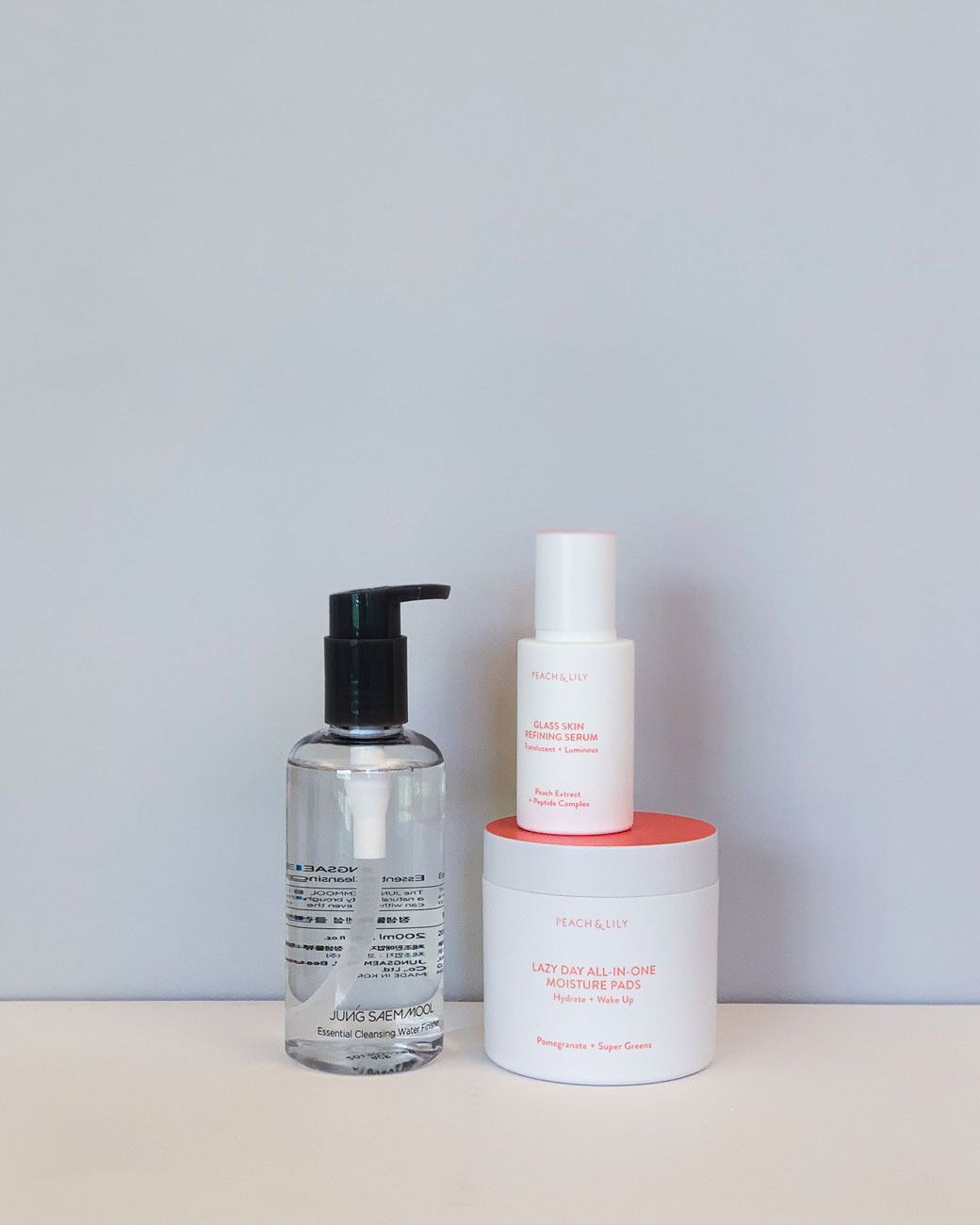
And on those lazy days or those super demanding days or those days you just don’t have any spoons? It’s okay to pare things down, but we still recommend you cleanse, even if it’s just using a cleansing water (like Jungsaemmool’s Essential Cleansing Water Finisher) on a cotton pad to swipe all the makeup and grime off your skin. Follow that up with the Peach & Lily Lazy Day All-in-One Moisture Pads, which work as a toner-serum-moisturizer in one cotton pad, and finish with the Peach & Lily Glass Skin Refining Serum to make sure your skin gets all the vitamins, nutrients, and antioxidants it needs!

The post A Routine to Glass Skin. appeared first on Pibuu.

A Routine to Glass Skin.
Originally posted here: https://www.pibuu.co/2019/05/21/a-routine-to-glass-skin/

Hanbang Skincare, Where Traditional Meets Modern

If you grew up in Korea or in Korean diasporic communities around the globe, you may know about hanbang, traditional Korean medicine. You may have grown up going to the hanisa, a practitioner of traditional Korean medicine. You — or, let’s be honest, your parents — may have left with a concoction of herbal ingredients and instructions on how to cook them, instructions they followed to extract a dark-colored, bitter drink (aka hanyak) that filled your home with strong, acrid smells. You may have blown on the hot liquid furiously to cool it down, pinched your nose to block the smell, and chugged it, allowed to come up for air only when you’d emptied the cup. You may have demanded a sweet candy to help remove the bitter taste from your mouth.

If you didn’t grow up going to the hanisa and drinking hanyak, you may still have encountered hanbang in other ways. Hanbang, traditional Korean medicine, can include acupuncture, food, salt rooms in Korean, and, yes, even skincare.

What is hanbang?

Hanbang refers to traditional Korean medicine that treats the body using herbal ingredients and particular techniques, like fermentation. It’s a holistic approach to medicine, emphasizing the balance between mind and body and targeting the root causes behind ailments, instead of simply the ailment itself. Hanbang, to put it shortly, wants to treat all of you, not just one individual part.

In similar fashion, for something to be considered to be part of hanbang traditions, it’s not just about the ingredients used — hanbang ingredients, like ginger root or licorice root, are commonly used — but also about how the various ingredients are combined together and formulated. Hanbang itself is about the whole, not the individual parts.

hanbang skincare textures

What is hanbang skincare?

Hanbang skincare is rooted in this traditional Korean medicinal foundation, but it combines the traditional with more modern ingredients and technologies. It’s why you might also see ingredients like niacinamide, shea butter, and glycerin alongside these traditional ingredients; hanbang skincare is about maximizing efficacy while being faithful to hanbang principles.

That means that hanbang skincare is also more holistic — rather than target a specific concern, like acne or visible signs of aging, hanbang skincare seeks to treat skin as a whole. It treats the foundation of skin.

A great example of a hanbang skincare brand is Atoclassic, a skincare line from the Woobo clinic in Seoul. The Woobo clinic was founded in 1912 and is now in its third-generation of hanbang practice, and Atoclassic’s products are formulated with up to 14% hanbang ingredients, capturing the power of Korean traditional medicine to help calm, soothe, and heal skin. We particularly recommend the brand if your skin is feeling sensitive or irritated, though Atoclassic is suitable for all skin types and even for children and pregnant women (though you should always check with your doctor first).

Our favorite Atoclassic products are their Real Tonic Soothing Multi Cleanser and Real Tonic Soothing Origin Essence, which are both easy to incorporate into your daily routine. We also love the Real Tonic Soothing Moist Mist for those times skin needs some refreshing during the day, as well as the Real Tonic Perfect Treatment Mask on those days when skin just isn’t cooperating and needs a blast of goodness.

What are common hanbang ingredients?

Of course, you’ll also find a lot of these hanbang ingredients in skincare products that aren’t necessarily considered “hanbang skincare.” These products might use ingredients commonly found in hanbang in general, the most common of which are ginseng root extract and ginger root extract, but that’s where the connection ends. That doesn’t mean these products are not as good or as effective or as gentle as hanbang skincare; like so much out there, hanbang skincare is not inherently better than non-hanbang skincare.

Ingredients like ginseng root extract and ginger root extract are great even outside of traditional hanbang practices. Ginger root, for instance, is a medicinal plant that’s high in antioxidants, helps stimulate circulation and encourage cell turnover, and has antiseptic and antibacterial properties. Ginseng root helps firm skin, reducing the appearance of fine lines and wrinkles, and it helps balance sebum. Coptis root extract has natural anti-inflammatory, antioxidant, and anti-bacterial properties, helping calm skin and provide moisture. These are just three ingredients you’ll find that are also common ingredients in hanbang medicine!

Product recommendations: The Be the Skin Daily Complete Cleansing Oil is fortified with ginger root extract, Chinese cassia root, and great burnet root to help stimulate circulation and help skin appear more youthful.You’ll find licorice root extract, skullcap extract, and ginger root extract in the Peach & Lily Power Calm Hydrating Gel Cleanser, a gentle, soothing cleanser that hydrates skin and leaves it calm. These two cleansers, one oil-based, the other water-based, pair well together for a gentle, soothing double cleanse. 

We hope that explains more about hanbang in skincare! Have any other questions? Leave them in the comments below!

The post Hanbang Skincare, Where Traditional Meets Modern appeared first on Pibuu.

Hanbang Skincare, Where Traditional Meets Modern
Originally posted here: https://www.pibuu.co/2019/05/20/hanbang-skincare-where-traditional-meets-modern/

Matcha. Green Tea. Camellia Sinensis.

Let’s talk about matcha. Green tea. Matcha. Are they the same thing?

Matcha and green tea come from the same plant, the shrub camellia sinensis, but the difference is in how they’re processed. Green tea comes from the leaves of the shrub, which are dried after they’re picked. To make matcha, the leaves in their entirety are dried then ground into the fine, bright green powder you may be familiar with.

Because matcha uses the whole leaf, grinding it down without using heat, matcha is more concentrated than green tea. Some studies even estimate that matcha has 3 times the antioxidants as green tea.

Does that mean matcha is better than green tea?

Not exactly — it just means that matcha and green tea are different and suited for different uses.

Let’s talk briefly about drinking matcha and green tea. Matcha is typically swirled into hot water (not scalding water), and it’s kind of like espresso — you’re typically going to drink a small amount of it, not a giant mugful, because of its intensity. Matcha has a bolder, more vibrant flavor, often with its own natural sweetness and body, depending on the quality of the matcha.

Green tea, on the other hand, is steeped in boiling water, and it has a different flavor, less intense, maybe slightly nutty, without the sweetness you might find in matcha. It’s also less concentrated, a more traditional tea you can sip throughout the day if you so wanted. (Of course, green tea does still contain caffeine!)

Because matcha is more concentrated, it’ll likely have a stronger impact on you — if you’re particularly sensitive to caffeine, you might opt to sip green tea instead of matcha. You probably wouldn’t bake with green tea, but matcha is more versatile, its intense matcha flavor and vivid green color welcome additions to baked goods.

All of which goes to say — neither is better or worse than the other. They’re just different.

matcha green tea textures

What about in skincare then?

Let us explain by describing these three different products.

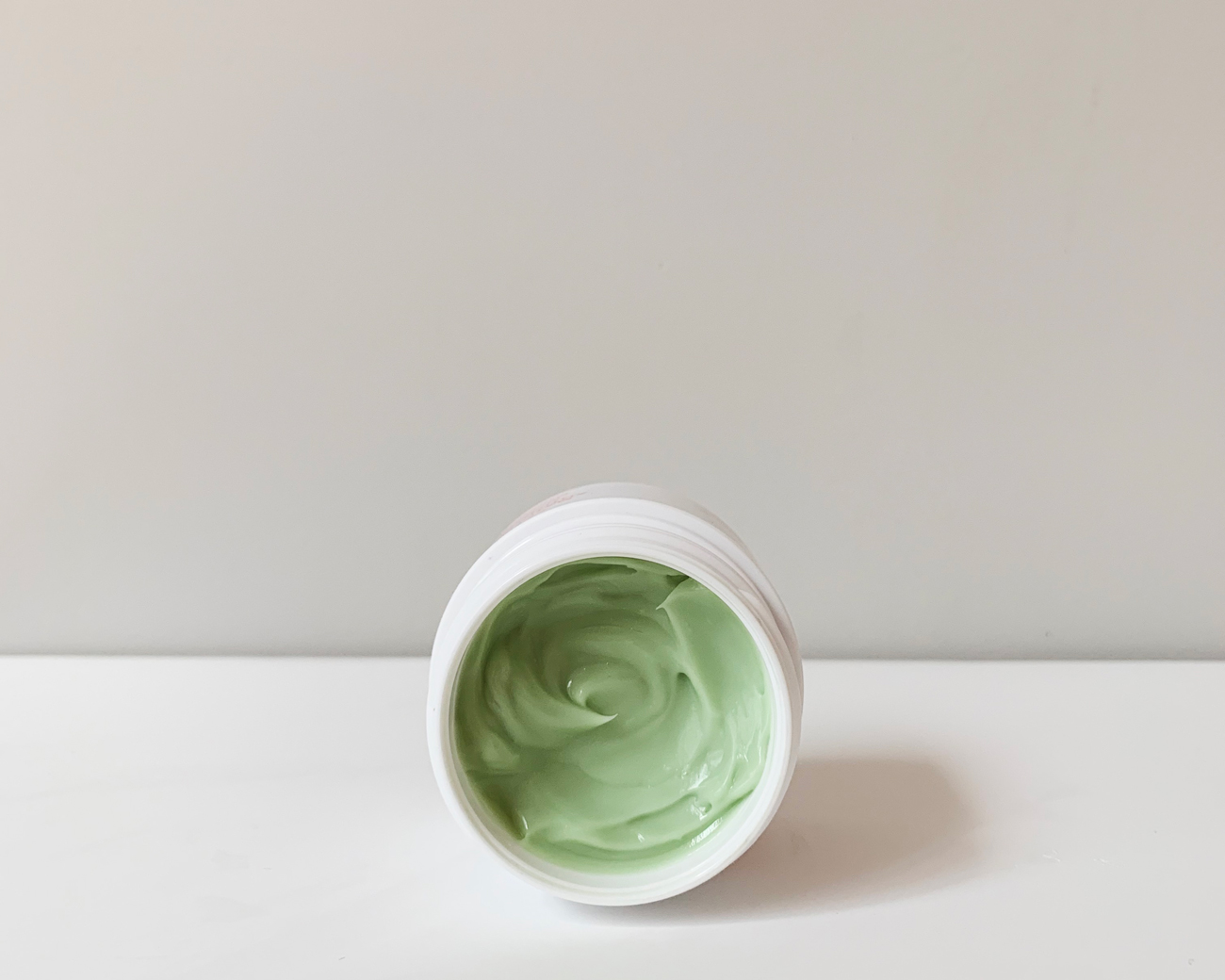
The Peach & Lily Matcha Pudding Antioxidant Cream uses matcha (obviously). It’s where it gets its natural green color, and the presence of matcha means the cream is full of antioxidants, which come from flavanoids, a type of polyphenol. Flavanoids are particularly known to have strong anti-inflammatory effects, helping reduce redness and fight acne, which can be caused by inflammation. Further, matcha actually also helps with sebum production, helping reduce the presence of oil on skin and slow the production of excess sebum.

You want your skin to have a chance to absorb all the goodness of the ingredients, so you might want a moisturizer that harnesses the extra power of matcha. The Matcha Pudding Antioxidant Cream boosts the antioxidative goodness of matcha with other beautiful ingredients, like cape lilac extract, niacinamide, and adenosine, so your skin can thrive.

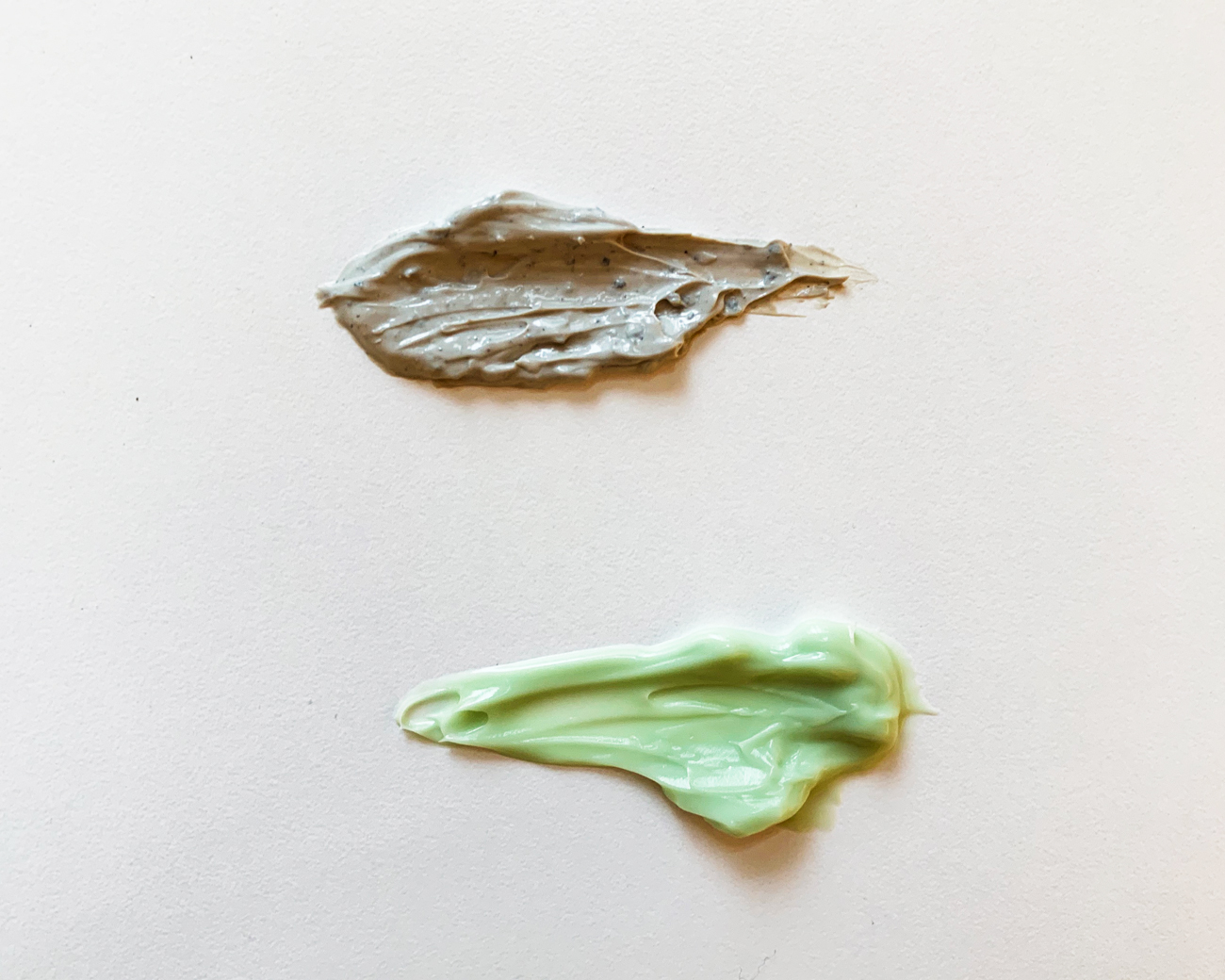
Then there’s the Femmue Gentle Green Relief Mask, a kaolin clay mask that includes actual green tea leaves to help provide gentle exfoliation while also helping manage excess sebum. Ultimately, you’re going to wash the clay mask off, and you want the kaolin clay to be pulling out all the excess oil, bacteria, and gunk that might be trapped in your pores. That means you’re not necessarily going to need the intense concentration of matcha in a clay mask — green tea leaves will still provide all the amazing properties of green tea, helping fight off free radical damage, reduce redness and inflammation, and manage sebum. The leaves themselves will also bring the added benefit of gentle exfoliation when you’re rinsing the mask off.

Green tea can also be found in the essences of sheet masks! When it comes to sheet masks, you need something that will soak into skin, which means green tea extract might be the likely choice. Ariul’s Green Tea 7 Days Mask is soaked in a formula that highlights the balancing and gently exfoliating properties of green tea, without the added texture of tea leaves or matcha powder.

Should you be wary of matcha if you have sensitive skin?

There are so many great things about matcha, and one of them is that matcha is generally suitable for all skin types, including sensitive skin. Of course, though, everyone’s skin is different, so you never know how your skin will react to any given ingredient! To be safe, we always recommend spot-testing anything new.

We love the versatility that comes from this one shrub, camellia sinensis. Just like matcha and green tea have different uses when it comes to drinking or consuming them, they have that same versatility in skincare, which we love — there isn’t  just one way for us to reap the benefits of this superstar ingredient.

The post Matcha. Green Tea. Camellia Sinensis. appeared first on Pibuu.

Matcha. Green Tea. Camellia Sinensis.
Originally posted here: https://www.pibuu.co/2019/05/16/matcha-green-tea-camellia-sinensis/

What’s With the Food in My Skincare?

Matcha Pudding Antioxidant Cream. Apple Smoothie Peeling Gel. Peach Pudding Makeup Cleanser.

Those are just in product names. When you look at ingredient lists, you see them even more. Ground Plan’s Cell Power Energy Essence is a waterless essence that has an oatmeal extract base. The Peach & Lily Lazy Day All-in-One Moisture Pads contains extracts from various fruits and vegetables — carrots, broccoli, pomegranate, to name a few. The Laneige Lip Sleeping Mask has multiple berry extracts, including strawberries, blueberries, and raspberries.

These are all foods we eat, foods that are known to be good for us, and they pop up in skincare all the time. That made us wonder — is it enough for our skin if we just eat foods that are rich in antioxidants and vitamins and nutrients? Or is it better to apply them topically via skincare products? Are some of these ingredients, like berry extracts, just included to make products smell good? We decided to find out.

I eat healthy! Isn’t that enough for skin?

Without getting too science-y, eating versus topically applying ingredients means they reach skin differently.

When you eat something, that food product is digested, broken down, and distributed throughout your body. Your vital organs take priority, so your body can function properly, and skin, despite being the largest organ of the body, is kind of low on the list of priorities. It makes sense when you think about it — you want your brain, lungs, heart, kidneys, liver, etcetera to get everything they need, so you can function and flourish overall. Non-vital organs can come later.

However! That doesn’t mean that skin doesn’t see any effects from you eating well; when you’re healthy and feeding your body properly, your skin has a better chance of also being healthy. The body, after all, is still one unit, and, if one part of it is impacted, whether positively or negatively, that can affect the body as a whole.

It’s like water — you probably know that you should be drinking water regularly throughout the day. People like to say that you should drink a lot of water for healthy, hydrated skin, and that’s true, just not in the ways people might be thinking. The water you drink doesn’t necessarily make it to your skin but goes mainly to your vital organs and picks up waste and toxins, which you’ll dispel as waste as it passes through your body. However, if you’re drinking enough water, you can still see and feel the effects on your skin — it might feel healthier and look clearer, not because the water you drink is going directly to your skin but because your body, overall, is reaping the benefits of being sufficiently hydrated.

As it turns out, food works similarly in a systemic way.

So is applying topically better?

If consuming ingredients works systemically, impacting your body as a whole, topically applying ingredients works only on the areas you target. That makes logical sense — when you apply skincare to your face, you don’t expect to see effects on your knees.

The advantage to topical application is that it delivers higher concentrations of ingredients to skin, which can show more drastic results on skin than consuming those same ingredients might. Because they don’t have to pass through the digestive tract, these ingredients can have a more direct impact on skin, directly addressing specific skin concerns, from breakouts to dullness to visible signs of aging, etcetera.

So which is better?

Honestly? It’s important to do both! Studies even show that the best results come from eating these great ingredients and topically applying them. It’s a more holistic approach that acknowledges the systemic benefits of eating foods that are rich in antioxidants, vitamins, and nutrients while also recognizing the benefits of directly targeting skin and addressing specific skin concerns with topical application — and we tend to agree! Skin, after all, is an organ and should be supported from the inside-out!

We hope that helped! Tomorrow, we’ll go into a few of our favorite ingredients that we can eat (or drink!) and apply topically!

The post What’s With the Food in My Skincare? appeared first on Pibuu.

What’s With the Food in My Skincare?
Originally posted here: https://www.pibuu.co/2019/05/15/whats-food-skincare/

Back to Basics: Skin Types, Part Two.

Yesterday, in “Back to Basics: Skin Types, Part One,” we talked about two of the four generally-accepted skin types — dry skin and oily skin. Today, we’re going to get into normal skin and combination skin!

Like we said yesterday, remember that skin type is just one factor to consider when it comes to skincare and choosing which products you might want to use — your skin type is one thing in a myriad of many things, like environment, skin concerns, etcetera, when it comes to skincare. Also remember to keep in mind that your skin type can change, so listen to your skin and its needs!

We do think that it can be helpful to know your skin type, though, and understand what each type needs. Skin type is a good place to start in figuring out what kinds of products you should look for. That’s why we thought we’d take some time to revisit the basics and go into each skin type, providing product recommendations and explaining the reason for each. As you read on, you might notice we mention the same few things, though, no matter the skin type — cleanse gently, protect your natural skin barrier, and hydrate, hydrate, hydrate. As you’ll see, that’s not an accident.

peach slices peach and lily ground plan

NORMAL SKIN

If you have normal skin, you have, well, normal skin. Your skin’s oil/moisture levels are balanced, and you’re not prone to breakouts or sensitivity. Congratulations.

However! Just because you have normal skin doesn’t mean you don’t need to take care of your skin. Normal skin is still prone to hyperpigmentation, and normal skin also shows visible signs of aging — and neglecting skincare can actually potentially accelerate those visible signs of aging. Caring for normal skin might take more the approach of maintaining skin, though, as well as prevention.

peach slices

Products We Recommend:

Peach Slices, Peach Pudding Makeup Remover

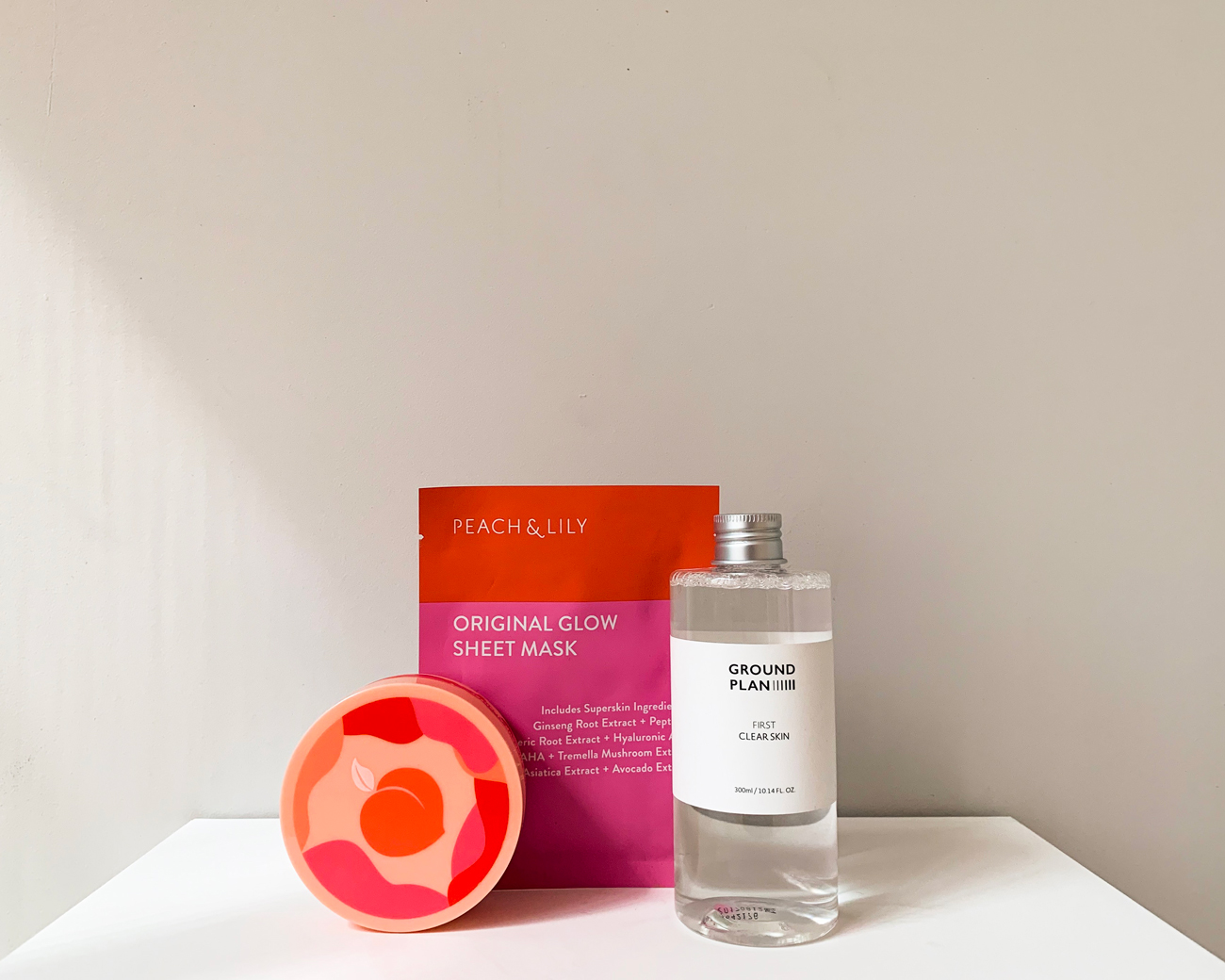
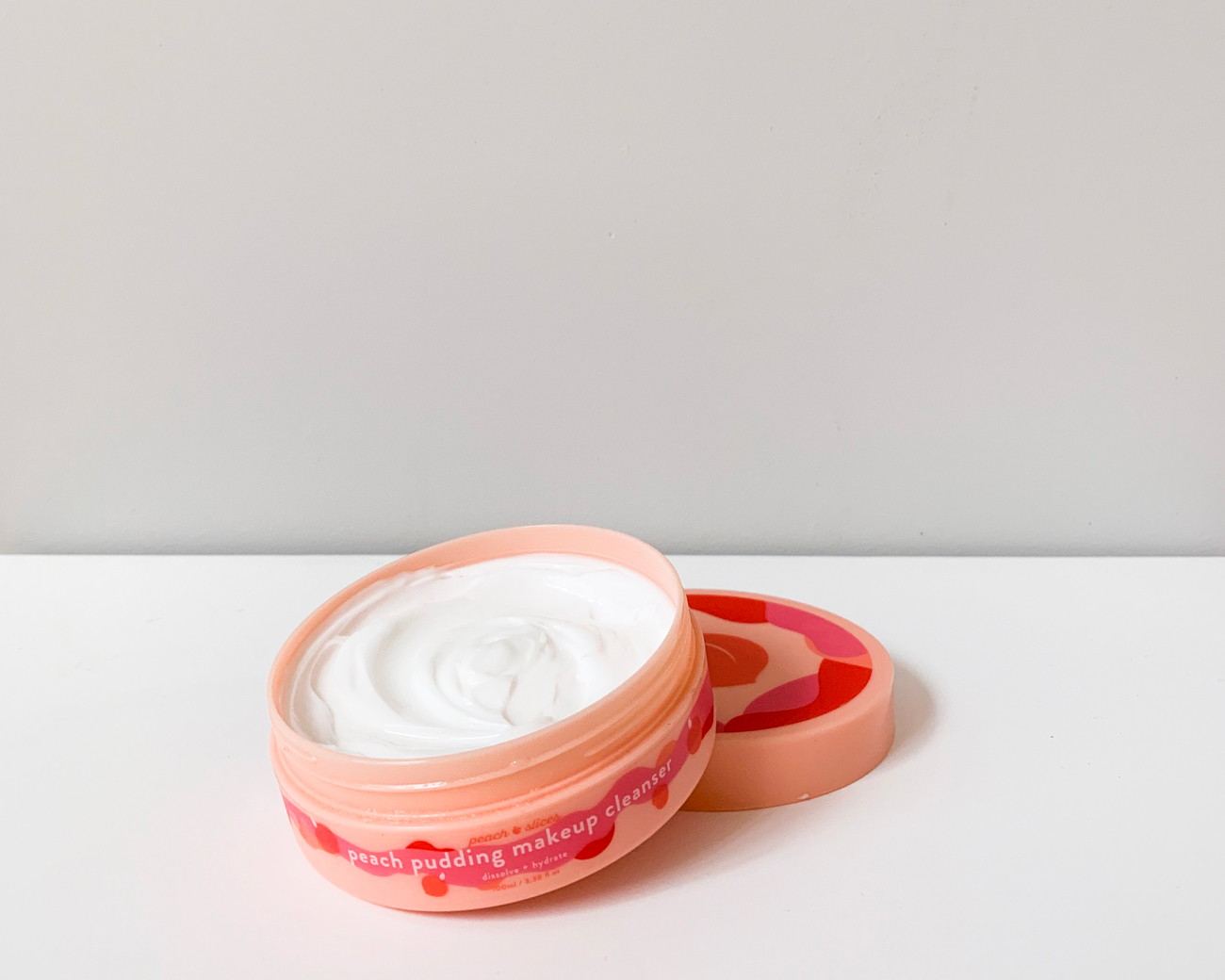
Normal skin should still double cleanse! Double-cleansing is a gentle way to cleanse deep into pores without stripping skin dry or disrupting the natural skin barrier, and maintaining the health of your natural skin barrier is one key way of maintaining overall skin health. The Peach Slices Peach Pudding Makeup Cleanser is a gentle first step, oil-based cleanser with a really special texture; it’s not a balm or a thick cream or an oil. Rather, it’s this soft pudding cream that melts away makeup and other oil-based impurities, leaving skin soft, supple, and clean.

Ground Plan, First Clear Skin

Cleansing can throw off the pH level of your skin, and toning helps balance it after cleansing. The pH level of your skin is important because of something called the acid mantle, which sits above your natural skin barrier (also known as the lipid barrier). The acid mantle is made up of secretions from our sweat glands (amino acids and lactic acids) and sebaceous glands (oils), and it helps protect our skin by fighting off bad bacteria and nurturing good bacteria. Our skin thrives when its pH level is slightly acidic (4.5 to 5.5 being the sweet range), but cleansing can often make skin, even normal skin, too alkaline or too acidic, which can ultimately harm skin. A toner/essence like Ground Plan’s First Clear Skin helps balance skin after cleansing, while also hydrating, soothing, and even providing light exfoliation thanks to wintergreen extract.

Peach & Lily, Original Glow Sheet Mask

Normal skin types can also benefit from regular sheet masking, and the Peach & Lily Original Glow Sheet Mask is a great way to give normal skin a boost. Packed with botanicals, peptides, and antioxidants, the Original Glow sheet mask helps hydrate, plump, and nourish skin, while a small amount of AHA provides gentle exfoliation. The Original Glow won’t leave your face feeling sticky or tacky after use, and the sheet adheres well to skin, so you can apply your sheet mask and go about your day as your face soaks in all the goodness. Remember to remove your sheet mask before it dries completely, though; when the sheet is dry, reverse osmosis occurs, the dry mask pulling hydration from your skin.

lagom aromatica peach and lily

COMBINATION SKIN

Combination skin is the tricky half-sibling to all the other skin types, and, if you have combination skin, you might have an oily T-zone and dry skin elsewhere, like on your cheeks and around your mouth. Or you might have dry patches around your cheeks but have a normal T-zone. Or you might have normal skin everywhere except for your T-zone, which might be dry. Basically, combination skin is a combination of any of the other skin types, and it also means that your skin type might change frequently — some days, your skin will feel more oily, and, other days, it will feel more dry, partly as a reaction to the climate or season you’re in.

Whatever the combination, hydrating skin is key. Combination skin can actually be a sign of imbalance and/or dehydration, so combination skin types can benefit from layering on hydration and caring for their natural skin barrier. Make sure not to strip your skin dry and avoid harsh products; opt for gentle, nourishing products that help bring your skin back to equilibrium.

peach and lily matcha

Products We Recommend:

Lagom, Cellup Micro Foam Cleanser

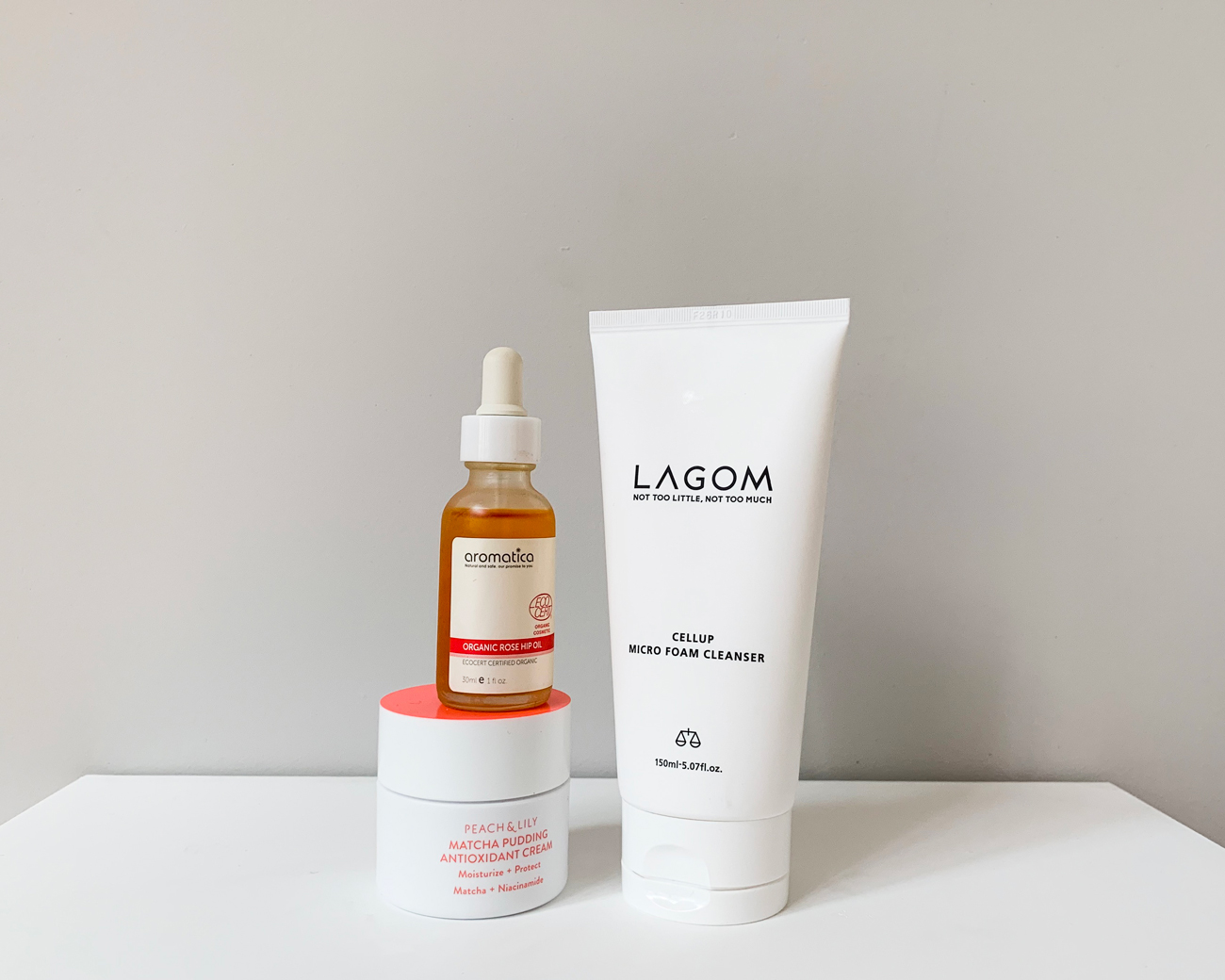
Gentle cleansing is, no surprise, an important part of caring for combination skin. Stripping skin dry and removing all the natural oils from skin can cause combination skin as skin then overproduces oil in spots and underproduces in others. By keeping cleansing gentle but thorough, you can help skin regain balance, so skin can thrive. For combination skin, we like the Lagom Cellup Micro Foam Cleanser — it lathers into a soft foam with dense micro-bubbles that sweep away impurities and grime while Dermaflux technology helps deliver moisture into skin. Sulfate-free with no added synthetic fragrance, the Cellup Micro Foam Cleanser instead contains several beneficial oils that help cleanse deep into pores without stripping skin dry.

Aromatica, Organic Rose Hip Oil

Extracted from the seeds left behind after roses drop their petals, rosehip oil is rich in antioxidants, vitamins, lipids, and fatty acids, all good things that can do wonders for skin. Rosehip oil helps protect and maintain your natural skin barrier, and it also helps even tone, brighten, and moisturize. The Organic Rose Hip Oil from Aromatica is ECOCERT certified and approved by the USDA, and it’s 100% rosehip oil that’s been cold-pressed to ensure that the oil is of high quality. And, yes, that orange color is 100% natural.

Peach & Lily, Matcha Pudding Antioxidant Cream

Combination skin might generally want to avoid heavier moisturizers, unless you have combination skin that veers more towards dry skin than oily or, even, normal. One of the things we love about the Peach & Lily Matcha Pudding Antioxidant Cream is its delightful, bouncy, pudding-like texture that absorbs quickly into skin and leaves it feeling dewy but matte, hydrated but not heavy. The Matcha Pudding Antioxidant Cream is also full of, well, matcha, which is an incredible source of antioxidants, which help fight off free radical damage.

And those are your four generally-accepted skin types! What other basics of skincare would you love to see us cover?

The post Back to Basics: Skin Types, Part Two. appeared first on Pibuu.

Back to Basics: Skin Types, Part Two.
Originally posted here: https://www.pibuu.co/2019/05/14/back-basics-skin-types-part-two/